
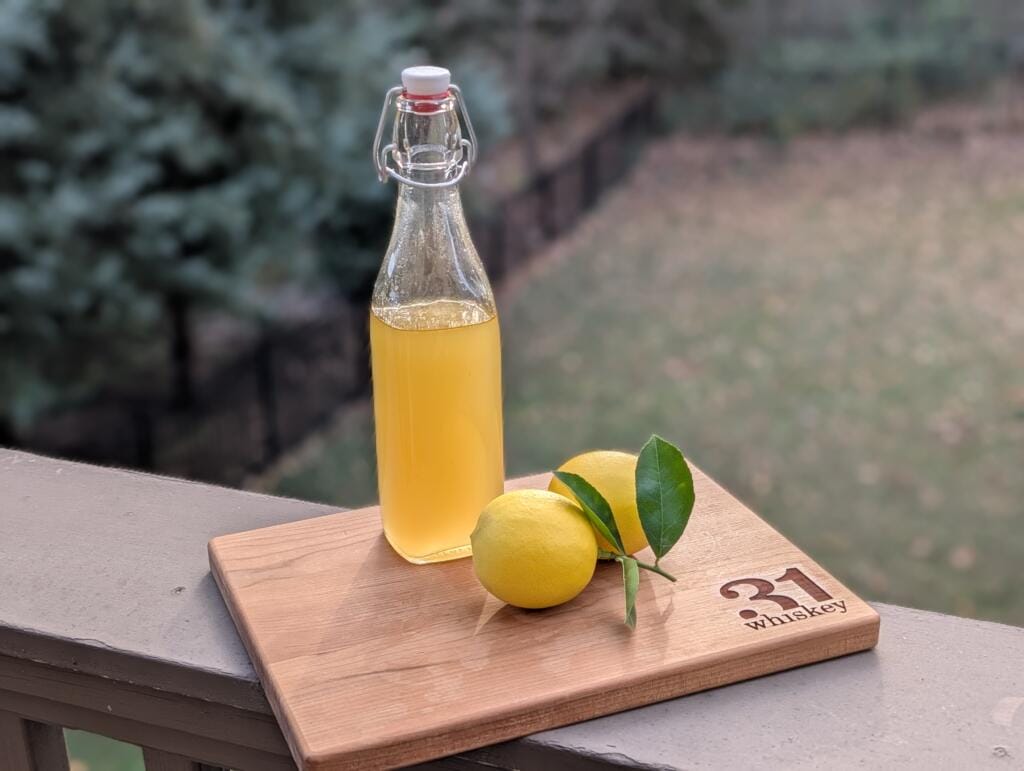
Italy is one of my favorite places to visit, and there are two liqueurs that I associate most strongly with those amazing visits: amaro and limoncello. Now, amaro is unfortunately a bit tough to produce at home… but thankfully limoncello is probably the easiest and simplest after dinner digestif that one can possibly make.
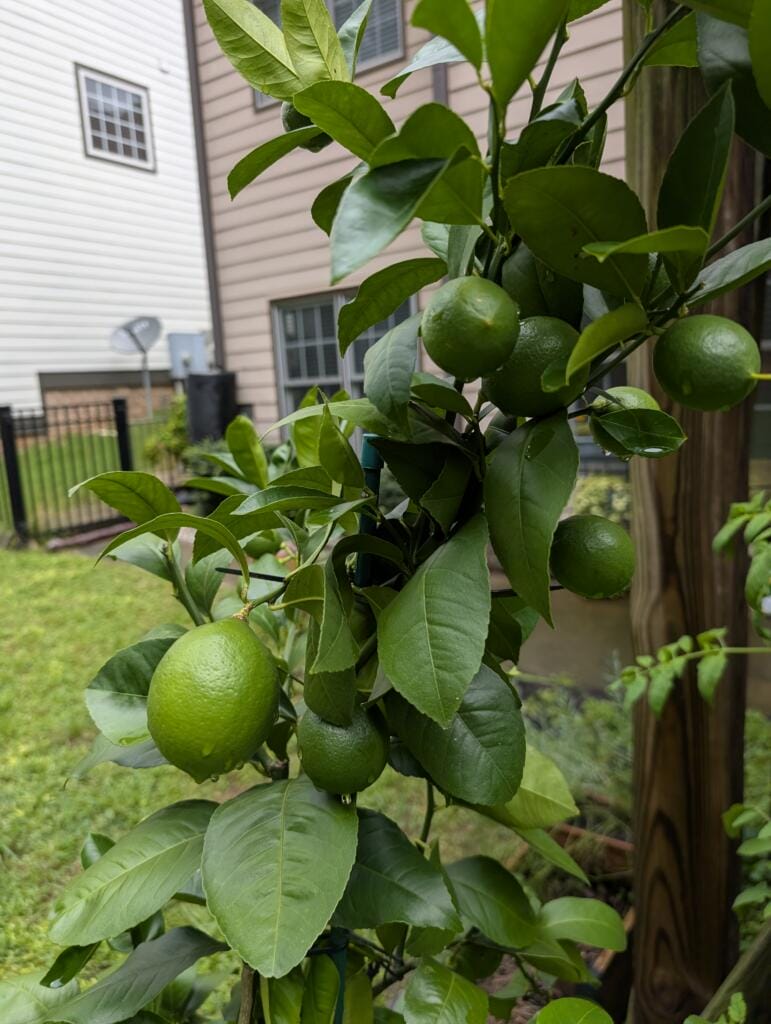
It also helped that we had a “problem” this year. My wife has a Meyer Lemon tree that has historically (while we were living in Texas) barely survived. I think we got a single lemon off that tree the entire time it was in Austin, and those lemons were tiny. But as soon as we moved to Raleigh, North Carolina (and my wife let her mother take charge of the tree) we could tell that this plant was finally in its element. In 2024, we got a handful of perfect lemons, most of which we candied and kept around for baking and cocktail purposes… but 2025 was an even bigger harvest, with more lemons than we could find bowls to keep in.
When life gives you lemons, you make lemonade… but first you take the lemon peels to make limoncello.
The process wasn’t all that intensive: the biggest issue was simply waiting for the lemon peels to macerate in the alcohol, which took a few weeks. But in terms of actual time spent in the kitchen, this takes less than an hour.
Tools
Ingredients
- Four lemons
- 32 Ounces of Grain Alcohol (Everclear or Pure Proof)
- 2 cups sugar
- 1 cup water
Steps
1. Peel the Lemons
I didn’t take a good photo of this step, but this is simple and pretty intuitive.
The goal here is to peel all the yellow skin off the lemons. Ideally, you want to do this while taking as little of the white flesh as possible (this is what will give your limoncello a bitter taste).
As for what to do with the leftover lemons, that’s up to you! Some lemonade wouldn’t be a bad idea. I like a lemon simple syrup for cocktails. My wife makes large batches of this lemon tumeric lentil soup. And if you really run out of uses, just freeze the juice — I guarantee you’ll find a way to use this within the next year or so.
2. Macerate the lemon peels in grain alcohol
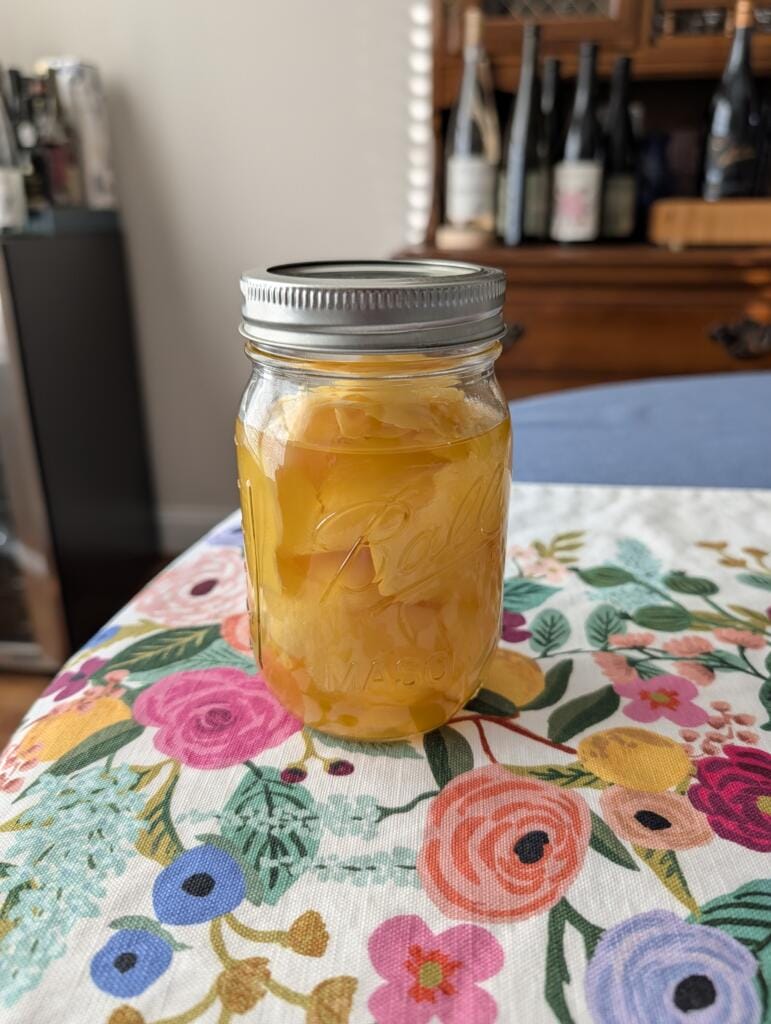
Once all of the peeling is complete, add your peels to a Mason jar and then fill the jar with grain alcohol.
I recommend grain alcohol instead of simply using vodka because typically grain alcohol is going to be a cleaner flavor profile and more neutral. Vodka might seem like a “you’ve had one you’ve had them all” kind of experience — but there are real differences in the flavor profiles and the source materials. Using grain alcohol ensures that all of the flavors you get in the end come from your lemons.
Once everything is in the jar, let it sit there for at least two weeks. Keep the jar in a cool, dark place and give it a good shake every few days. You’ll know that its ready because the alcohol itself will be a bright yellow color and the lemon peels will be more pale.
3. Make some simple syrup
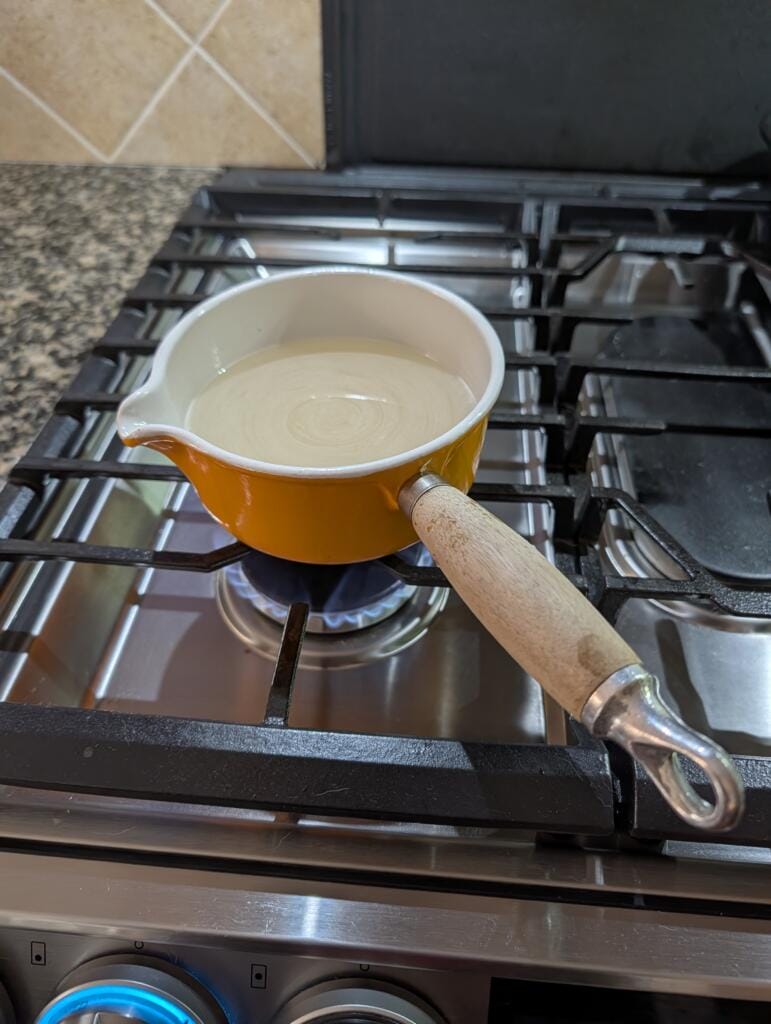
When the lemon peels have been steeping long enough, its finally time to make your bottle of limoncello. And that starts with preparing some simple syrup.
Personally, I like a more viscous simple syrup and use a 2:1 mixture of sugar to water. Pour two cups of sugar into your saucepan, add one cup of water, stir to combine. Then bring the water close to a boil and let the sugar dissolve into the water.
For this I really love my tiny #14 Le Creuset saucepan. It’s a shame that they no longer make these — all the modern versions are slightly larger, have metal handles, and lack this nifty easy pouring spout off to the side. Thankfully my wife got this vintage one for me a few years back and I use it multiple times a week. (I can say without shame that I would absolutely cry if this saucepan ever broke.)
Once the simple syrup is made and allowed to slightly cool, pour it into one of the squeeze bottles. This not only allows you to carefully and slowly add the simple syrup to your limoncello later, but it also makes it very easy to store and use any excess in cocktails later.
4. Strain lemon alcohol into glass bottle
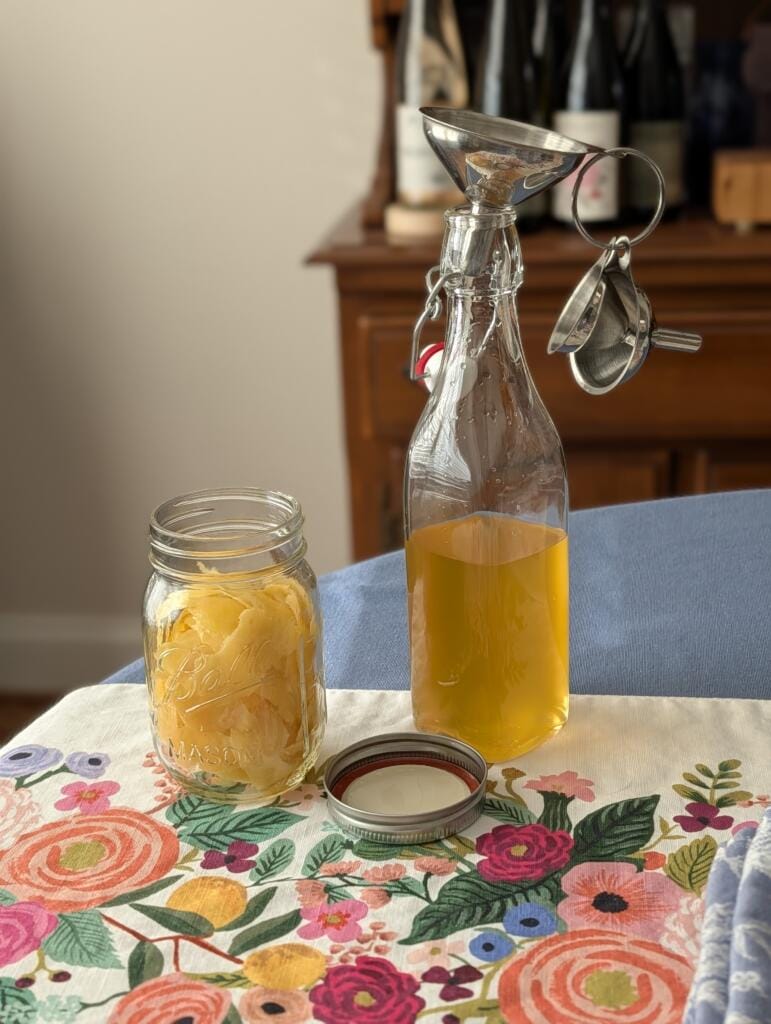
Back to the lemon alcohol mixture, using a funnel and a strainer you should pour the alcohol out of the Mason jar and into the glass bottle. Some people recommend also using a coffee filter or some other cloth to catch finer particles… but to be frank, I don’t mind a cloudier and likely slightly more flavorful version of this digestif.
With the peels, you can either discard them or simply add more grain alcohol and start the process again. (Just be aware that likely the next batch will take longer and not come out quite as flavorful.)
5. Add simple syrup to taste
Most recipes say that you should taste your limoncello along the way and keep adding sugar until you find a spot you like. If your bottle is similar to mine (17oz bottle linked earlier), I ended up adding the simple syrup until the liquid was just past the shoulder.
You can also experiment with adding lemonade or water to reduce the alcohol content or increase the lemon flavor. (At the end of the day, the goal is to make a liqueur that you will enjoy drinking, not trying to adhere to some strict concept of a “proper” limoncello.)
6. Chill and enjoy!
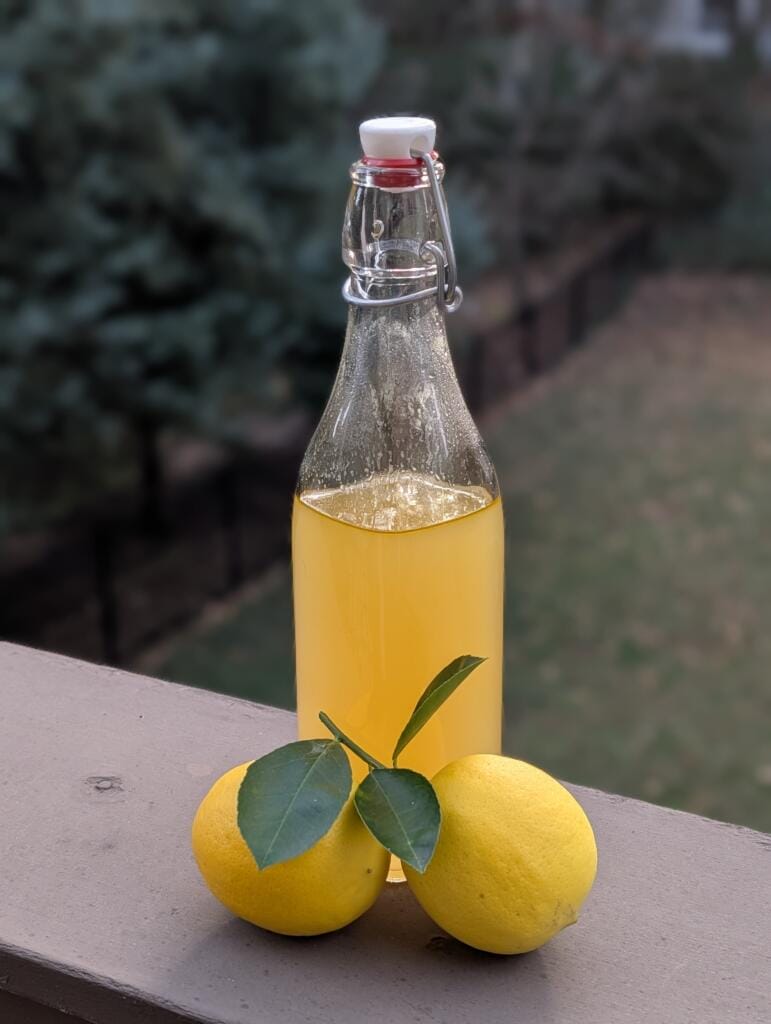
That’s it! I keep my limoncello in the fridge door, which I find is the perfect temperature to enjoy this refreshing drink.
If you give this a try, let me know how it turns out in the comments!