
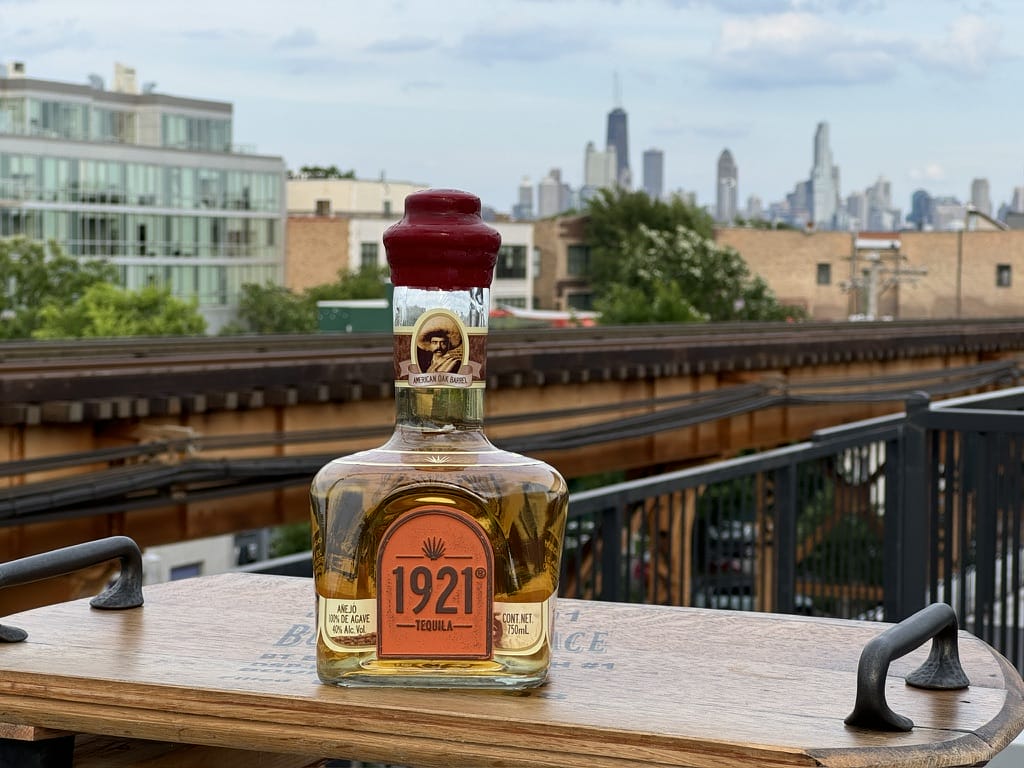
I was standing in a duty-free shop in Cancun, bags checked, with some time to burn before boarding. I turned to the woman working the tequila section and asked her to point me toward something I wasn’t likely to find back home. No celebrity names on the bottle, no television commercials — just a bottle that meant something in Mexico.
She walked me down the aisle and set her hand on a squat, clear bottle with a bold terracotta label and a deep red wax top. She even offered me a sample. The bottle was beautiful, the price was honest, and the sample was delicious. I checked out and headed over to Air Margaritaville for some tableside guac to complete the experience before hopping my flight back home, one bottle heavier in my bag.
History
Casa 1921 was founded in 1996 with a straightforward mission: produce ultra-premium 100% agave tequila, mezcal, and crema de tequila, and carry Mexican culture to the world through the bottle. The company isn’t particularly forthcoming about the exact founders, except to cite “four friends with a passion for tequila” — which isn’t necessarily good or bad. It could just be as simple as the founders preferring to be low-key and more behind the scenes. Either way, the brand says the name marks the close of the Mexican Revolution (most historians put that at 1920, but I’ll let it slide – 1921 is a better-looking number), and that cultural pride is woven into every inch of the packaging. This is not a brand that was invented in a marketing meeting in Los Angeles. It was built in Jalisco, for Mexicans. And while the saleswoman implied it was only available in Mexico, I’ve since spotted a few of these bottles in US stores.
The agave used in 1921 Tequila is grown in the red clay soils of Los Altos de Jalisco, the highlands region that sits at roughly 2,000 meters of elevation. Highland agave is its own thing: the altitude, the mineral-rich red soil, and the cooler temperatures produce a blue weber agave plant that tends to be sweeter and more floral than its lowland cousins. It’s the same region that has given us some of the most revered tequilas in the world, and 1921 has been quietly growing its agave there for about three decades.
Product
- Learn More: What Is Tequila?
1921 Añejo is a 100% blue agave tequila, which means every bit of fermentable sugar comes from the agave itself — no cane sugar filler, none of the mixto shortcuts you find on the bottom shelf. The agave piñas are sourced from the Jalisco highlands and go through the traditional tequila production process before being distilled and sent to the barrel.
The aging happens in American white oak barrels, which is called out right on the neck of the bottle. American oak is more aggressive than French oak and imparts bolder flavors over time. It’s the same wood that gives bourbon its backbone, and when it’s applied to a highland agave tequila, the results lean sweeter and rounder than you might expect. By law, añejo tequila must be aged in oak barrels no larger than 600 liters for at least one year. 1921 doesn’t carry an age statement, but that means you’re guaranteed at least twelve months of American oak influence in every bottle. The color in the glass tells the rest of the story.
Packaging
Let’s get the wax out of the way first: I don’t like wax-dipped bottles. Never have. They’re a pain to open, they can leave debris in your pour if you’re not careful, and I sometimes feel they exist almost entirely to signal “premium” without adding anything to the experience. The bold red wax top on the 1921 Añejo is no exception to my general irritation on this front — but I’ll admit it does catch your eye on a shelf. It’s one of the first things I noticed in the duty-free shop, so I can’t be entirely mad at it.
Everything else about the bottle, I like quite a bit. The squat, wide-shouldered silhouette is distinctive and stands apart from the tall, narrow bottles that dominate the tequila category. The glass is clear, so you can see the warm amber liquid inside without any distortion — and for a spirit this color, that matters. The curved sides catch the light and give the bottle some depth and character.
One practical gripe: the bottle so wide that pouring a measured amount with one hand is awkward. You need two hands to control it with any confidence, which is an odd ergonomic choice for a bottle meant to be used regularly. My hope is that this gets easier as the bottle gets lighter.
Neat
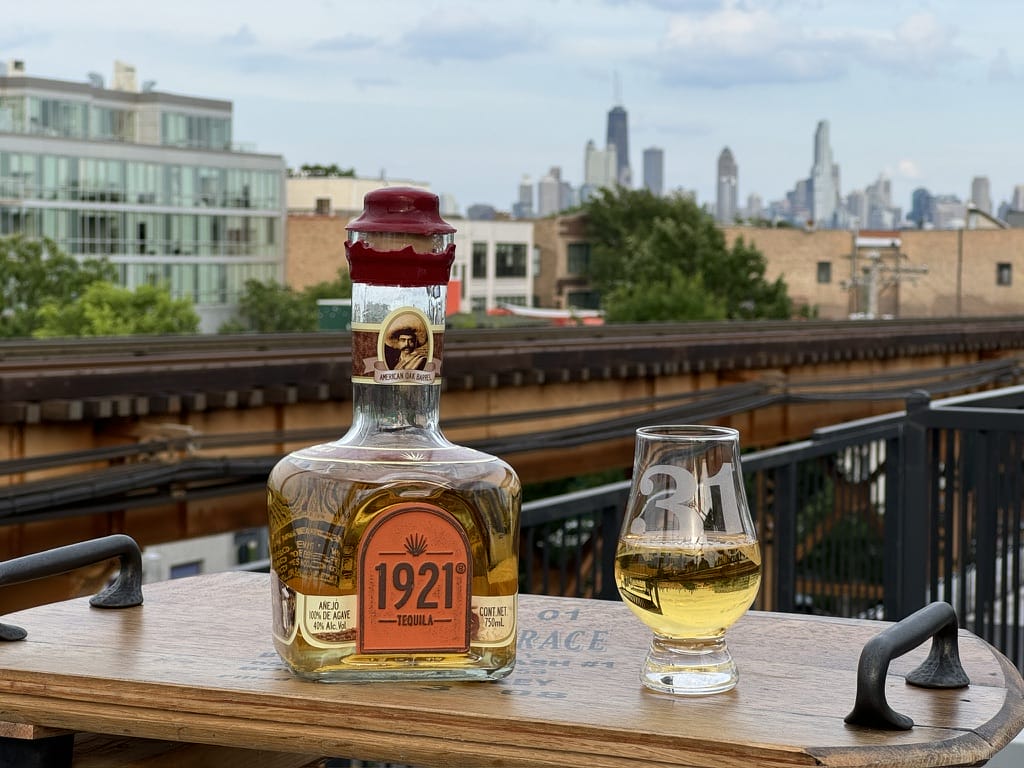
The first thing I noticed pouring this was the color: a pale amber that reminds me of a wheated bourbon.
On the nose, lime leads the way. Its fresh and citrus-forward, with distinct agave right behind it. Behind that are vanilla and a mild oak presence that keeps everything grounded without taking over. It smells like something that actually came from a plant, not a barrel, which is what you want from a good highland tequila.
The first sip delivers vanilla crème wafer cookies: that layered, delicate sweetness that shows up when American oak has done its job properly. From there, the flavor opens into agave, a hit of oak, and a back-end black pepper that adds just enough bite to keep things interesting. The citrus from the nose reappears mid-sip in a big way, pushing lime and orange forward before the oak reels it back in. The finish is long and clean. There is no burn — none. For 40% ABV, this drinks incredibly smooth.
On Ice
Adding ice to the 1921 Añejo doesn’t diminish it — if anything, it opens it up. The vanilla moves to the front of the line and stays there, but it evolves into something richer: toasted marshmallow, with just a hint of char at the edges. It’s the kind of sweetness that feels earned rather than added.
The oak calms down significantly on the rocks, which lets the agave character breathe. There are earthy, mineral notes here that you don’t quite catch neat (a reminder that this tequila started its life in the red soil of the Jalisco highlands). The lime steps back a bit as well, ceding the stage to the sweeter elements. If anything, the on-ice version is even smoother than neat… and I didn’t think it could actually get smoother.
Cocktail (Margarita)
I was nervous to see how a tequila this gentle would hold up against the bold flavors of a margarita, but the 1921 Añejo holds up in a margarita better than I expected. Its character still comes through: the oak, the vanilla, and especially that citrus, which absolutely pops when the lime juice hits it. Everything goes down smooth, and the cocktail feels a cut above your average margarita.
The vanilla and oak do something interesting in the mix: rather than being overwhelmed by the brightness of the lime and triple sec, they act as ballast, keeping the drink from going sharp or one-dimensional. If you’re making margaritas with this bottle, you’ll notice the difference. It doesn’t taste like a tequila that was designed for cocktails — it tastes like a tequila that’s good enough to hold its own in one.
Overall Rating
The 1921 Añejo has fantastic flavor. The vanilla-forward profile, with layered citrus, subtle oak, and real agave earthiness, delivers the drinking experience you hope for. It’s smooth enough to sip neat without effort, versatile enough to shine in a margarita, and interesting enough that you’ll actually want to keep coming back to it.
At $55.99, it sits at the top of the añejo price range we’ve reviewed here at 31W, just above Don Julio Añejo at $54.99. Still, it’s not an outrageously expensive bottle, and it absolutely delivers at that price point.
Who is this for? Tequila drinkers who want something genuinely premium without the inflated price that comes with some of the more popular premium tequilas.
Who is it not for? Anyone who needs a wax-free cap or a one-handed pour. Casual drinkers who won’t notice the difference between this and something half the price.
| 1921 Anejo Tequila Produced By: 1921 Production Location: Jalisco, MexicoClassification: Tequila Aging: Anejo Proof: 40% ABV Price: $55.99 / 750 ml   |
Overall Rating: 4/5
A duty-free find that earns a permanent spot on the bar.