
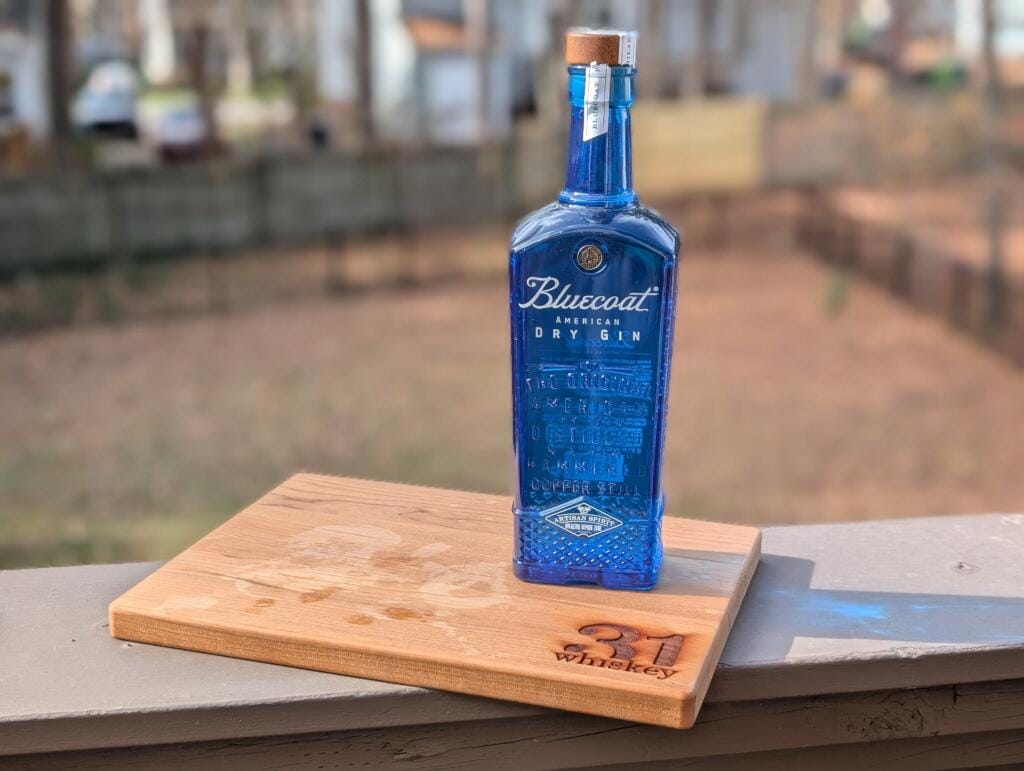
After reviewing over six hundred different spirits, we’re close to filling out our bingo card of at least one reviewed spirit from every state in the union. But surprisingly, one state we haven’t yet tried is the one where this whole enchilada of an experiment started: Pennsylvania. Today we’re reviewing a gin from the oldest craft distillery in the state, and a spirit that pays homage to the boys in blue who helped found this country.
History
Robert Cassell was working for the Victory Brewing Company in Pennsylvania when he felt the urge to take that delicious beer and make it even better. After taking courses on distilling through the Heriot-Watt University in Edinburgh, Scotland in 2005, he partnered with his uncle Andrew Auwerda and a third partner named Timothy Yarnall to launch the first craft distillery in the state of Pennsylvania.
The concept was so new at the time that, when they went to file the paperwork with the state of Pennsylvania, the state realized that the necessary forms didn’t even exist and created them specifically to let Cassell apply for his license.
Originally located in an office park in northeast Philadelphia, the distillery purchased a hand-hammered copper pot still and got to work making something delicious. One of the first spirits to roll off the production line was Bluecoat American Dry Gin in 2006, named in honor of the Continental Army during the American Revolutionary War who wore blue colored coats as opposed to the bright red coats of their British opponents.
Product
- Learn More: What Is Gin?
As is typical of a gin, this starts with a batch of neutral grain spirits that are imported into the facility. This is pretty much just raw alcohol with no flavor whatsoever, and provides the blank canvas that the distillery uses for their gin.
Once at the facility, botanical herbs and spices are placed into the raw alcohol like a giant teabag and allowed to steep (or “macerate”) for a period of time. The distillery doesn’t disclose the specific components of their blend of ingredients, but do note that it includes American citrus peels, juniper berry, as well as angelica and coriander.
Once properly infused, the alcohol is re-distilled through their hand-formed copper pot still and condensed back into crystal clear newly made gin. This is then proofed down, bottled, and shipped for sale.
Packaging
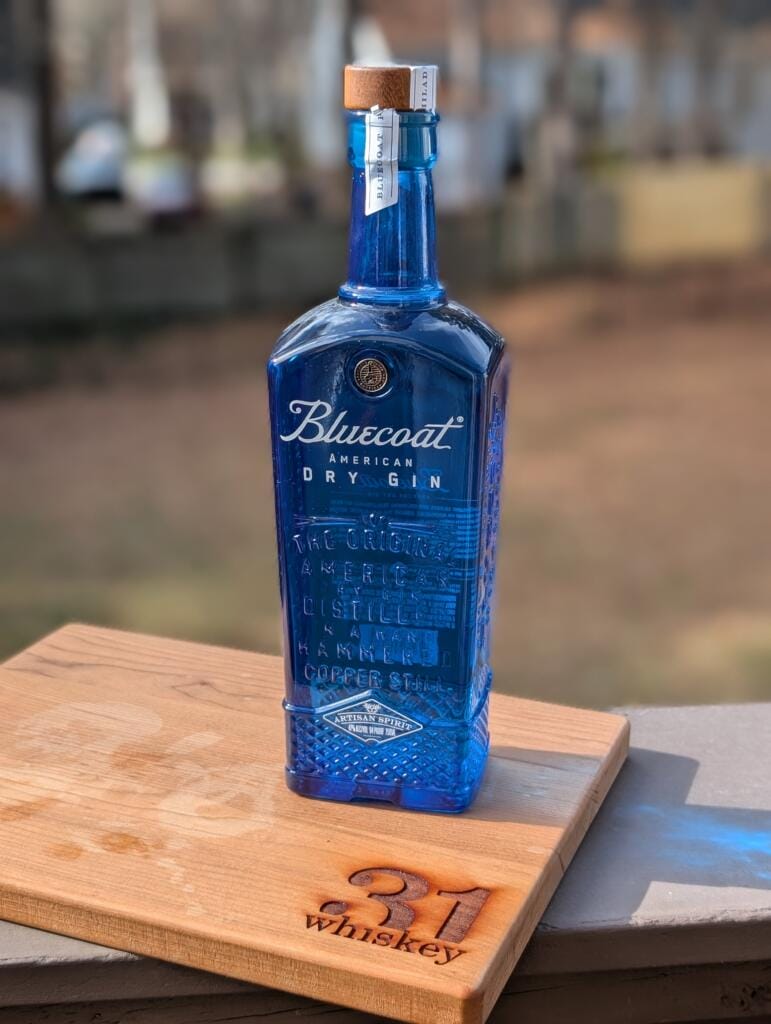
Legend has it that the famous red coats worn by British soldiers were intended to make them stand out and be imposing on the battlefield. Well, in this case, the blue tinted glass on this bottle seemingly has the same impact… just now, it’s on the liquor shelf.
Instead of a traditional bottle shape, this bottle is much more angular and stylistic. The body is a roughly square cross section, with some knurling around the bottom of the bottle as if to let you grip it better. The body flares outwards towards the shoulder, looking like the broad shoulders of a soldier standing at attention. That’s capped off with a medium length straight neck and a wood and cork stopper.
There is no proper label on the front — instead, the information is either painted onto the bottle or embossed into the glass itself. This is normally where I’d praise that choice for letting the spirit shine through and be seen… but the completely blue tinted bottle prevents that from happening. Then again, with something as boring looking as gin, I really don’t blame them for choosing the more visually striking blue glass instead.
Neat
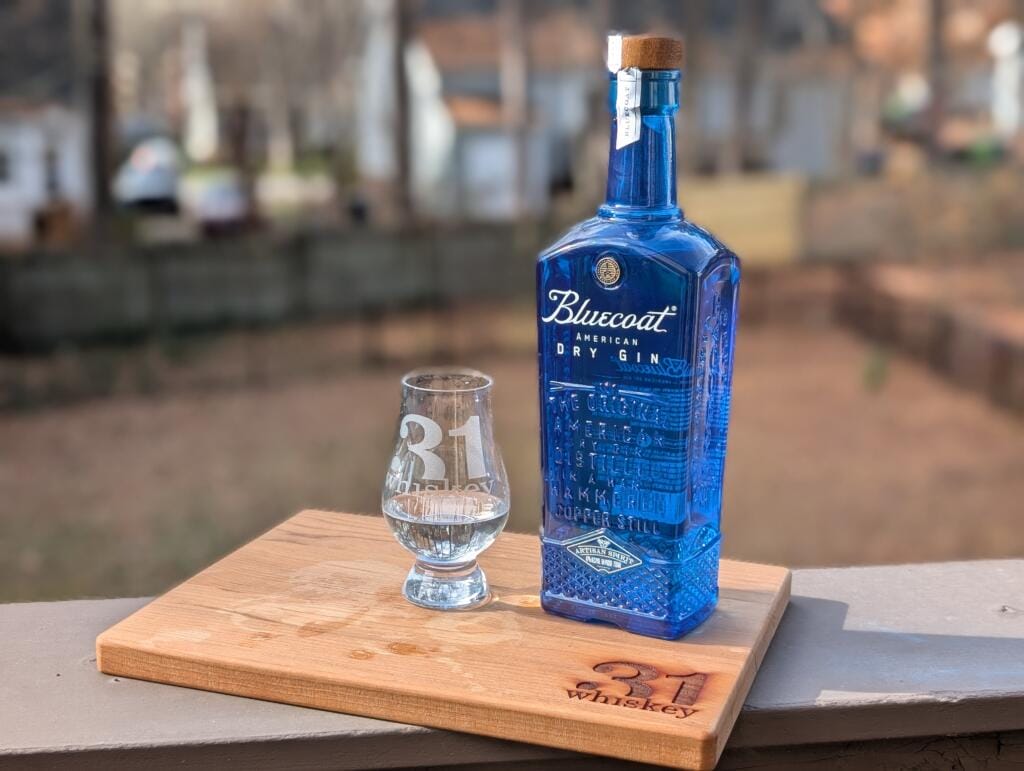
The defining feature of an American gin as a style of spirit (as opposed to the traditional London style gin) is the lighter use of juniper and the heavier focus on other herbs and botanicals. But even as I pour the first drops, I’m already getting that “pine forest in winter” kind of aroma. Given further inspection, I do get some coriander spice and lemon peel, and a general floral impression.
After taking the first sip, the flavor profile is an almost complete 180 from the aroma. The juniper is there, but it’s a supporting character in the far background compared to the other flavors in here. Most prominent is the lemon citrus and coriander spice, with what tastes like some orris root and some orange zest. There’s a bit more richness to the flavor than just the lemon citrus, which gives it a bit of weight and keeps it from being too light and airy.
All in all, a nicely balanced and sippable gin.
On Ice
My biggest concern here was that the lighter citrus flavors would fade too much once the ice is introduced to the glass, and that does happen to some extent. But that richness and saturation from the orris root and coriander spice provide enough grounding to keep the flavors from being washed out, and the lemon citrus is simply a lighter component in the background. As for the juniper, the only place I’m really seeing it is on the finish if you look closely enough.
The profile is simple and uncomplicated at this point, but with a solid base. Which might be the ideal balance to strike in a spirit designed to be mixed more than anything else.
Cocktail (Gin & Tonic)
The key to a good G&T, in my opinion, is the citrus. Otherwise, it’s just watered down juniper in a glass.
And in this case, I think the inherent hint of lemon citrus in the gin itself does a great job elevating and highlighting that flavor, making for a really bright and cheerful cocktail that is a delight to sip.
(Pro tip: my wife and I made some candied lemon slices over the holiday, which resulted in an abundance of lemon simple syrup. A dash of that syrup is perfect in this cocktail.)
Cocktail (Negroni)
The negroni isn’t usually my cup of tea. There’s usually too much bitterness in this cocktail to really make me commit for an entire drink. But in this case, I think it works.
The key is a well saturated base of flavors — the coriander and orris root kinds of components. This provides enough of a foundation to support the Campari without the bitterness overpowering the rest of the flavors. Add in a splash of lemon from the gin and you’ve got a pretty good cocktail.
Overall Rating
I like this gin. It’s a good spirit, with good flavors, that gets the job done. I especially like the well saturated foundation that it lays for other cocktails, which is exactly the kind of thing that I’m looking for when picking something for mixing drinks. It comes from an honest background, in a good looking bottle, and is absolutely worth the price of admission.
The only reason it isn’t getting a better rating is the competition. I think of this gin specifically compared to the Yaupon Gin from Treaty Oak or the Sunday Gin from You & Yours — and in both of those cases, for roughly the same price point, you’re getting something with more complexity or with a unique ingredient beyond the normal fare. That’s what I’m missing in the Bluecoat, and why I think the other spirits just edge it out in the competition.
| Bluecoat American Dry Gin Production Location: Pennsylvania, United States Classification: American Gin Aging: No Age Statement (NAS) Proof: 47% ABV Price: $31.99 / 750 ml Overall Rating:    |
Overall Rating: 3.5/5
A delicious, simple American style gin.