
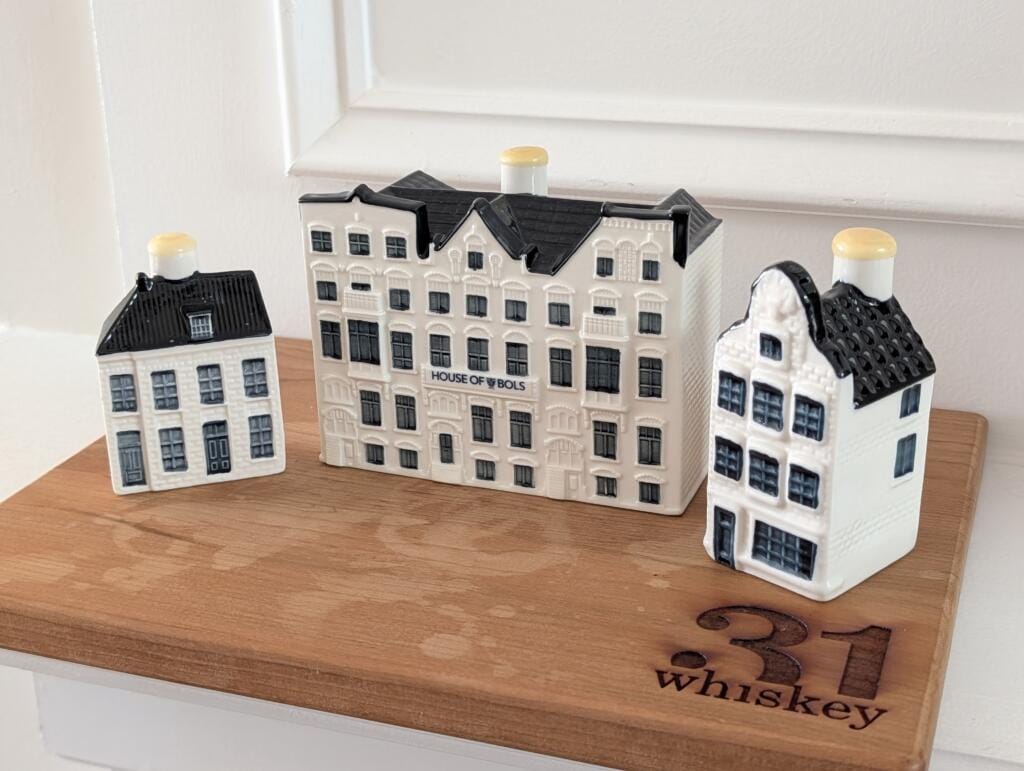
You may have noticed that things have been a little quiet over the last few weeks here, and that’s because I was out of the country on a proper vacation for most of October. But during my travels, I did run across a couple interesting things that to share — starting with a flight memento many an aviation geek might recognize.
Quick disclaimer: I want to highlight up front that this review will deviate slightly from the normal process. Since the specific product we are reviewing only contains 35 ml of spirits, we can only review this spirit neat. It’s a limitation, but I think we can still give this product the review it deserves.
History
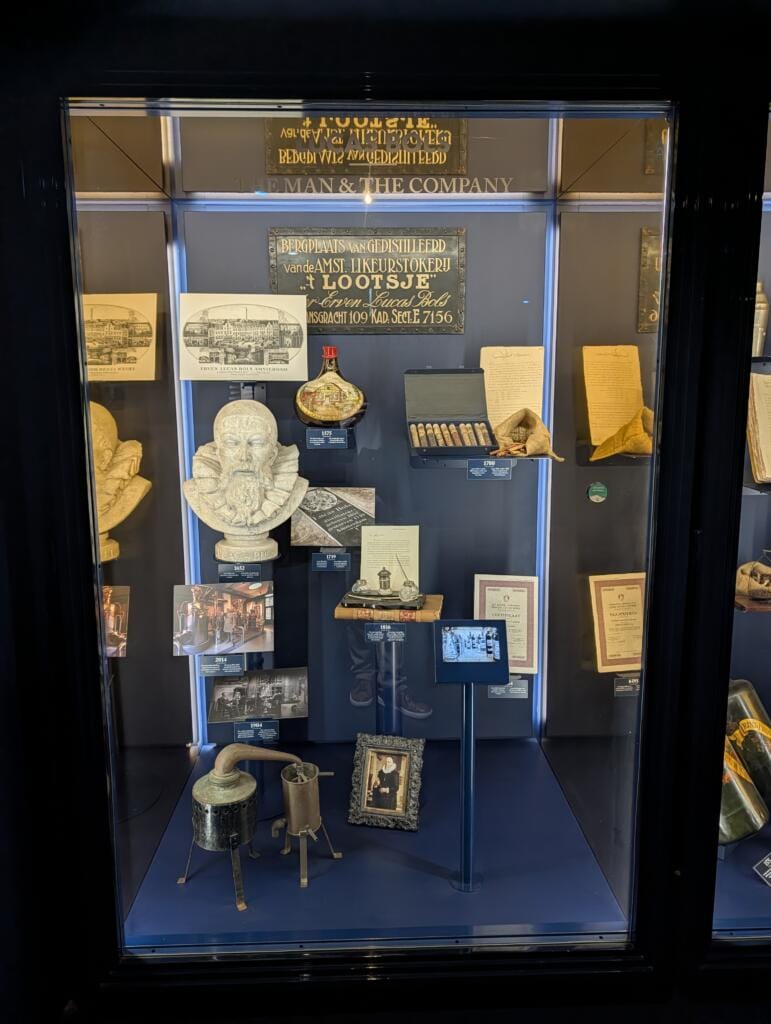
The Bols family distillery was founded in 1575 adjacent to a small stream outside the city walls in Amsterdam and began producing genever — a traditional Dutch alcoholic liquid produced by distilling local Dutch moutwijn (malt wine) to at least 50% alcohol by volume. The resulting spirit was notoriously awful tasting, which resulted in most distilleries (including Bols) adding juniper berries to provide some flavor to mask that awful taste. This process would eventually be adapted over the years and become the common “gin” that we know and love today.
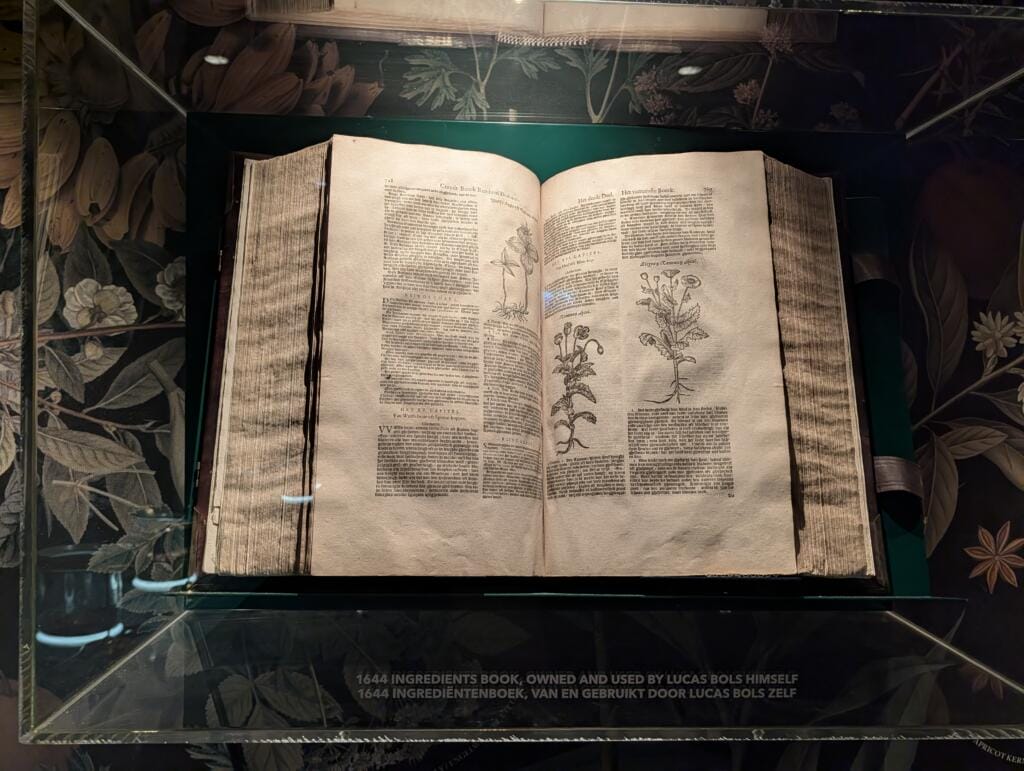
For roughly a century, the distillery turned a reasonable profit for the family, and the Bols family became wealthy investors in the Dutch East India Company. In 1652, the modern distillery’s namesake Lucas Bols was born, coinciding with the height of the Dutch trading empire that enabled exotic spices and herbs to be transported from across the world back to Amsterdam for the enjoyment and profit of its citizens. Lucas capitalized on this availability of exotic ingredients and used them to make new versions of genever and liqueurs, making the Bols family distillery an incredibly popular and even more profitable business.
(Fun fact: the painter Rembrandt van Rijn lived down the street from the distillery for about eleven years between 1658 and 1669, and records from the time indicate that he and the Bols family had a friendly relationship.)
Over the next two centuries, the Bols family grew disinterested in the distillery. With the passing of the last male heir to the Bols family name in 1813, the distillery was sold to an investor with the requirement that the Bols family name remain on the label. The original facility closed in 1889 when the canal adjacent to their location was filled in to make what today is known as Rozengracht street in Amsterdam (immediately south of the Anne Frank house), and a new facility was established elsewhere in Europe.
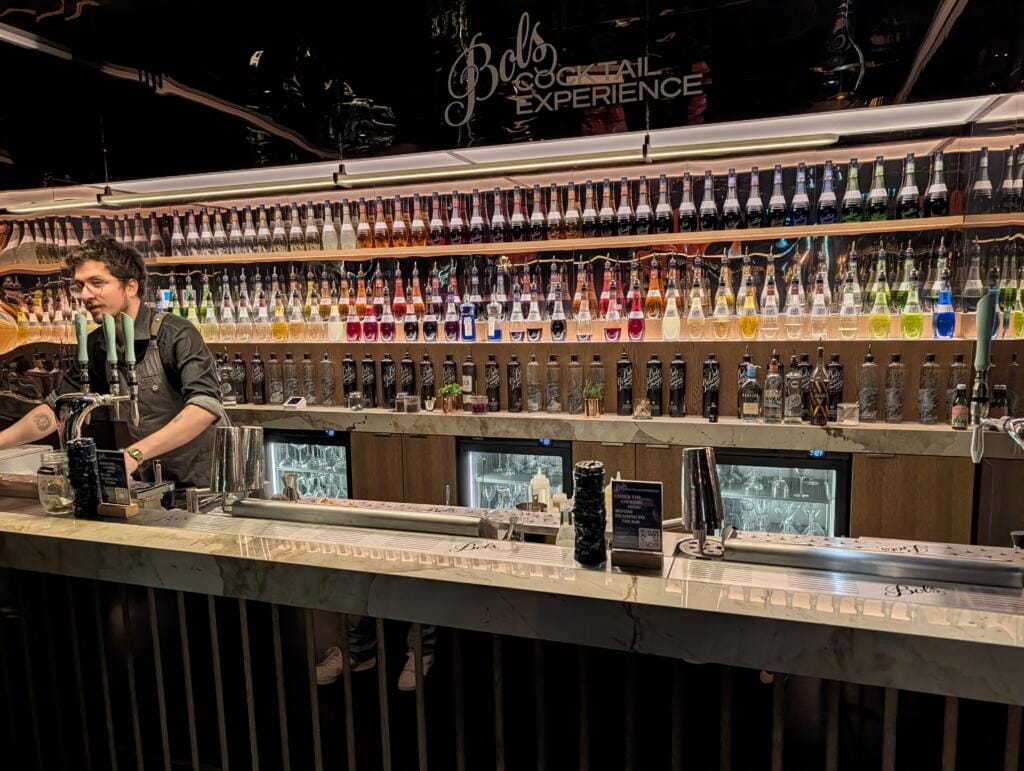
Throughout the years, the distillery continued to change ownership repeatedly — most recently being part of the French based Remy Cointreau spirits corporation. In 2006, Remy Cointreau pivoted to focus on their premium brands and sold their ownership interest in Lucas Bols to a combination of a European investment fund and one of the board members of Remy Cointreau. The new management revitalized the company, invested in a new distillery and a new showroom in Amsterdam adjacent to Museumplein, and expanded the brands produced under the Lucas Bols name. Today, the Lucas Bols distillery produces a rainbow of flavored liqueurs as well as the traditional Dutch genever and other spirits.
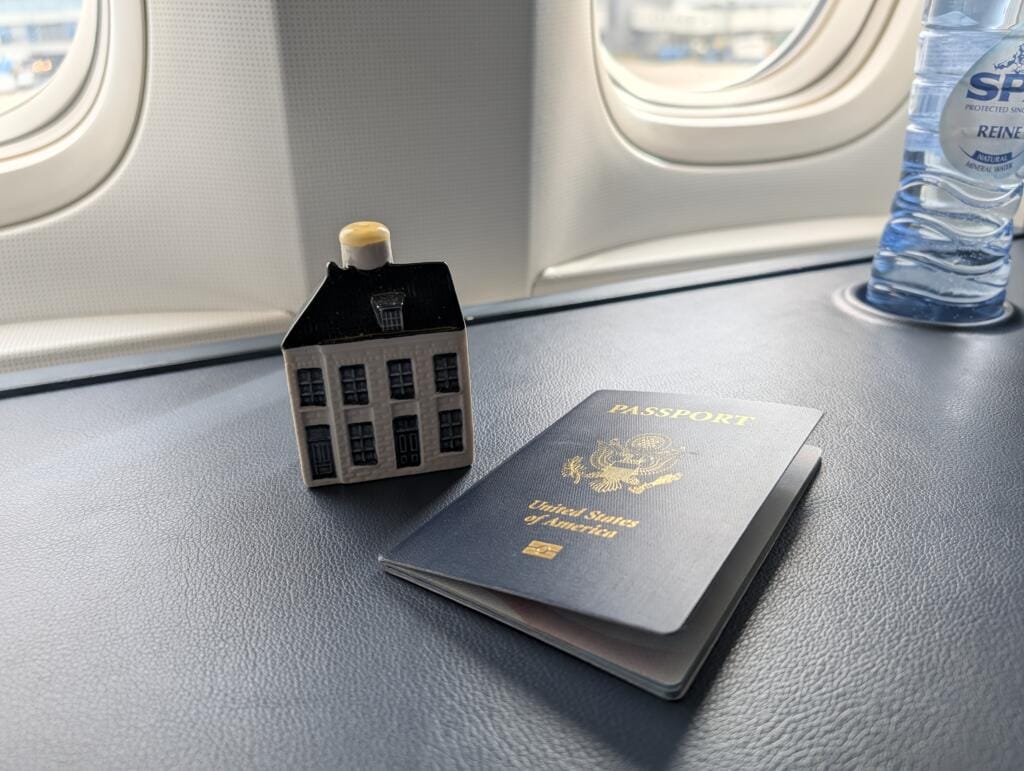
Royal Dutch Airlines (known by their Dutch initials KLM) is the flag carrier for the nation of The Netherlands, headquartered at Schiphol airport near Amsterdam. Founded in 1919, it is one of the oldest continuously operating airlines in the world.
In 1953, during a period of increased competition for air travel following the end of World War II and a rapidly improving European economy, KLM sought to differentiate its services by presenting a more welcoming and friendly atmosphere that also highlighted the history and unique architecture of its hometown of Amsterdam. The way it chose to do this was by providing passengers with a small gift in the form of a miniature model of a canal house made out of traditional white and blue Delft porcelain (a technique mastered by imitating the Chinese porcelain that had been brought through the region as part of its rich trading history over the centuries).
Naturally, the competition was not happy. A longstanding convention was in place prohibiting the use of gifts for passengers to entice them onto flights. KLM smartly circumvented this prohibition by filling the houses with a portion of gin and claiming that they were merely serving drinks to passengers, just like every other airline (albeit in a better container).
For the contents they selected the Simon Rynbende distillery to produce a traditional Dutch genever to be sealed inside the houses, a distillery which had been operating since 1793. That distillery was eventually purchased in the 1980s by Lucas Bols while it was owned by Remy Cointreau, and the Lucas Bols distillery continues to produce these genever filled houses to this day.
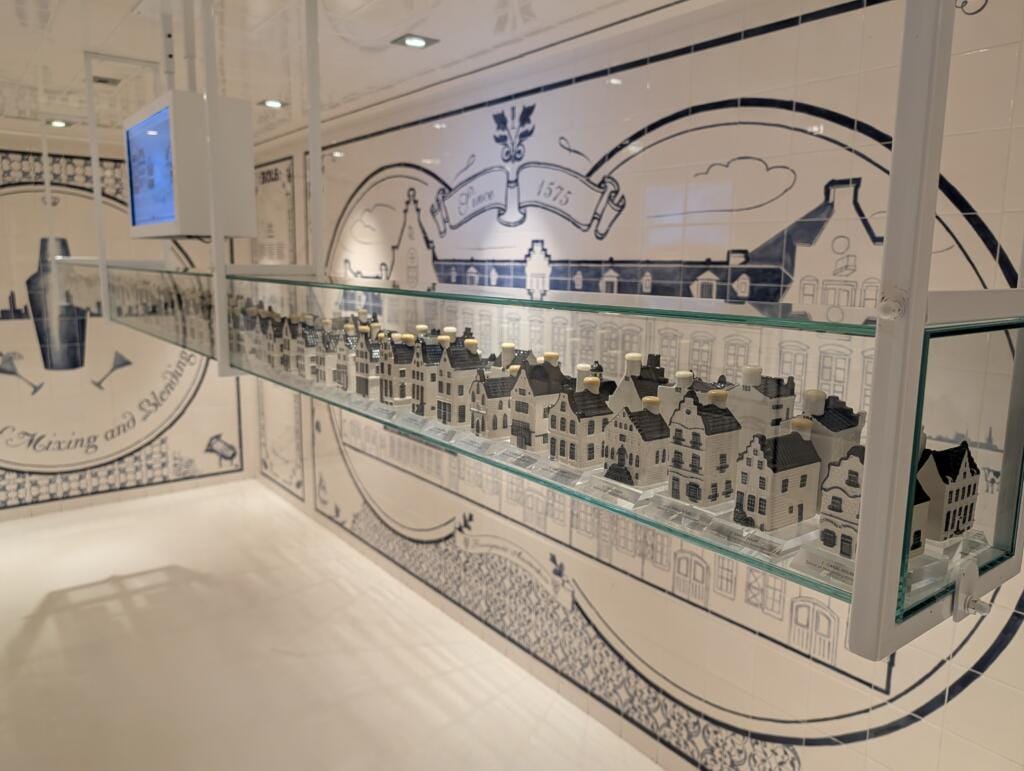
The modern KLM Delft Blue houses continue to be produced and offered to passengers in Business Class and First Class on transatlantic flights. The company designs and produces a new house for every year of operation for KLM — which means there are currently approximately 106 houses in existence.
The only ways to obtain one of these houses is either by flying KLM in Business or First Class… or by buying one of the limited edition versions at the Lucas Bols experience in Amsterdam. And for this review, we did both.
Product
Today’s version of Lucas Bols genever is still made according to the same recipe from 1820. Not quite as ancient as the brand itself, but still a solid classic.
This spirit starts off as something closer to a whiskey than a gin: a combination of wheat, rye, and corn grains are ground, cooked, and fermented to create a mildly alcoholic liquid called “moutwijn” or “malt wine”. This slurry is then distilled using column and pot stills to concentrate the alcohol within the liquid without losing any of the character, resulting in a relatively low 47% ABV spirit.
Separately, imported neutral grain spirits are macerated together with twenty two different botanical elements including juniper berries, carraway seeds, coriander, and anise for flavoring. This is then blended together with the moutwijn distillate to flavor the resulting spirit.
Once finished, for the standard version of Lucas Bols genevber the spirit is directly bottled for sale. They also produce a barrel aged version that uses French limousine barrels to mature the spirit before being bottled for sale.
Packaging
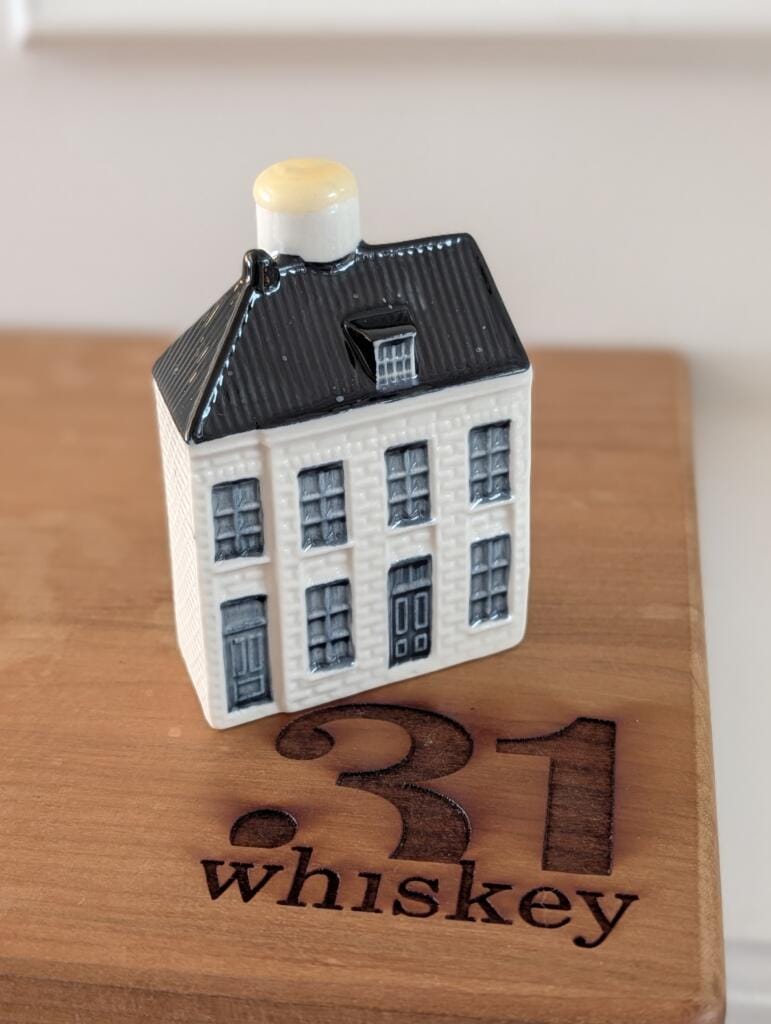
The small houses are produced using Delft porcelain. The Dutch have had a long history trading with far-away lands including China, and Chinese porcelain has long been a prized possession. However, since porcelain has a tendency to break in transit during long journeys, Dutch artisans studied the craft from the Chinese examples that were shipped back home and created their own version of it known as Delft porcelain.
Starting in 1953 and continuing every year thereafter, KLM introduces a new numbered house that represents an actual historical canal house in the city of Amsterdam, each example numbered and collectible.
From an aesthetic point of view, this is phenomenal. These houses are not only attractive, but also emblematic of Dutch history and blend many traditional Dutch concepts and crafts together in one single package.
There is, however, a small problem with utility.
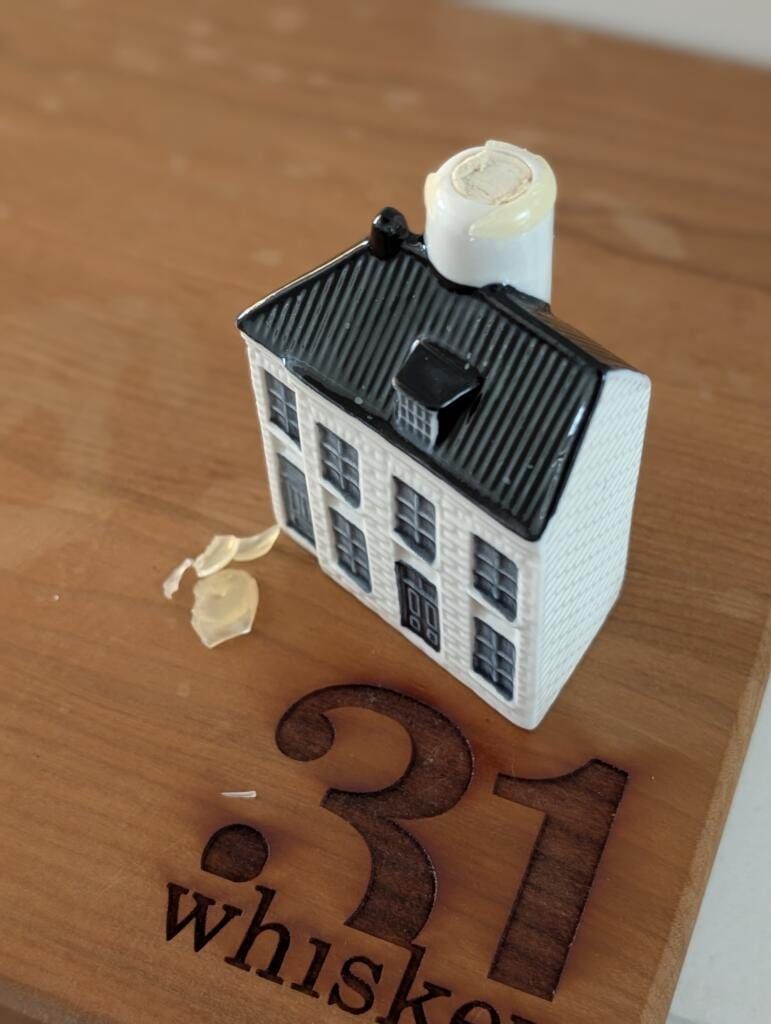
In most cases, the houses are filled with gin (on some routes where alcohol is banned locally, the houses are empty). On top of the house there is a “chimney” that acts as the neck of the bottle, stopped with a cork stopper and sealed with a wax covering.
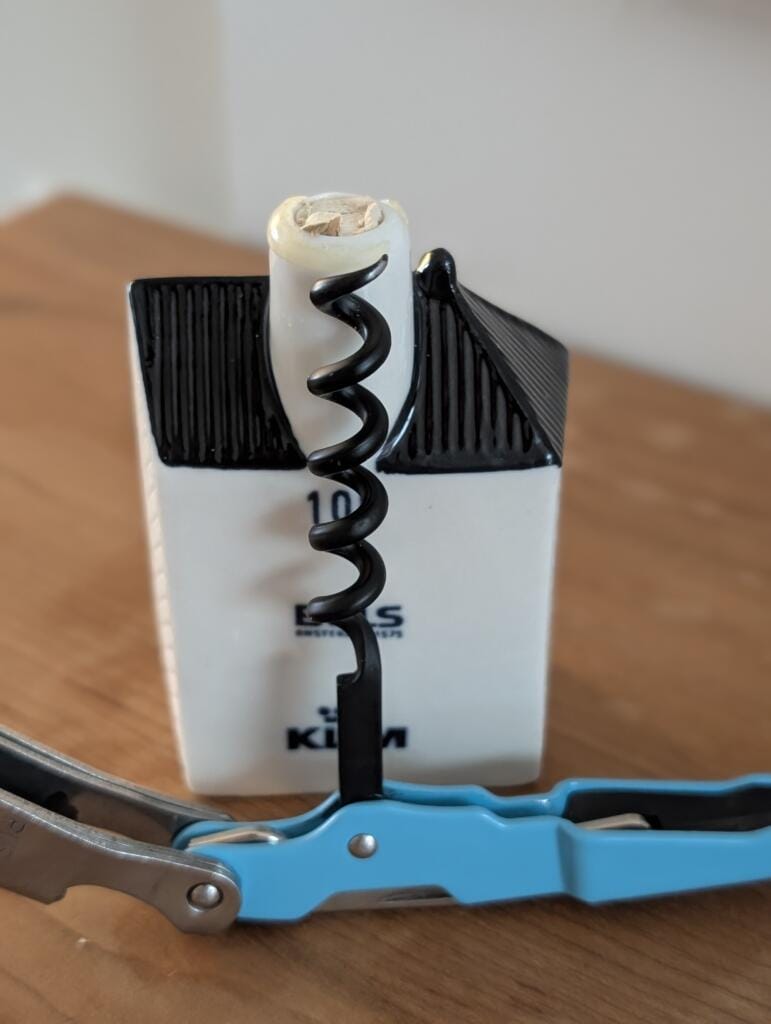
Your first instinct may be to try and take a corkscrew and remove the cork. I don’t recommend this approach — the corkscrew is likely going to be too large, and you might break the porcelain chimney.
Instead, my recommendation is to remove the wax seal on top and then simply push the cork into the body of the bottle. This will allow you to extract the gin within the container without damaging it. And, because the bottle is opaque, no one will ever know the cork is still in there (unless they pick up the bottle).
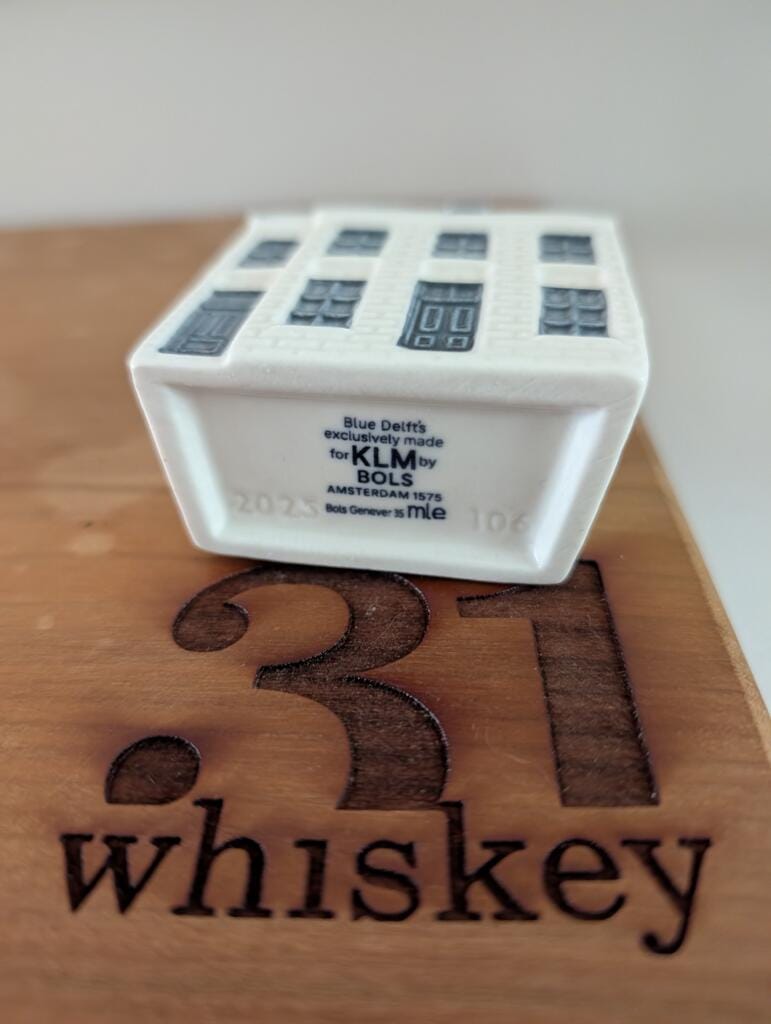
As far as keepsakes from air travel go, this is probably the only thing I’ve actually wanted to keep beyond the end of a trip. Having flown a wide variety of airlines on transatlantic crossings over the years, usually the best that you get is a toothbrush and some earplugs; maybe an eye mask and nice toiletry bag if you’re in business class. In this case, this was something that I truly enjoyed and cherished when I got home as a reminder of the trip my wife and I took to Amsterdam.
10/10 for the packaging.
Neat
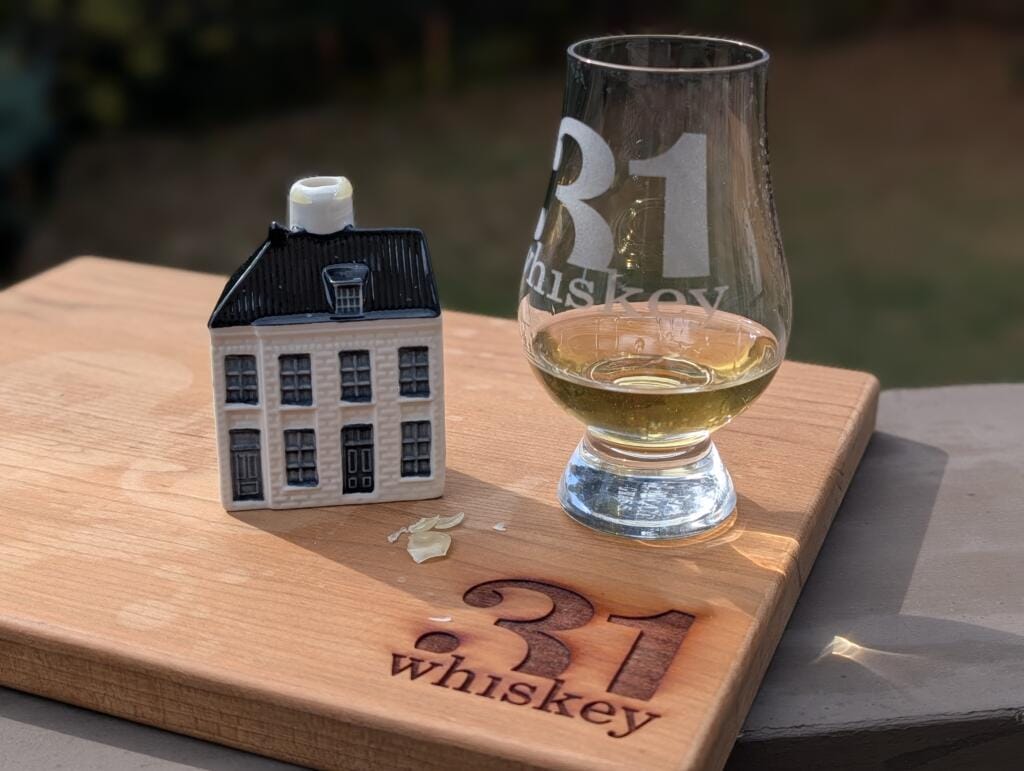
While the standard Bols genever is water white, the liquid in this specific house seems to have a golden color to it. To me that starts to indicate that some barrel aging took place prior to bottling. That idea is supported by the aroma coming off the glass — I’m getting the expected juniper component, but there’s also a significant level of vanilla and brown sugar accompaniment. Those two specifically, the vanilla and brown sugar, are usually hallmark indications of some kind of barrel maturation process for finishing the spirit. Supporting and providing a bit of softness is a malty aroma that helps round out the experience, preventing it from being too aggressive.
Taking a sip, the vanilla and brown sugar components are the very first thing that you’ll notice. It’s a sweet start that, combined with some of that malty goodness we saw in the aroma, makes for a deliciously smooth and sufficiently complex flavor profile. There are some hints of dried fruit along the way that make an appearance such as dried apricot, some lemon peel citrus, and a flash of juniper berries near the finish, but predominantly what you’re tasting is the vanilla, the brown sugar, and the malt.
Overall this is a smooth and delicious spirit. Not overly complex, but likely a good base for cocktails.
Overall Rating
One quick note: the price listed here is for 750ml of the spirit. We based the price on the 35ml version that is available for sale at the Bols distillery experience in Amsterdam. Taken on its own, this is a reasonably priced ~$30 keepsake. But because we normalize the prices to a 750ml bottle, this might be the most expensive liquid we’ve ever reviewed.
Taken solely on the merits of the spirit, this would be an average experience at best. The flavors are good, but there’s nothing really knocking my socks off here. I could see this working as a mixing spirit and making some nice cocktails, but on its own it lacks the depth and complexity that I’d want to see.
Where this really excels is the history, the packaging, and the experience. Putting it all together, these Delft blue houses are the quintessential Amsterdam experience that fits in the palm of your hand.
| Lucas Bols KLM Delft Blue House Bols Genever Produced By: Lucas Bols Production Location: NetherlandsClassification: Genever Aging: No Age Statement (NAS) Proof: 42% ABV Price: $642.85 / 750 ml  |
Overall Rating: 5/5
A delicious (if somewhat boring) spirit — but the packaging and branding that makes all the difference in the world.