
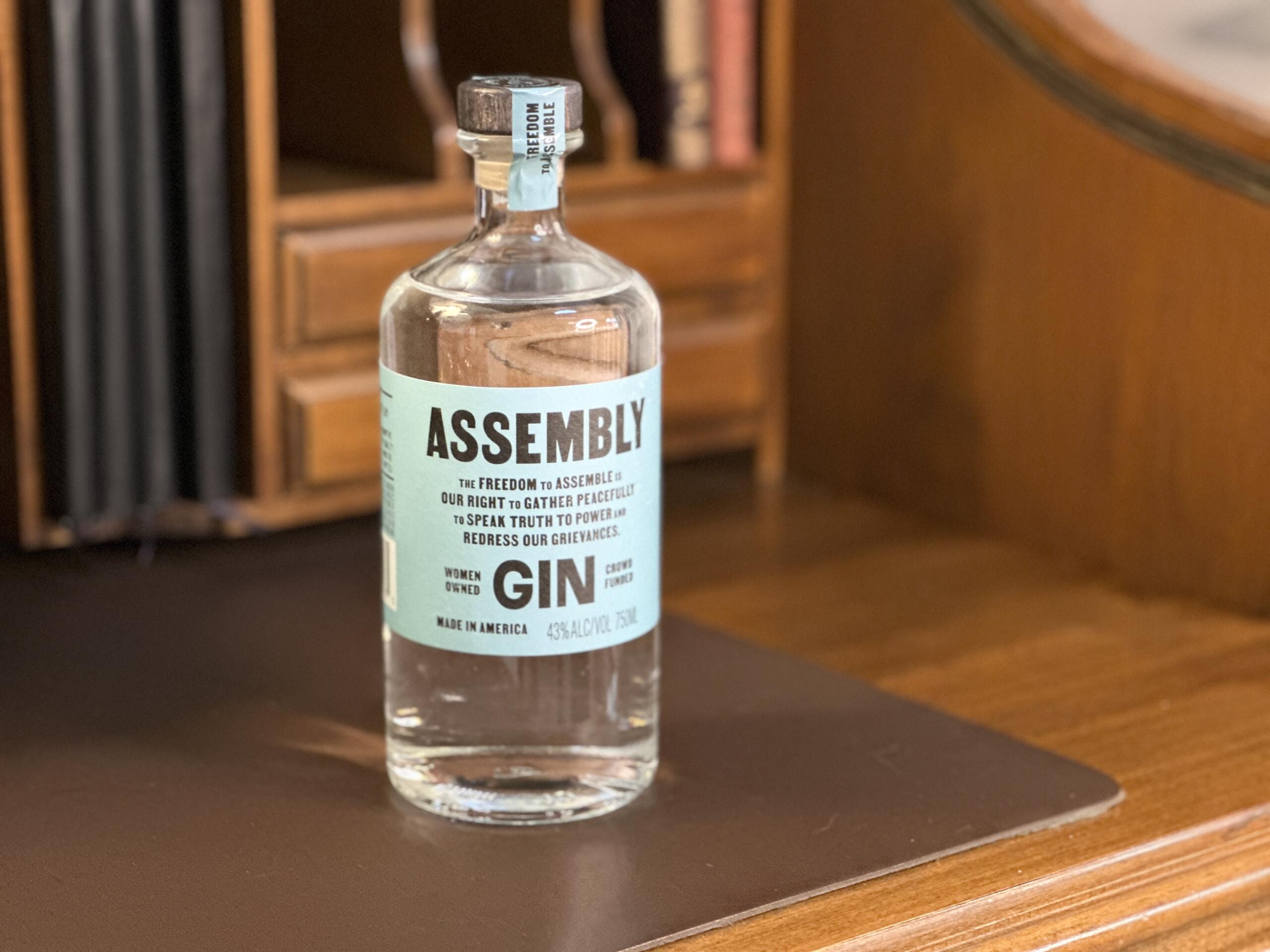
I’ve had a lot of gin in my time reviewing spirits. Plenty of it has been London Dry gin, with it’s heavy juniper forward note; plenty of it has been American gin, with an emphasis on the fruits and other botanical elements. But I’ve never had a savory gin. It’s an interesting idea, and it makes sense that a distillery like Republic Restoratives (which seems to be questioning much of the status quo) would take a stab at it.
History
As you might expect for a distillery located in Washington D.C., the history of Republic Restoratives starts with politicians.
Pia Carusone had built a successful career in politics, serving as Chief of Staff to Congresswoman Gabby Giffords and in 2011 was appointed as the Assistant Secretary for Public Affairs at the Department of Homeland Security. But by 2013, after experiencing the horror of watching her boss Gabby Giffords nearly be assassinated on stage and enduring the grueling world of federal politics, Carusone was burnt out and wanted to make a change.
In her own words, at that point, “[y]ou can’t help but ask yourself, ‘what has my life amounted to, what would I regret’ following an experience like that”. And like so many other burnt-out, high performing professionals before her, she decided to quit the rat race and open a distillery.
Carusone teamed up with lifelong friend Rachel Cole Gardner to realize this dream. Gardner had found her love for fermented drinks in college, starting with making her own beer and eventually moving into the world of distilling in Seattle, Washington. There she worked with Berle “Rusty” Figgins Jr., a consultant distiller and assisted him in building and opening a number of craft distilleries in the area, and also worked on immersing herself in the technical details of distilled spirits by earning a Craft Distilling Certificate from the Spirits Institute of Puget Sound and attending courses at Moonshine University.
Together, Carusone and Gardner had the expertise and the gumption to open a distillery, and a fortuitous change in the laws in the District of Columbia had encouraged new businesses to open there — but they lacked the funding to make that dream a reality. They turned to crowdfunding to get their distillery off the ground, appealing to the fact that this would be the first woman-owned distillery in the District with both founders being members of the LGBTQ+ community to drive excitement and interest in the project, and appealing to their audience with provocative titles for their proposed spirits.
The result was a huge success — the distillery would become the largest crowd funded craft distillery in the world with over $119,500 in funding, opening its doors for the first time on Mother’s Day in 2016.
Product
- Learn More: What Is Gin?
As with all gin, this starts out as a big vat of neutral spirits (essentially just raw, flavorless alcohol). Most distilleries source this from large industrial production facilities rather than making their own, because realistically you just need the alcohol and none of the flavor.
The critical part of this process starts with selecting a number of elements to add to that vat of alcohol as flavoring, much like you’d add leaves to a cup of hot water to make tea. In this case, the specific elements that they use are:
- Red juniper
- Dried tomato
- Fresh basil
- Bay leaves
- Fennel
- Olive leaves
- Mandarin
- Lemon zest
- Local tomato leaf
The really unique items on that list are the olive and tomato leaves, as well as the bay leaves, which you don’t normally see in a gin. This specific gin was created as a nod to the Italian heritage of the founders and their love of those savory flavors, with the “Assembly” name for this product being an apt description and comparison between how the individual components come together to make this delicious spirit and the American right to assembly that is enshrined in our Bill of Rights.
Exactly how these flavors are infused into the gin isn’t disclosed, but the most popular method is to add all of the elements into a large teabag of sorts and simply let that steep (or “mascerate”, if we’re using fancy words) in the alcohol. This allows the essential oils and other elements to be absorbed by the liquid. Once properly infused, that alcoholic mixture is then re-distilled through the distillery’s hybrid pot still, resulting in the crystal clear gin that still retains many of the flavors and aromas from the added ingredients.
As an unaged spirit, this gin is then proofed down and immediately bottled for sale.
Packaging
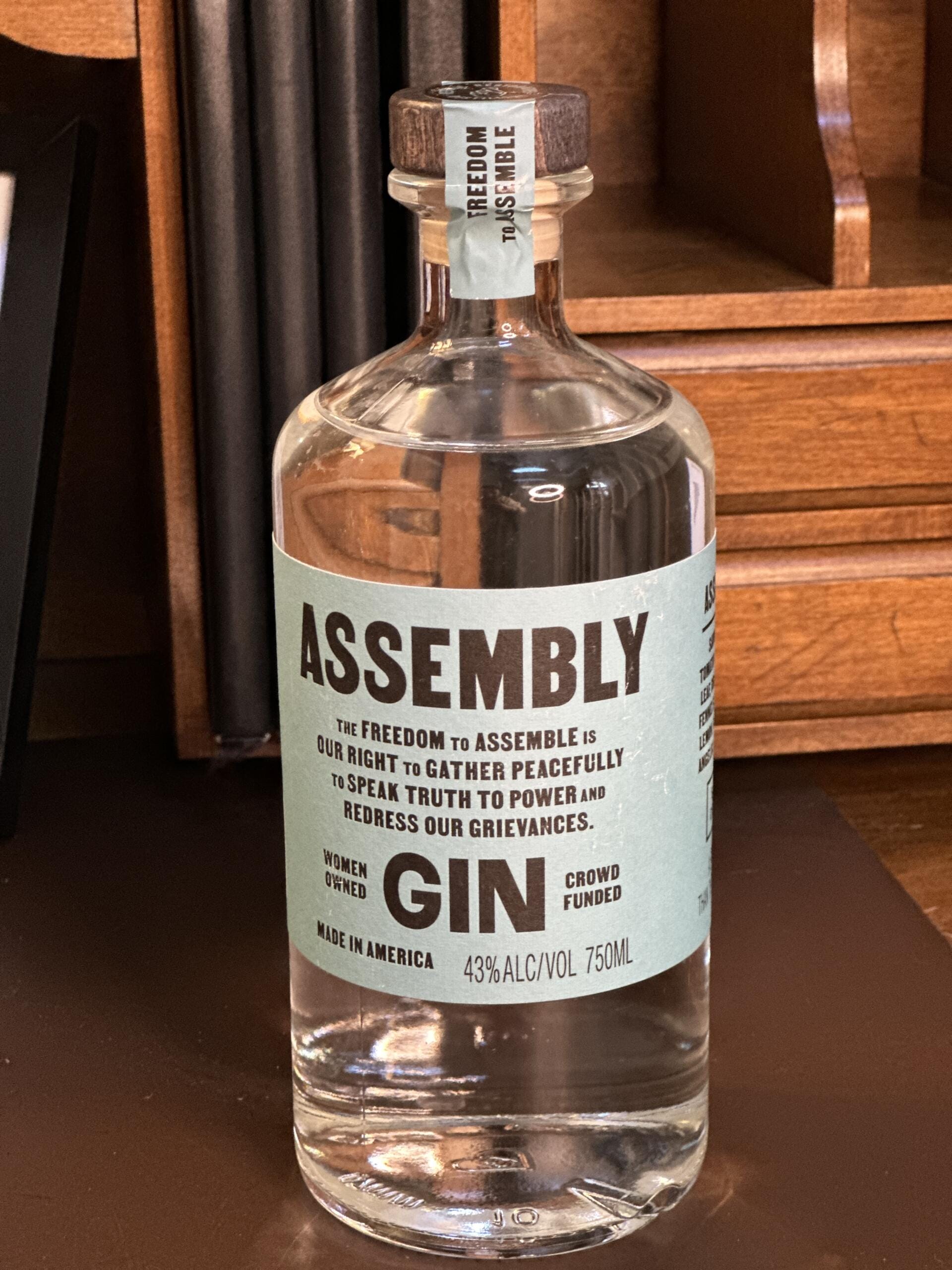
Overall, the design of the bottle is very familiar. The general shape is that of a cylindrical body with a sharply angled shoulder and short neck, capped off with a wood and synthetic stopper. The lip on the mouth of the bottle is wide and flat, allowing for an easy and controlled pour. It’s clean and modern, consistent with other craft distilleries out there.
The label is large, and the central focus of the bottle. Which makes sense — crystal clear spirits tend to be a little boring, so having a label provide some visual elements is a perfect choice. It’s a bold modern design, with a clean light blue background with bold black lettering that conveys the brand information as well as a message about the right to assemble.
Neat
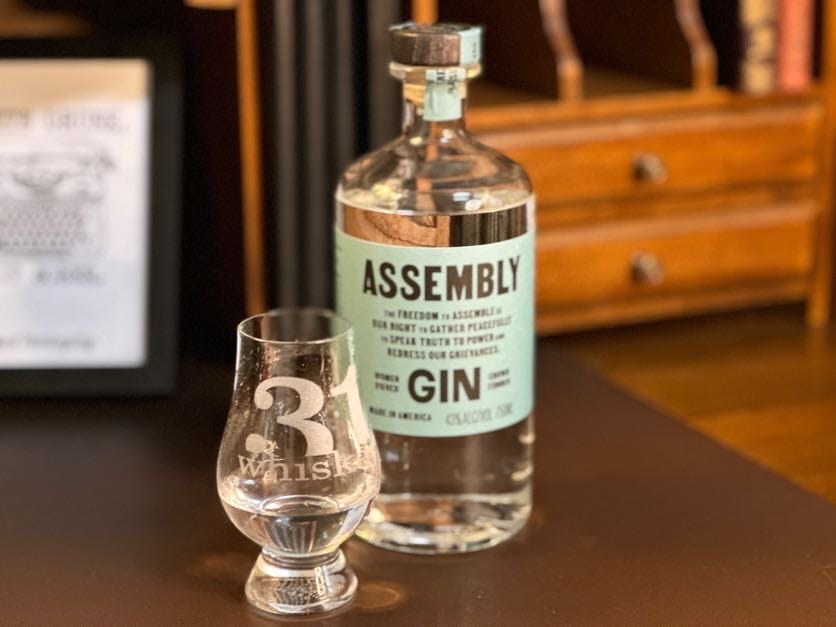
At first, you’d be forgiven for mistaking this for a London Dry style gin. The spirit is clear as water, and there’s a good aroma of juniper coming off the glass. But that juniper is tempered with a combination of lemon zest citrus and savory bay leaves that gives this a richer aroma than I’m used to seeing in a gin.
That savory vibe continues into the flavor profile — in fact, I don’t think I can find any juniper flavor coming through. There’s a bit in the aroma, but the actual flavor is dominated by an immediate note of bay leaves, olives, and some fennel along the way. On the finish, I get a little lemon zest to add some brightness and perhaps a hint of that juniper, but really it’s the soup-like flavors that are headlining this show. While I don’t taste it specifically, I feel like the olive and tomato components are adding an earthy and rich base to this profile that helps ground the whole experience and give it some needed weight.
On Ice
I’ll be honest, I don’t think I’ve had a spirit with bay leaves as one of the key ingredients before. So while I know how a gin usually reacts in a glass with ice, I wasn’t sure how this would turn out. Typically, lighter flavors disappear with ice, leaving the earthier components behind — so my anticipation was that the richer earthier flavors would stick around. Unfortunately, that doesn’t seem to be the case.
What we’ve got here is something that seems to be reverting to an American style gin in spirit. I’m getting a lot of earthy spicy components that taste like coriander and orris root, with a hint of juniper and lemon zest… and not much of the other flavors at all. I could be convinced that there’s some olive flavor in here adding some richness, but in general this tastes like any other American gin on the market.
Cocktail (Gin & Tonic)
If you were hoping that the tonic water and a lime peel would help this situation, you’d be surprisingly correct.
Normally, with a G&T, whatever flavors had started to decline when we add ice to the mix would simply continue down that slippery slope. But here, I think we actually see the savory herbaceous elements rebound a bit. I’m picking up on the basil, the bay leaves, and the fennel especially, with the juniper in the background.
I actually think this is quite nice. Normally, a G&T is a bit one-note and lacking some depth in my opinion — but this gin adds a new dimension to this cocktail that I really appreciate.
Cocktail (Negroni)
I don’t normally actually see the flavors of the gin peeking through in a negroni. It’s just a drink where the spirit is along for the ride and hanging on by its fingernails, fighting to keep things from going off the rails. But in this case, I actually do see some of those flavors coming through. Specifically, I can taste the fennel, the bay leaves, and an interesting spicy note. It isn’t anything more than what I’d call a hint of those flavors, but that’s way more than I usually see.
And especially for this test, the question isn’t whether it’s good, the question is whether you can taste the gin. And the answer here is a resounding yes.
I did also use this in a martini with some lemon simple syrup, and that came out fantastic. The fennel, bay leaves, and that spicy note were all present and danced nicely with the lemon for something that my wife described as “dangerously tasty”. So yes, it does make a good cocktail.
Overall Rating
I love when a distillery tries new things, and especially when that experimentation is tied to the personal history of the distillers themselves. In this case, we have a distillery that chose to do something different than your typical London or American style gin and go for an Italian vibe — and I think that gamble worked out. The flavors washed out a little bit with ice, but both as a Gin & Tonic and a couple other cocktails those flavors came through clearly and made for an interesting cocktail.
It isn’t often that a gin gets a spot on my liquor shelf for future personal use, but this one made the cut.
| Republic Restoratives Assembly Gin Produced By: Republic Restoratives Production Location: District of Columbia, United StatesClassification: Gin Aging: No Age Statement (NAS) Proof: 43% ABV Price: $45 / 750 ml Overall Rating:   |

All reviews are evaluated within the context of their specific spirit classification as specified above. Click here to check out similar spirits we have reviewed.
Overall Rating: 4/5
A gin so Italian that it talks with its hands and makes homemade batches of tomato sauce on the weekends.