
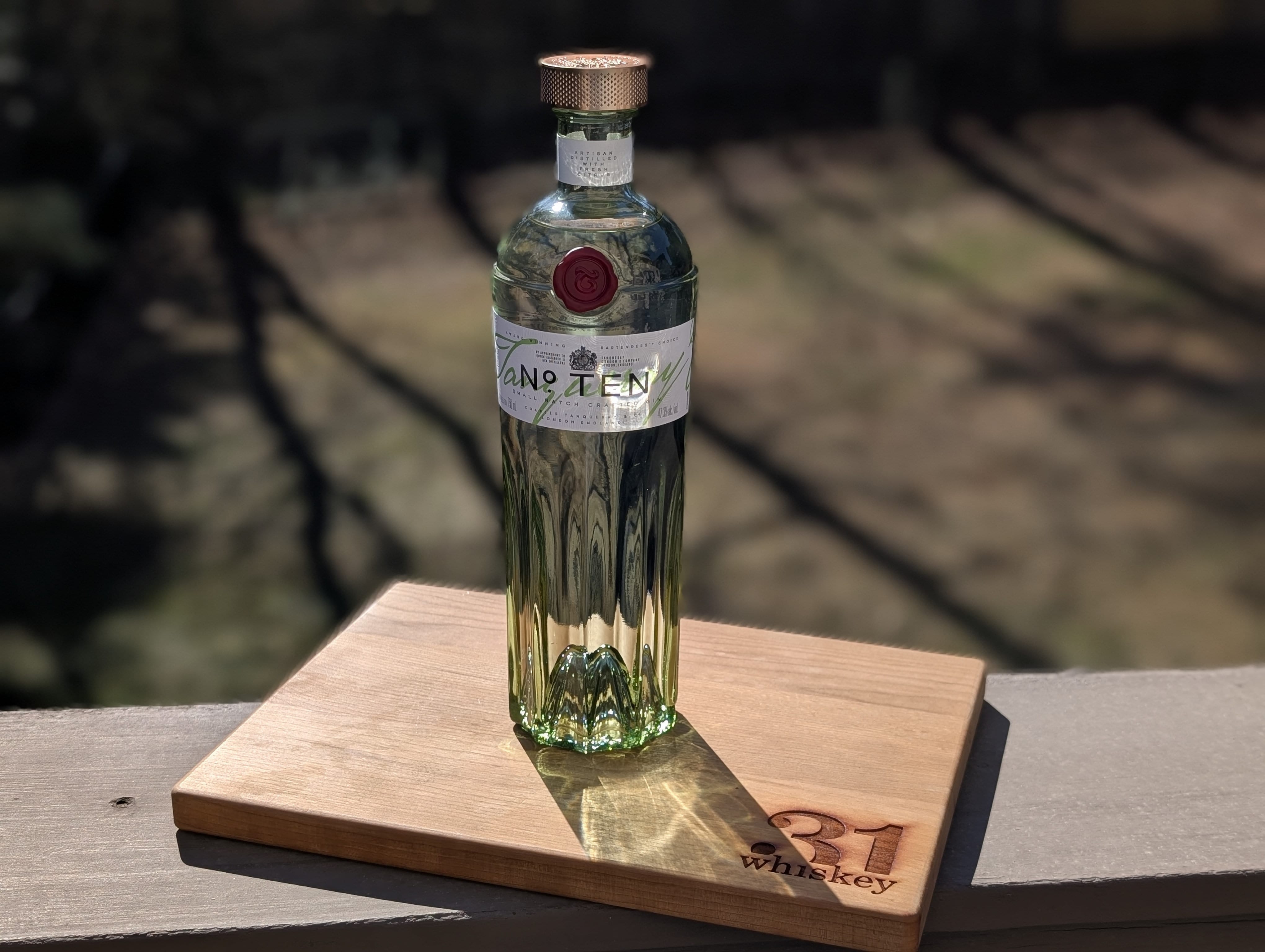
Springtime is just around the corner, and that means a blossoming of floral and herbaceous aromas all around us (…and my allergies making me miserable again, but that’s a small price to pay). I feel like the best spirit for this time of year is a good gin, and thankfully the local liquor store had just the ticket: a bottle of Tanqueray No. TEN.
History
Charles Tanqueray was born in 1810 to a third generation member of the clergy in Bedfordshire, England. At the age of twenty, he decided that the church wasn’t really his scene and started experimenting with spirits production, making the first run of what would become his famous gin in 1830. He and his brother Edward learned about the spirits business at the Curries Distillery and, less than a decade after striking out, they had established a retail outlet named Edward & Charles Tanqueray & Co on Vine Street in London.
Edward did not live long enough to see the business take off, but Charles continued alone and eventually hit on a winning flavor combination for their gin by using just four ingredients: juniper, angelica root, liquorice and coriander seeds. Charles died in 1865, and left the business to his son, who decided to merge with Alexander Gordon & Co (another gin producer) to better compete with the wave of gin distilleries popping up all over London. The two companies split their focus: Gordon’s Gin, aimed at domestic tastes in London, and Tanqueray, focused on the export market (specifically, the United States).
Business was great, with prohibition barely being a stumbling block for the brand. When prohibition ended in the United States, reportedly the first legal cocktail served in the White House was a Tanqueray gin and tonic. The distillery would be bombed into near destruction (with only one still surviving) during World War II, but the company re-built bigger and better on the same site. Even that site wasn’t enough, though, so in 1995 the company relocated to Scotland.
At some point over the years, the company was acquired by the British sprits giant Diageo, who maintains ownership of the brand to this day.
Product
- Learn More: What Is Gin?
The folks at Tanqueray don’t make their own base spirit, and instead use a wheat-based neutral spirit made by the same distillery (and reportedly from the same source spirit) as Smirnoff vodka. Once that spirit arrives at their facility, they directly add to the liquid the same four botanical components that have been used since the 1830’s: juniper, angelica root, liquorice and coriander seeds.
For this specific version of their gin, they go a little off script by adding fresh white grapefruits, whole oranges, and limes in addition to the usual components.
Here’s where things really start to diverge from other gin distilleries, though. Some folks believe that leaving the botanicals to rest in the spirit over a longer period of time will improve the flavor. The folks at Tanqueray don’t agree, and instead immediately add water and begin re-distilling the spirit into gin in their copper pot stills. Tanqueray also uses a one-shot distilling method in which all of the components are distilled together, rather than individually distilling each ingredient and blending together later.
With the No. TEN version, rather than using one of the larger stills, this version is batch distilled in small quantities using the smallest still in the distillery (still number ten, hence the name on the label).
Once the gin has been re-distilled, it is proofed down to a slightly higher than usual 47.3% ABV and shipped out the door.
Packaging
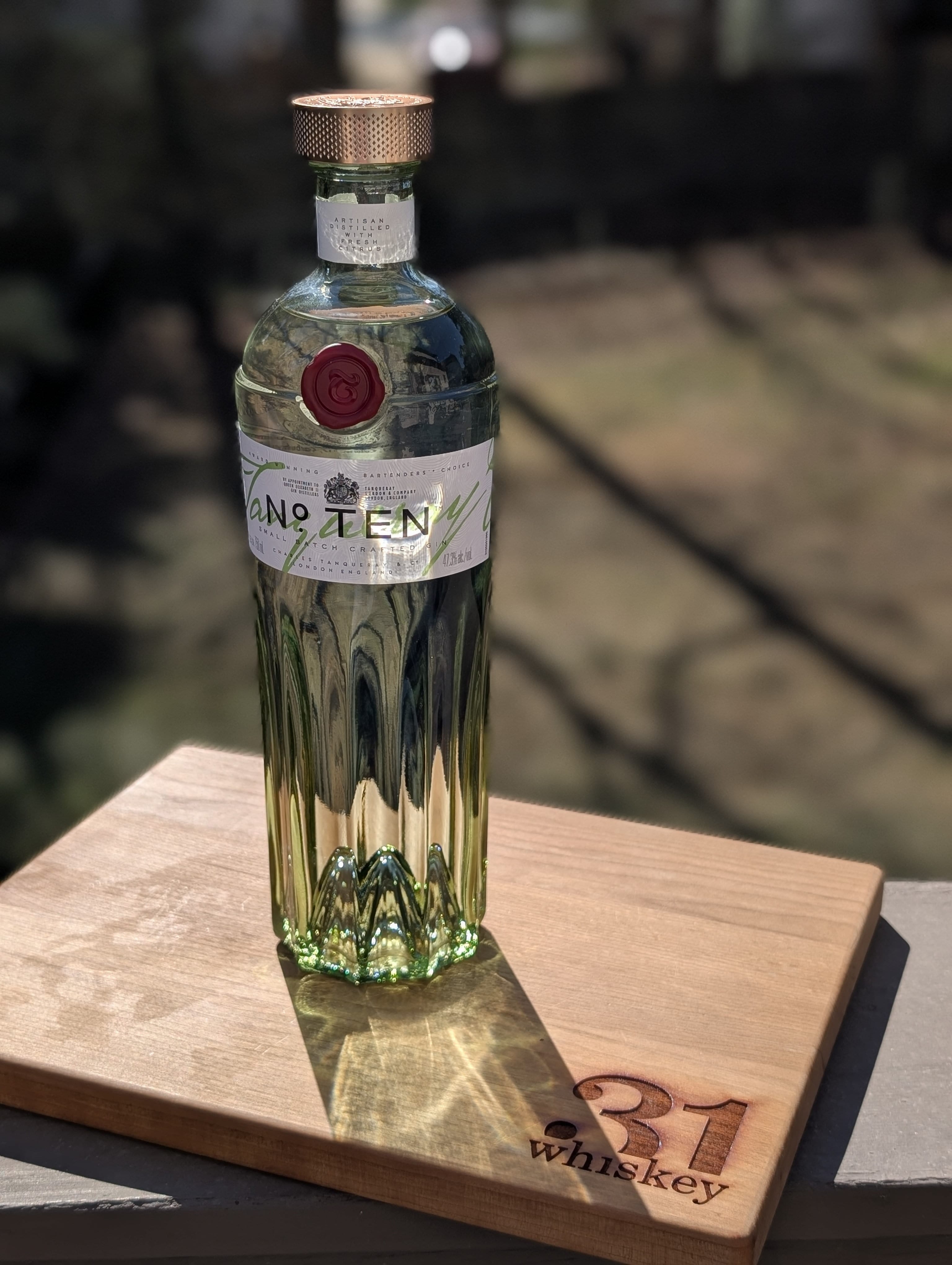
The normal version of Tanqueray uses a bottle shaped like a cobbler shaker, and I’m a big fan of it. Some people might see it as kitschy… and maybe they’re not wrong. But I’m the kind of guy who has a wide variety of tiki glasses specifically for my annual springtime tiki cocktail kick — not everything needs to be refined or minimalist.
But for those who want their Tanqueray classy, this bottle is definitely the bottle for you.
This is a slender, elegant bottle that feels like it should be wearing a striking white evening gown, long white gloves, and smoking a cigarette in a long white holder. Down near the base the bottle has distinct ridges like a cut rocks glass from the 1920’s, which slowly smooths out around the label to a more familiar shape. Up top there’s the traditional Tanqueray cobbler shaker style cap, and the bottle is topped off with a metallic gold (plastic) screw-on cap.
The glass is tinted slightly green. Not quite as electric lime green as the other bottles in this line; instead, its more like the kind of tinting you’d expect from dipping a green watercolor paintbrush in a new glass of water. It really does look great on the shelf.
Even the label is improved. The Tanqueray brand name is difficult to read, looking more like a fancy signature than anything else. The No. TEN brand name is what stands out the most. I get the feeling that is deliberate, with Tanqueray being a known brand quantity. Those that like the brand might still seek it out and get it, but this bottle might surprise and delight some unsuspecting people who hadn’t considered the brand before.
Neat
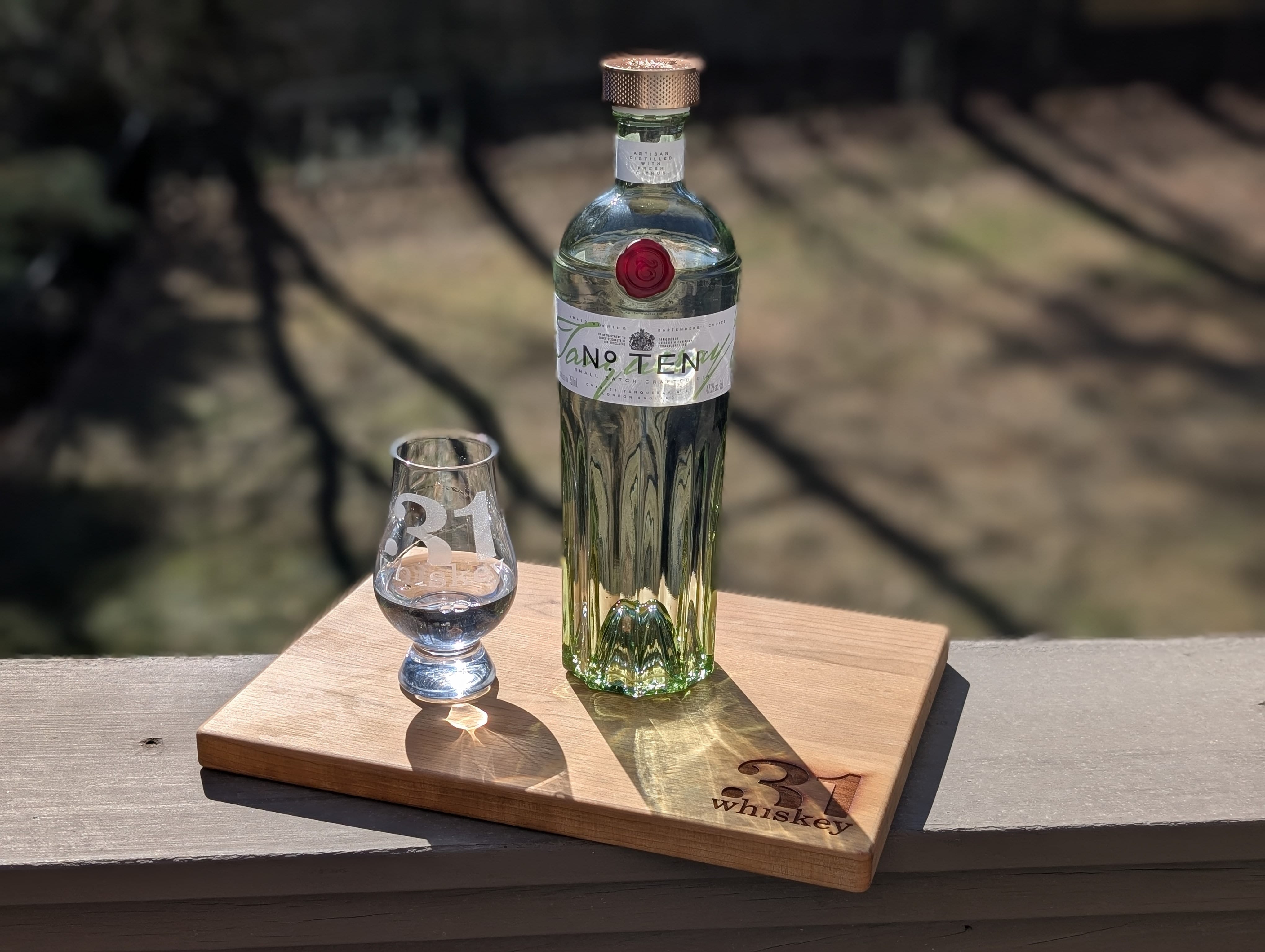
It’s a rare moment when I can confidently say that I smell all of the elements listed in the ingredients of a gin, but here we are. From the coriander to the white grapefruit, the whole gang is here. And it smells just right — light on the juniper, significant contributions from the citrus, and with the licorice providing some great saturation and earthiness to the combination.
Taking a sip, the citrus is the first thing you’ll get. Specifically, the grapefruit and lime comes through cleanly, supported by a hint of juniper. That’s when the whole limes come into play, providing much more sweetness and well-rounded citrus flavor compared to the lime peels that we usually see. From there, the coriander seeds add some lovely spicy notes, the licorice provides some richness and depth for balance, and on the finish the flavors are crips and clean.
Normally, when I say something is a “sipping gin” I expect it to be barrel aged. But this is not barrel aged and yet it’s great all on its own.
On Ice
A gin is typically dependent on botanicals and other lighter elements, and can therefore usually be destroyed by some added ice. But in this case, we’ve got a flavor profile that is heavy on the spices and the citrus elements — and as a result, it comes through not quite unscathed but at least still deliciously drinkable.
The biggest change here is that there is a touch of bitterness on the citrus notes. I think the licorice and angelica root have been toned down and no longer provide enough balance, so the citrus and coriander have conspired to create just a little bit of a bite. It’s not enough for me to hate it, and actually might be interesting in the cocktail tests, but it’s something to note nonetheless.
Otherwise this is still great. Plenty of citrus up front, a bit of juniper, some coriander spice, and a good bit of licorice keeping things grounded.
Fizz (Gin & Tonic)
At this point, I think the spirit is acting more like a typical glass of Tanqueray than anything particularly novel. The biggest elements that I can taste coming through are the licorice and the coriander, with some lime flavor equally attributable to the spirit and the actual piece of fruit sitting on the side of the glass.
If you are going for a G&T, you might want to look into the Rangpur Lime version instead. This is good, but there’s not quite enough distance between it and the normal version to recommend the upcharge.
Cocktail (Negroni)
What I’m looking for in a Negroni are two things: first, whether the spirit is visible through the chaos of the Campari and vermouth and second, whether the cocktail is drinkable.
I’m not sure I can piece out the elements of the gin through the mixers here, to be honest. I might be getting a tiny taste of licorice and some hints of lime, but that could also be the flavor equivalent of autokinesis. It isn’t clearly visible in any case.
That said, the drink is actually drinkable. I don’t hate it, which is a remarkable situation in and of itself (lets just say Negronis are not my favorite). This cocktail usually tastes like gasoline to me, but in this version it seems much more balanced and sedate.
I get the feeling that the licorice and angelica root are doing a lot of that heavy lifting, and for that I am extremely grateful.
Overall Rating
This might be one of my new favorite gins. Top to tails, this is legitimately pretty darn good.
Starting with the packaging, it looks fantastic. The styling is great, and it would be more than welcome on any mid century modern bar cart. Heck, with how good it looks, my wife might even let me keep it out and not hidden under the counter.
Where the rubber meets the road is the flavor — and in that case, this is definitely one of the better versions of gin I’ve had. Very citrus forward, but with enough licorice and coriander spice to give it some depth and character to keep things interesting. It makes for an okay Negroni (which is high praise from me) but is better in tiki cocktails, where it really does shine.
There are other gins that are better, but there are very few of them. And for the simplicity of the ingredient list, this does a fantastic job being balanced and interesting.
| Tanqueray No. TEN Production Location: United Kingdom Classification: Gin Aging: No Age Statement (NAS) Proof: 47.3% ABV Price: $36.95 / 750 ml Overall Rating:   |
Overall Rating: 4.5/5
A citrus forward gin that is well balanced, with some depth and character that you might not often see elsewhere.