
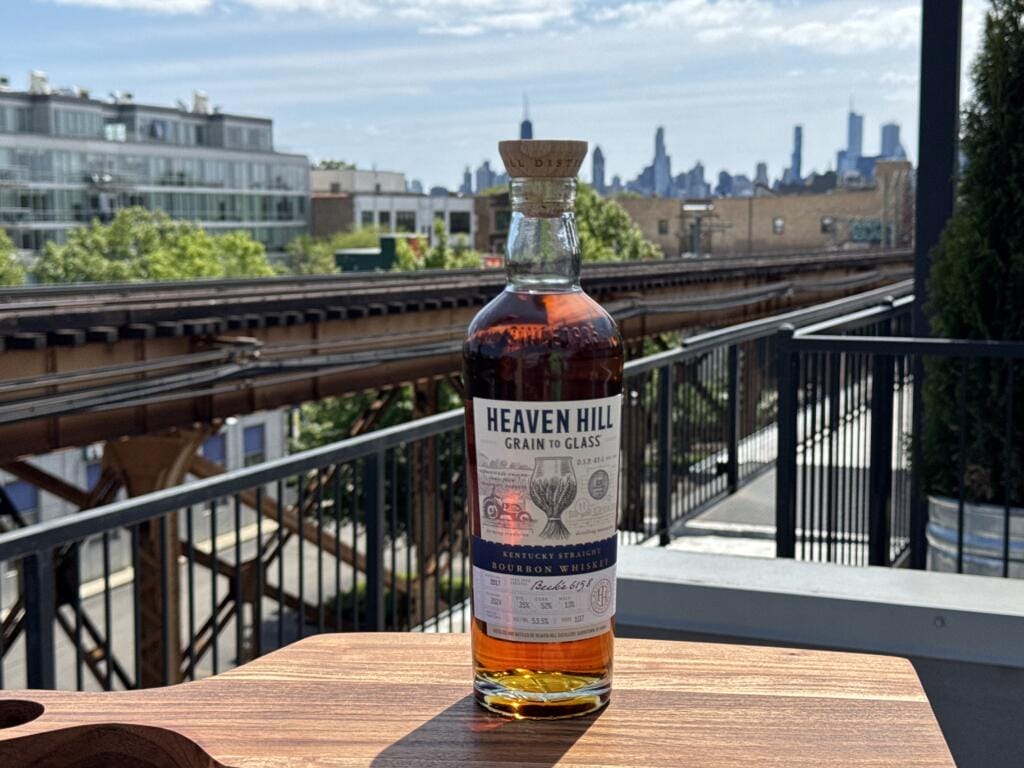
Heaven Hill is one of those distilleries that you just can’t seem to escape. Whether it’s Elijah Craig, Evan Williams, Henry McKenna, or any number of their other brands, their products occupy a massive chunk of the whiskey aisle at your local bottle shop. We’ve reviewed a number of their offerings here at Thirty-One Whiskey, and the results have been a mixed bag. Recently, though, Heaven Hill decided to try something different with their new Grain to Glass series: focusing on transparency and traceability from the seed all the way to the bottle. So naturally, we had to check it out.
History
Established in 1935, shortly after the end of prohibition, Old Heavenhill Springs Distillery was founded by a group of investors in Bardstown, Kentucky. They were gambling on the idea that alcohol production would be a booming business after prohibition and invested heavily in being one of the first companies to service that market. One of those investors was well known distiller Joseph L. Beam (first cousin to Jim Beam), who would also become the first master distiller of the facility.
As the years went on, five brothers in the investment group, the Shapira brothers, bought out all of the other investors to become the sole owner of the business and changed the name to “Heaven Hill Distillery” — which was a typo on the paperwork from the original Heavenhill distillery. Despite being bought out, though, the descendants of Joseph Beam remain the master distillers of the facility to this day.
Their primary distilling facility burned down in 1996, destroying 90,000 barrels of whiskey and lighting the creek that feeds the distillery on fire for nearly two miles downstream. I did a visit to the distillery back in 2024 (more about that in this review of Five Brothers Bourbon) and according to the distillery tour guide, the fire melted 5 fire trucks and burned for nearly 4 days. But they also said that “the truth is agreed upon fiction”… so take that as you will.
Regardless of how long it burned, the business survived and they purchased a new distillery in Bernheim from Diageo in 1999. All production now takes place there, but all aging still takes place at the original Bardstown facility.
That1935 bet has paid off big time. Heaven Hill Distillery is currently the biggest family-owned distillery in the United States and the second largest holder of bourbon whiskey inventory in the world. Their flagship brands include Deep Eddy vodka and Elijah Craig, and their facility hosts the annual Kentucky Bourbon Festival.
Product
- Learn More: What Is Bourbon Whiskey?
The Grain to Glass series represents a new direction for Heaven Hill, focusing on transparency and traceability from the very beginning of the whiskey-making process. The series launched in 2024 with three expressions: a bourbon, a wheated bourbon, and a rye whiskey, each featuring unique mashbills that differ from Heaven Hill’s traditional recipes. Each year, the master distiller works with Beck’s Hybrids to select a specific corn seed varietal, which is proudly displayed on the label. The corn seed varietal chosen for the first edition was Beck’s 6158, and every bottle bears detailed production information including the distillation year, aging location, and barrel entry proof. It’s a bold move for a distillery of this size and scale, and I appreciate the effort to give whiskey enthusiasts a deeper connection to the liquid in their glass.
My bottle was distilled in 2017 and bottled in 2024 at cask strength (107 proof). As a Kentucky Straight Bourbon Whiskey, the grain bill must start with a minimum of 51% corn, and this specific Grain to Glass bourbon features a mashbill of 52% corn, 35% rye, and 13% malted barley — a dramatically higher rye content than Heaven Hill’s traditional bourbon recipe (78% corn, 10% rye, 12% malted barley), which is used for brands like Elijah Craig and Evan Williams.
Those grains are milled, cooked, and fermented to create a mildly alcoholic distiller’s beer, which is then distilled at the Bernheim Distillery in Louisville, Kentucky. The resulting new make whiskey went into the barrel and was aged for just over six years at Heaven Hill’s Cox’s Creek rickhouse on the third, fourth, and fifth floors (higher in the rickhouse for wilder temperature swings during the day — and ideally, a more flavorful whiskey).
Packaging
I like the overall vibe of the Grain to Glass bottles. The bottle itself is a tall cylinder that’s narrower at the base than at the shoulder, with a gently sloping shoulder that tapers up to a short, bulbous neck. It’s topped with an oversized cork stopper that gives the whole thing a premium feel. Each variety in the series shares a similar look, but with a different color to distinguish them: bourbon is blue, rye is green, and wheated is red.
It’s a good looking bottle that has a decidedly higher-end feel to it, which is appropriate given the price point. And that feel is present both when you’re pouring and when you see it on a shelf. I appreciate that Heaven Hill invested in new custom glassware for this line — it signals that this isn’t just another limited release destined to disappear, but rather something they seem intent to build on for years to come.
The label is where things get interesting. Heaven Hill went all in on the transparency angle here, packing the label with production details that you rarely see from a distillery this size. I first started to see this approach from Bardstown Distillery, and really have come to appreciate the transparency. Not only do see the exact mash bill, but you’ll find the specific corn seed varietal (Beck’s 6158), the distillation year, and the aging details all right there on the bottle. The label itself features custom illustrations that include a blueprint of the Bernheim Distillery and designs depicting farming tradition. Overall, the packaging is a win: it looks good on the shelf and communicates exactly what this product is trying to be.
Neat
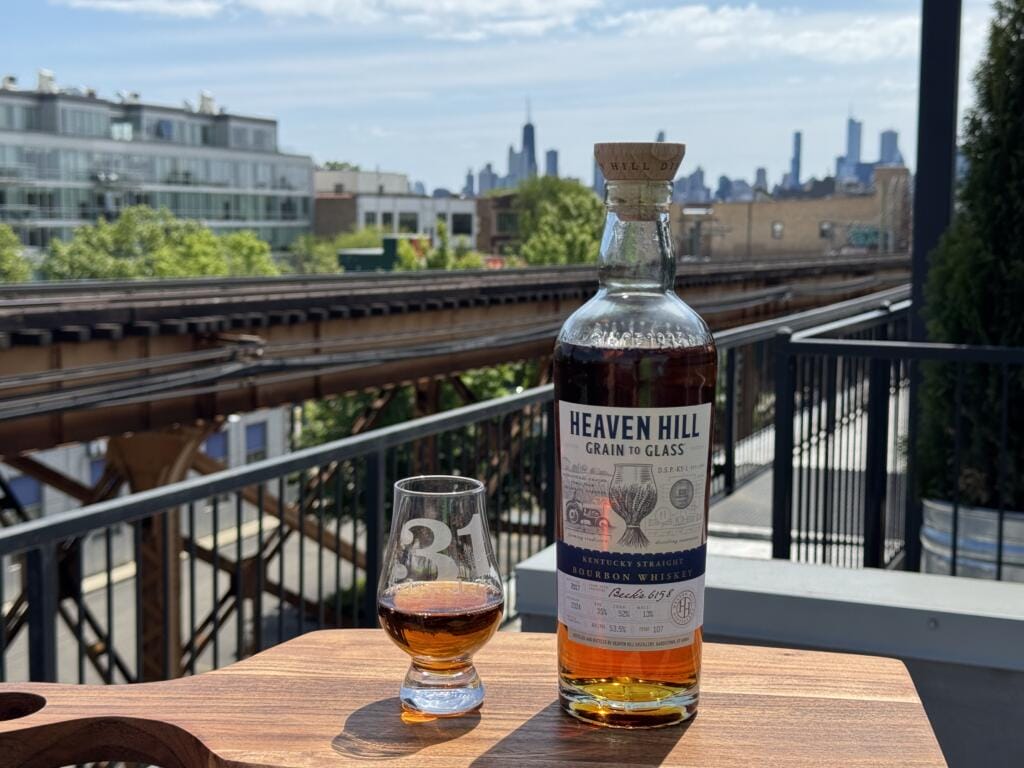
The nose on this bourbon is sweet and welcoming right out of the gate. A vanilla aroma leads the charge in a way that only a classic Kentucky bourbon could. Behind it, a mild spice reinforces the character you’d expect from a high-rye mashbill… and if you spend a little time with the glass, a faint raisin note surfaces in the background. It’s a pleasant, well-composed aroma with nothing aggressive and nothing out of place.
Taking a sip of this bourbon neat is a genuinely enjoyable experience. The flavor is bold and immediate: rich caramel and toffee arrive first, with a hearty grain backbone. The second sip allows raisin and orange notes to emerge, adding a layer of dried fruit complexity that keeps things interesting. The finish introduces a mildly bitter, spicy character that lingers. There is some burn on the way down (which, at 107 proof, shouldn’t come as a surprise).
If you’re someone who regularly sips bourbon neat, this is a great pour. The flavors are all there, they’re all doing their jobs and balancing well, and the experience holds your interest from first sniff to last sip.
On Ice
As we’ve often mentioned in our reviews, adding ice can mellow out some of the more extreme flavors and smooth the edges on some of the rougher characteristics of a spirit. In this case, the rocks do exactly what they need to do — and then some. This bourbon is genuinely excellent on ice.
The heat fades almost entirely, and the caramel steps forward as the dominant note in a much more focused and immediate way. The slight bitterness from the neat pour smooths out considerably. And with the heat turned down, you can now get new notes of black walnut, joined by orange and a slight hint of chocolate.
There is no burn at all. If you were on the fence about this bourbon after the neat pour, the rocks pour will close the deal. Most evenings, this will be the way I reach for this bottle.
Cocktail (Old Fashioned)
This makes a delicious old fashioned. The bourbon’s natural caramel and dried fruit character pairs beautifully with the muddled orange and bitters, and the high-rye backbone ensures the spirit doesn’t get lost. You know exactly what you’re drinking, and it tastes like it was meant to be in this glass.
This is the kind of old fashioned I could drink on any given evening. It’s not pretentious or occasion-specific — it’s just a well-balanced, flavorful cocktail that hits the mark. The high-rye mashbill is an asset here, lending a subtle spice that complements the bitters perfectly.
If you’re looking for a bottle that will reliably produce a great old fashioned, this belongs in the rotation.
Fizz (Mule)
One thing I always watch for in a mule is whether the spirit can hold its own against the brightness of the ginger beer and lime. A lot of bourbons simply disappear into the mix… but this one doesn’t. You can absolutely taste the bourbon in this cocktail, which speaks well to the character and depth of the spirit.
That said, it’s still not the most assertive fizz I’ve come across — the bourbon is present and accounted for, doing its job quietly from the middle of the glass, but it’s not leading the conversation.
It’s not the best mule I’ve come across, and it’s not the worst. If the old fashioned is where this bourbon truly shines in cocktail form, the fizz is middle of the road. I assume that those who don’t typically drink bourbon neat or on the rocks will be happy with this, and that’s worth something… but at this price point, it’s not worth it to me.
Overall Rating
Overall, the Heaven Hill Grain to Glass Bourbon is a genuinely well-made whiskey that delivers across the board. The neat pour is bold and interesting. On the rocks it’s excellent. And in an old fashioned it’s the kind of thing you’ll make on repeat. This bourbon is an approachable and versatile bottle: a flavorful, well-composed Kentucky straight bourbon that, while good, sits on the higher end of the price spectrum.
Let’s be honest, that price point deserves an honest conversation. At $110 a bottle, this sits well above the everyday reach tier. Heaven Hill makes some good bourbon at a fraction of this cost (Elijah Craig and Evan Williams both live in the same portfolio and deliver quality for significantly less). What you’re paying for here is the traceability, the transparency, and the novelty of an unusually high-rye mashbill from a distillery that doesn’t normally operate in this space. If those things matter to you, then this is a bottle worth seeking out. But if you just want a great bourbon old fashioned and don’t care about the backstory, save yourself $70 and reach for the Elijah Craig.
| Heaven Hill Grain to Glass Kentucky Straight Bourbon Whiskey Production Location: Kentucky, United States Classification: Straight Bourbon Whiskey Aging: 6 Years Proof: 53.5% ABV Price: $110 / 750 ml Overall Rating:   |
Overall Rating: 4/5
A solid bottle of bourbon with maximum traceability and transparency… for a price.