
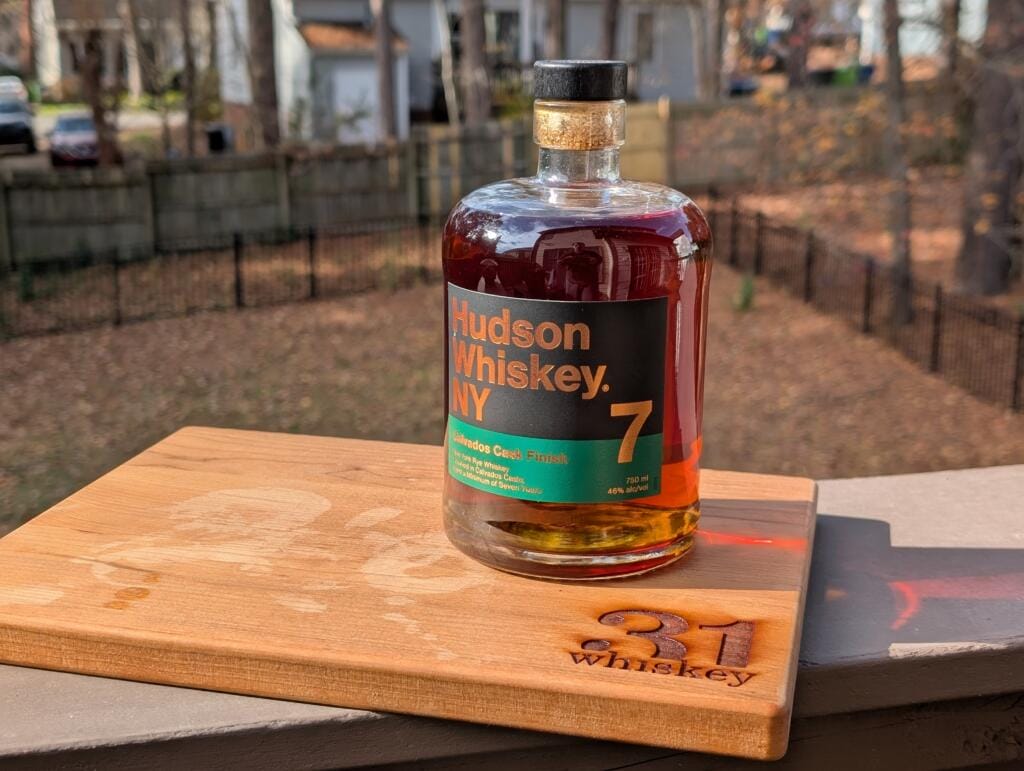
Growing up in New York, apples were a fact of life. Apple cider, apple doughnuts, apple pie … it’s all delicious and reminds me of home. Which is why this calvados finished rye whiskey from NY-based Hudson Whiskey just makes sense — rye spirits already have an inherent rye flavor in my opinion, and this should just further assist and accentuate that component. (In theory, at least.) And add in the French twist to the process, and I’m intrigued enough to bring a bottle home for further testing.
History
The facility itself dates to 1788, when the eponymous Mr. Tuthill founded a grist mill to supply flour and other grains to the local region. The area became known as Tuthilltown (although that won’t help if you put that in Google – try Gardiner, NY instead) and is the quintessential bucolic New York location.
The distillery started when a former professional rock climber named Ralph Erenzo purchased the land in 2001, planning to build a bed and breakfast to share the beauty with other New Yorkers looking to escape the busy urban cities. After some difficulty obtaining permits, those plans never came to fruition, but by 2003 Ralph had enlisted the help of Brian Lee (an engineer by trade) and decided to turn his plot of land into a distillery. If they couldn’t bring people to the land, they could bring a taste of the land to the people.
Over the next few years, the two built the distillery from the ground up — essentially creating the blueprints of how to run a farm distillery in New York (blueprints which others would soon follow). Using locally sourced ingredients and recipes true to the history of the region, they built a strong following and in 2010 the distillery was purchased by William Grant & Sons. Since then, the day to day operation has remained in the hands of the local New Yorkers, but thanks to that investment they have been able to greatly improve their output and start distributing their spirit to a much larger audience.
Product
New York used to be known for its rye whiskey, which makes sense given the proximity to Canada (and the Canadian proclivity for rye whiskey). Tuthilltown wanted to bring back that rich history of rye whiskey production with their Do the Rye Thing, which becomes the base for their Maple Cask Rye.
This used to be a 100% rye based whiskey, but recently about 5% of the mash bill has been taken up by malted barley to improve the taste. Naturally, all of the rye is locally sourced from New York, with the malted barley being the only outsourced product.
Almost every part of the whiskey making process happens on-site. At least, the important bits do. The grain comes in pre-milled (the 1788 grist mill still exists, but it takes about four hours to make a single bag of flour – not economical) and is cooked and fermented on-site in large vats. Originally, the distillery used an old pasta sauce cooker for the process, but the recent acquisition means bigger custom built equipment is used these days instead.
Once the rye and barley combination is fermented it is batch distilled in their hybrid pot still (which is a small copper pot still with a short column section on top), and the resulting spirit is filled into new charred oak barrels and socked away in the distillery’s rickhouses for a period of about three and a half years. To aide in the maturation process, heavy bass sounds are pumped through the warehouse at night to force the spirit into every nook and cranny of the barrels.
Here’s where things get interesting: up until this point, it’s been a pretty standard rye whiskey, but the cask finishing is what differentiates this from other spirits.
Calvados is a type of brandy (more information about brandy and some of our reviews here) specifically made from apples and pears grown, harvested, fermented, and distilled in Normandy, France. This distilled fruity spirit is then matured in oak casks for a minimum of two years before it is able to be bottled and sold.
For this expression of Hudson Whiskey, the folks at Tuthilltown Spirits imported previously used French calvados casks and re-used them on their rye whiskey, aging the spirit for an additional three and a half years. It’s a nod to the rich history of apple production in New York (the “Big Apple” isn’t named for nothing, after all), a state where apple cider doughnuts are a welcome fact of life.
After that full seven years of maturation in a combination of American oak barrels and French calvados casks, the spirit is proofed down and bottled for sale.
Packaging
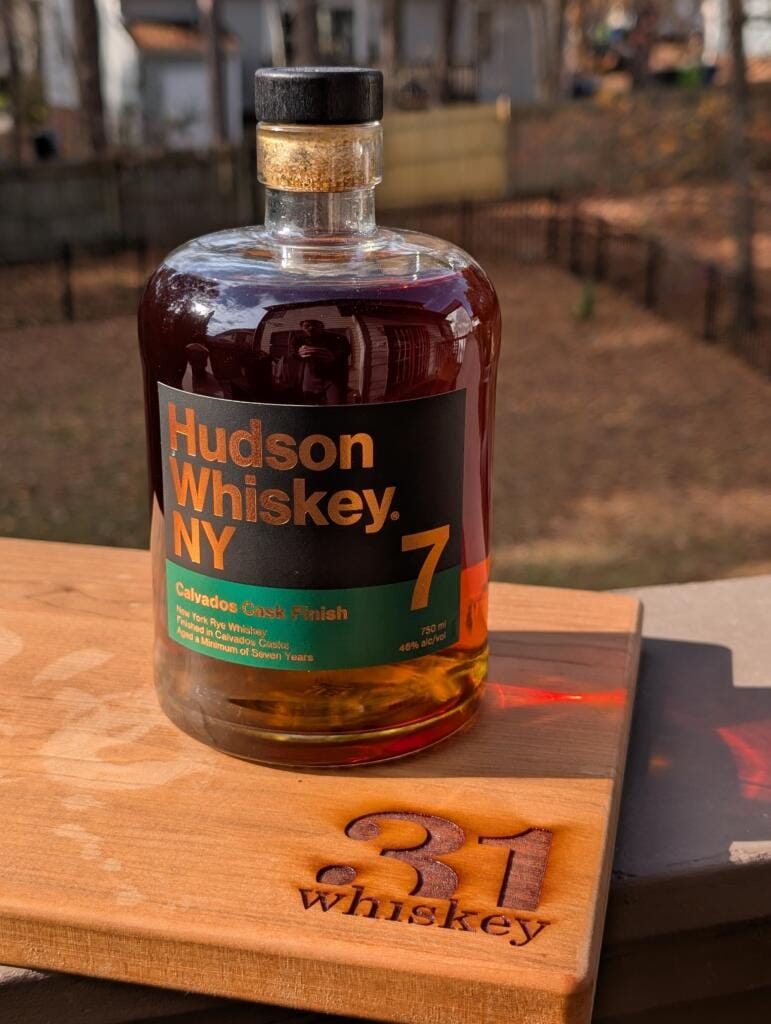
Hudson changed their labels in the last couple years. And normally, I don’t really like it — for many reasons, their new labels strike me the wrong way. But in this case, I think there are some differences that actually make this label a little bit better.
The bottle remains the same as it always has been: a plump short, cylinder with a gently sloping shoulder. The bottle is capped off with a wood and cork stopper, which is a slight improvement from the last version, but the wax seal is now missing.
As for the label, in their re-branding, they have gone for bold and simple rather than the original rustic motif — less Michelangelo and more Mondrian. It feels more urban, and claims to borrow the styling of the New York City subway system. Which works… kind of… if someone already told you that’s what its suppose to evoke and if you squint real hard. In an informal and highly unscientific poll I conducted among some of my New York-based family and friends, consensus was that they could barely see the resemblance even after I told them about the NYC subway reference.
The difference here between their usual line of whiskey and this specific bottle is that the background for the label is a stark black instead of the usual white. That gives the label a bit more gravitas, and the choice to use a metallic gold ink for the brand information instead of normal black ink makes it stand out a little better on the shelf.
I still think this could have been executed better, but at least it isn’t as bad as the rest of their line.
Neat
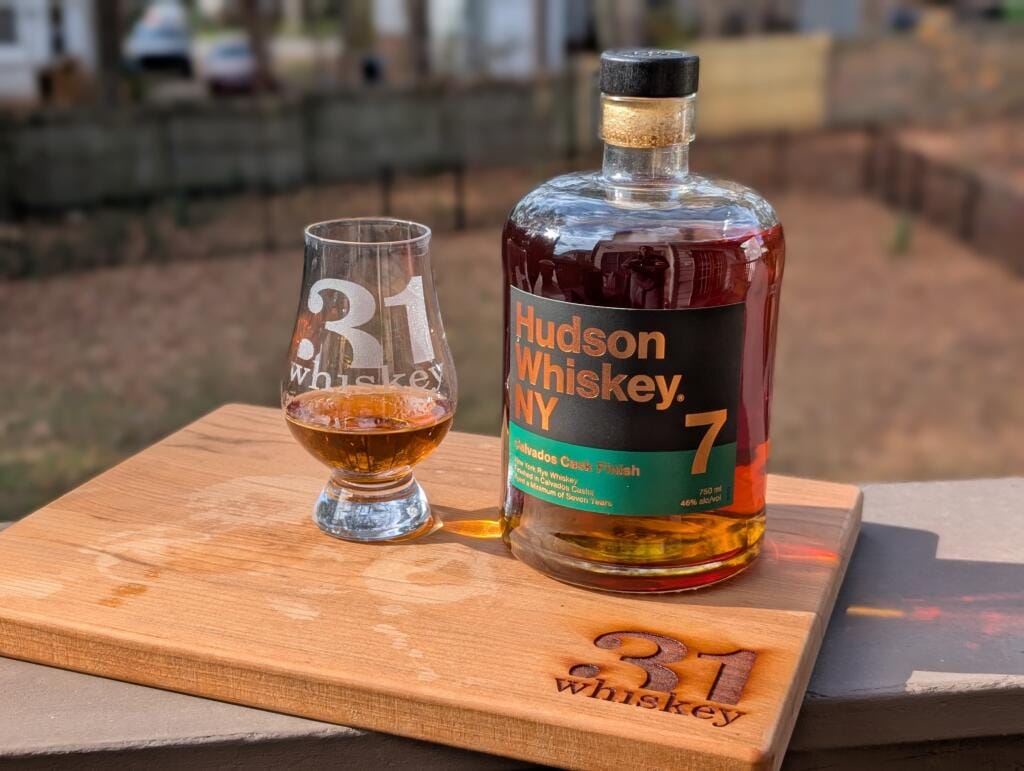
The liquid in the glass is a hair darker than the standard version of their Do The Rye Thing product, which would be expected from something that spent twice as much time in an oak barrel as usual. The aromas coming off the glass are richer and darker, too: baked apple and caramel are the first notes I pick up, with some brown sugar, vanilla, dark chocolate, earthy peanuts, and a hint of black pepper. Where their standard rye whiskey is a more crisp apple aroma, this is a more velvety and sweet approach.
Candied apples are also the very first impression I get when I take a taste of the spirit. Specifically: brown sugar, caramel, vanilla, and cooked apples along with some cedar chips thrown in for good measure. The flavor is well saturated and rich, and even has a bit of that dark chocolate component to really drive home the experience.
As the flavor develops, this turns from a more calvados-forward expression with the cooked sweet apples to a typical rye whiskey version with crisp green apples. On the finish, I also started seeing more of the cedar chips, as well as the typical black pepper spice that I’d expect from a 95% rye based whiskey. That peppery spice leaves a good tingle on the lips as the experience finishes off.
On Ice
With the added ice, most of the apple flavor has started to disappear. That’s to be expected, since the apple is a result of the raw ingredients and distillation process, and those lighter and more delicate flavors have a tendency to get wiped out fairly easily with some added ingredients. What’s left behind is a darker and richer flavor profile, with just a hint of the apple adding some uniqueness in the background.
The most prominent flavors here are toasted brown sugar, rich caramel, vanilla, and dark chocolate. Those flavors provide an excellent base and remain throughout the experience, with some very light crisp apple appearing near the finish. I’m also getting a hint of black pepper, but that’s much more like an impression of black pepper at this point than the previous feeling (which was a bit more like I’d stuck my tongue into a pepper shaker).
I do want to highlight that, usually, a rye on the rocks is bitter and unbalanced. But here, I think the extra time in the oak barrels has allowed more of those rich flavors like the dark chocolate to come in and help balance things out. It’s a nice sipping spirit, even on ice.
Cocktail (Old Fashioned)
This is good — better than average, even — but I think it falls a little flat.
What I’m getting most from the rye whiskey is some lightly toasted brown sugar, caramel, vanilla, and dark chocolate. Those flavors provide an excellent base to help balance out the herbaceous and bright angostura bitters, but it still leaves something to be desired. I’m not getting much of the apple at this point beyond a light wafting of the flavor through the general area, nor really any other kind of fruit that would make this more interesting.
For those making this at home, some orange bitters or a solid chunk of orange would be useful to provide the necessary citrus to really make this cocktail awesome. But taken as-is, I think it unfortunately falls a little flat.
Fizz (Mule)
What I’m looking for in a truly amazing mule is the ability for the whiskey to provide some balance and some extra texture to the cocktail that wouldn’t otherwise be seen with a less characterful spirit. And that’s exactly what we’re getting here.
This is a more mellow and refined version of a mule: heavier on the dark chocolate and toasted brown sugar, which really nicely balances with the tangy ginger and lime juice. The end result is something much closer to a evening cocktail in a swanky bar than something you’d find served on a pool deck in the middle of the afternoon. I’m even getting some black pepper spice that adds a nice intriguing complexity to the texture on the finish.
Overall Rating
The difference between this whiskey and Hudson’s standard Do The Rye Thing is the opening salvo of cooked apples in the flavor profile. Otherwise, this seems to follow fairly closely to the flavor profile of Do The Rye Thing. What’s especially interesting is that you can clearly identify the two different kinds of apple — the rich, sweet, baked apple from the calvados and the bright, cheerful green apple from the rye whiskey, each hitting at different times.
In my opinion, I feel like this whiskey is worth the price tag mainly for the added time in the barrel, but less for the calvados cask finishing. It really only comes into play when taken neat or adding a slight bit of character on the rocks — otherwise, I don’t think there would have been much difference if they had simply left this in the same barrel for another half decade. I’m loving the dark chocolate and the nicely balanced flavors that are in here, and for me that alone is worth the cost of admission.
| Tuthilltown Spirits Calvados Cask Finish Whiskey Production Location: New York, United States Classification: Rye Whiskey Aging: 7 Years Proof: 46% ABV Price: $74.99 / 750 ml Overall Rating:   |

All reviews are evaluated within the context of their specific spirit classification as specified above. Click here to check out similar spirits we have reviewed.
Overall Rating: 4/5
Two kinds of apples and a bunch of dark, rich flavors make this a luxurious experience for your taste buds.