
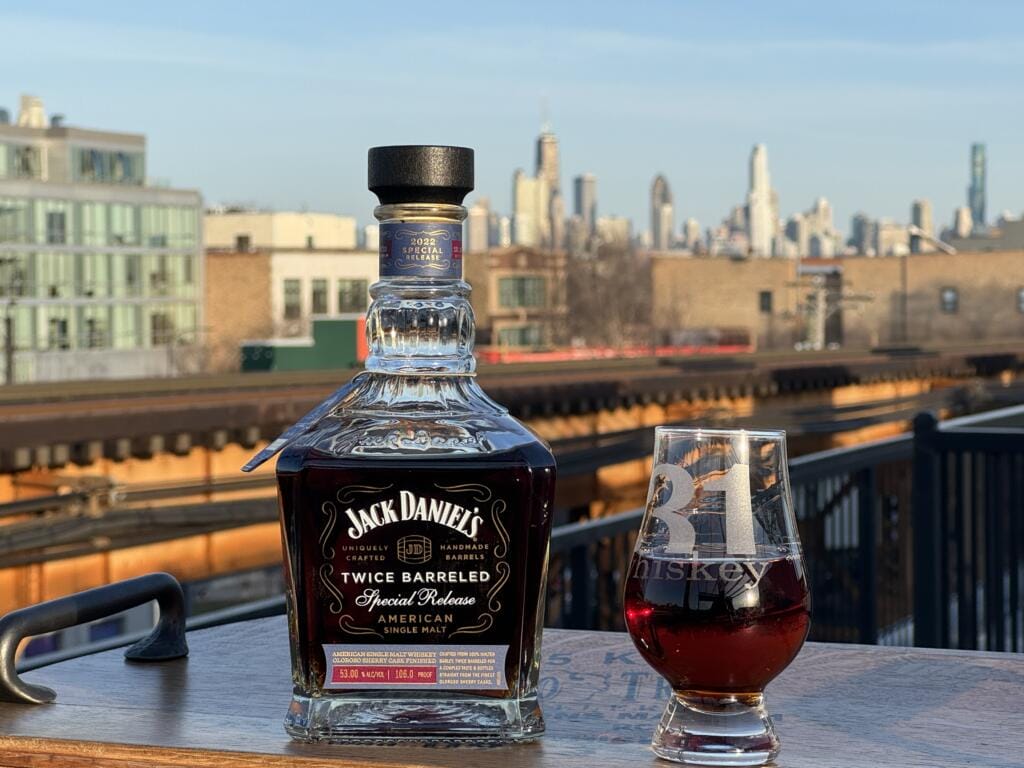
During a recent trip to Nashville (in addition to the normal trouble one tends to get into visiting the honky-tonks up and down Broadway), we decided to take a quick drive down to Lynchburg, Tennessee to visit the Jack Daniel’s distillery. Lynchburg is located in Moore County, Tennessee, which happens to be a dry county… so after the tour, I decided to purchase a commemorative glass bottle that coincidentally happened to come with 700mL of free whiskey inside.
History
Jasper Newton “Jack” Daniel was born around 1849 in Tennessee, the youngest of ten siblings. His birth mother died shortly after having him and his father remarried, having three more children before leaving to fight in the American Civil War. Daniel never liked his stepmother, and ran away from home when news came that his father had been killed.
Daniel was taken in by a preacher and moonshine distiller named Dan Call, who was working with an enslaved African-American man named Nathan “Nearest” Green. The three continued to work together after emancipation. Throughout his teenage years these two men taught Daniel the art of distilling and producing whiskey.
Following a long fight with his siblings, Daniel eventually received some of his father’s inheritance and in 1875 (not 1866, as sometimes claimed), he used this money to purchase the land where the Jack Daniel’s distillery now resides. He legally registered the distillery so that he could start selling his product and was assigned registration number seven in his district, which is the origin for the “Old No. 7” labeling on their bottles.
Daniel never had any children of his own, but he was very fond of his nephews and worked with them to pass on the knowledge that he had gained. In 1907, he officially handed the distillery over to his nephews, and Lem Moltow would eventually buy out the other family members to become the sole owner of the facility.
Kentucky enacted their own version of prohibition a full 10 years earlier than the rest of the United States. Moltow led the test case to challenge the constitutionality of the law, but lost in court when the judge upheld the law. He tried to move production to neighboring states but none of the product made at those facilities was ever made available for sale due to issues with the quality of the product.
While federal prohibition ended in 1933, Tennessee’s law remained on the books. Moltow, now elected as a Tennessee state senator, led the effort to repeal the state prohibition on alcohol and was instrumental in the passage of the 1938 repeal that allowed his distillery to reopen.
Moltow died in 1947, leaving the distillery to his family. They sold the brand and the distillery in 1956 to the Brown-Forman corporation, a family owned business that is one of the largest producers of whiskey in the United States and also owns brands such as Woodford Reserve and Old Forester.
Originally sold as a 90 proof whiskey, the Brown-Forman company started lowering the alcohol content to 86 proof in 1987 and again to 80 proof in 2002 in an attempt to reduce the production cost and the taxes paid on each bottle.
Product
This special release does not use the standard Jack Daniel’s mash bill consisting of 80% corn, 12% rye and 8% malted barley; instead, it uses a 100% malted barley mash. This mash is fermented and distilled following the process we all know and love to create a bourbon whiskey. However, what follows that distillation is the one additional step that makes Tennessee whiskey unique.
Once distilled, the spirit is filtered through a 10-foot stack of charcoal produced from sugar maple trees. This filtering process removes impurities and some of the harsher tasting elements from the spirit, a process that the company calls “mellowing” and is referred to as the Lincoln County Process, which was developed by Nathan “Nearest” Green.
After being filtered, the spirit is stored in new production oak barrels and aged for a period of time, although the packaging makes no claims as to the actual age of the liquid inside so there’s really no way to know how long it sat on those oak barrels. However, I was able to find a press release on this product that mentioned that it was aged for ‘at least four years’. Either way, once the initial aging is complete, the whiskey is transferred to Oloroso Sherry barrels from the Antonio Paez Lobato Cooperage to undergo a finishing process in a second barrel. According to the same press release, this finishing process lasted ‘at least two years’. The whiskey is then bottled at barrel strength.
Packaging
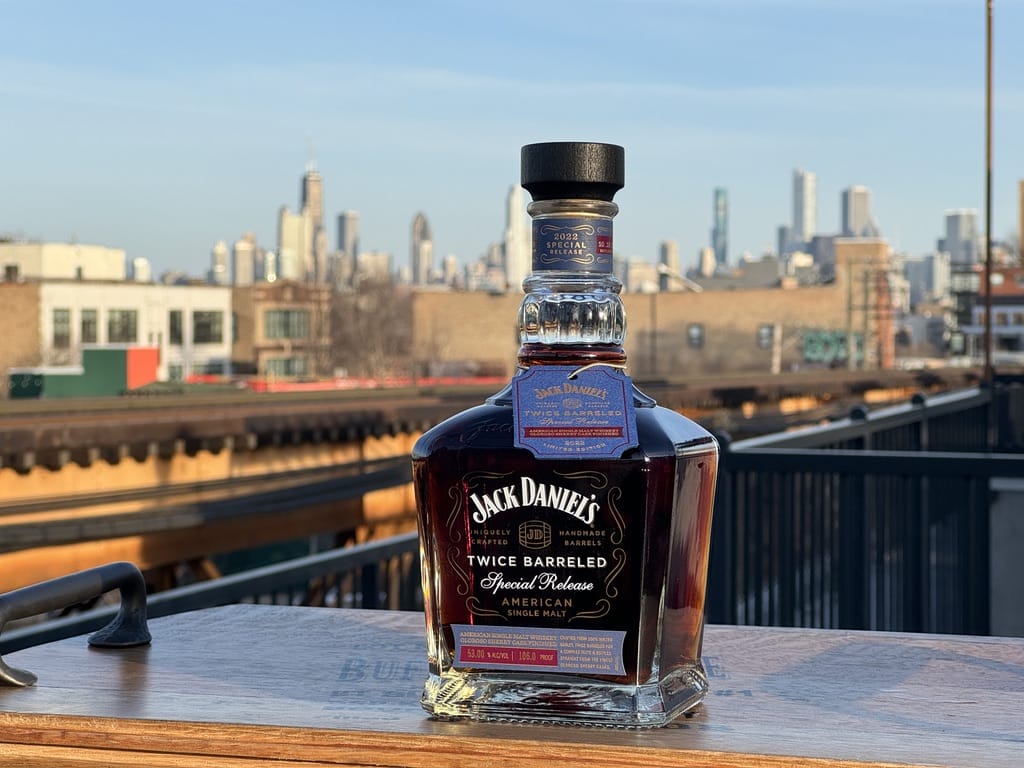
The traditional Jack Daniel’s bottle is an iconic shape that is instantly recognizable throughout the world. This bottle resembles it – just if it had been pressed and flattened to about two-thirds the original height. The bottle is also slightly smaller in volume than the traditional Jack bottle at only 700mL.
So overall, the bottle is still a square-ish shape — but instead of being tall and narrow, it’s short and fat. This flattening process also causes the sides to flare out a bit. The bottle also has more intricate glasswork with the rounded corners, the ridges around the neck, and the raised “Jack Daniel’s” name on the front shoulder. It is topped with an oversized wood and cork stopper that feels solid and enjoyable to use.
The labeling is also significantly different. Instead of a wraparound label, this is a smaller and more specific label with only the bare essentials detailed on the front. There’s not a whole lot of wasted space, which means there’s plenty of spare room around the sides for the beautifully dark whiskey inside to show off its true colors.
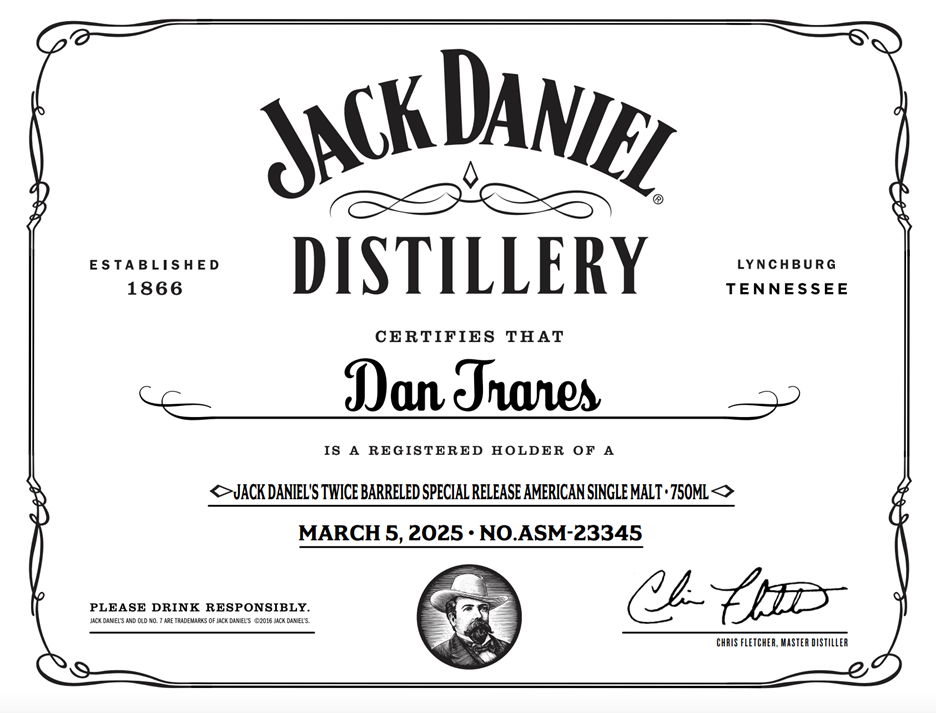
The one thing that I found interesting was the ability to “register” your bottle at JackDaniels.com. My bottle came with a unique code, and I was able to fill out an online form to obtain the certificate above. I do not know the reason to do this… and frankly, it seems like a pretty goofy thing with no real purpose other than provide a platform for Jack Daniel’s to collect my information (jokes on them – they already got it when I registered for the tour).
Neat
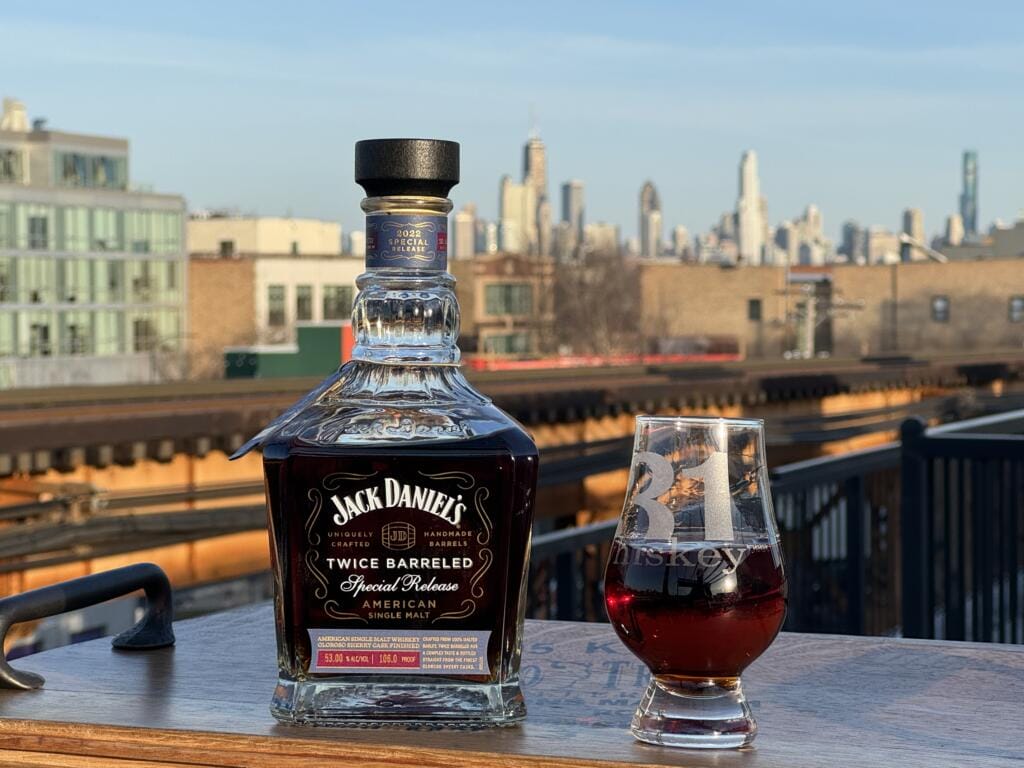
The whiskey is a dark golden-brown color, and looks great in my glass right off the bat. Given that it’s barrel strength, I expected a lot more on the nose than I actually get… but what I do get has a very smooth and mellow aroma, with hints of vanilla, nutty cheese, and fruit.
The first sip gives me a bold kick that feels like being dropped out of the back of an old pickup truck. Right out of the gate, there is a thick and strong oaky wood flavor from the barrels, combined with a rich and hearty bread-like flavor from the malted barley content. There are more refined flavors that can also be found as well, including a hint of maple syrup along with cherry, cocoa powder, walnut, and clove.
As the flavor develops, I get a lot of heat at the back of my tongue that dissipates into more oak, fresh bread, and not much else.
I don’t love this whiskey neat… it’s much harsher than I would expect, even from a barrel strength whiskey. I do think there is a lot of potential, but those complex flavors seem to be masked behind heat, oak, and bread.
On Ice
Usually, this is where barrel strength whiskeys seem to shine for me — the ice cutting down enough of the harsher elements tends to give you a strong yet drinkable bourbon. And given the unpleasant harshness I got when drinking this neat, I am looking forward to adding some ice.
It’s immediately clear that this whiskey is much more complex than what comes across neat. Yes, there is still a lot of oak and grains, but it’s more subdued and acts as a role player than the main flavor.
I get a toasty sweetness that reminds me of campfire marshmallow, along with a much more forward expression of maple syrup. There are notes of peach, cherry, and apple fruit that I’m able to taste now that we’ve added the rocks. The finish is still bold, but there is some brightness that reminds me of fresh ginger and the smooth decadence of black coffee.
This is much more enjoyable on the rocks. The whiskey mellows greatly and allows a much more complex flavor profile to emerge.
Cocktail (Old Fashioned)
For starters, I get a really great aroma coming off of this cocktail. The bitters seem to tease out a sweet and spicy clove scent that pairs well with the orange essence of the garnish.
The drink itself is really smooth, too. The sugar seems to cut the bold kick that the whiskey had neat, and the bitters pair well with the bolder flavors to smooth everything out. The resulting flavor reminds me of sipping on a flat cola more than an old fashioned — it’s actually a bit of a surreal (but tasty) experience.
This is one of the more unique old fashioneds that I’ve had. There is a standard flavor that you tend to expect, and it’s not that of the iconic “Jack and Coke”… but here we are. I don’t hate this cocktail, but I don’t love it either. It’s the kind of cocktail that you make when you want to surprise your friends.
Fizz (Mule)
The good news is that the whiskey seems to hold up well to the ginger beer. The spicy effervescence and the bold oakyness of the whiskey both share the stage in this cocktail… but the bad news is that they do not seem to share it well.
The first reaction is that this cocktail tastes like ginger beer filtered through oak. They each have a clear place in the drink, but it tastes like two siblings bickering over who gets the top bunk. What does seem to work well is the cola flavor that seems to occur when drinking this whiskey with some additional sweetener (sugar in the case of the old fashioned or ginger beer here).
I don’t think this is how a Kentucky (Tennessee?) mule is supposed to taste, but I don’t hate it. I like the bold oak and dichotomy of flavors between the whiskey and the ginger beer. However, I doubt this would be a cocktail for the average mule lover, given it’s more raw whiskey flavors.
Overall Rating
I am not the biggest Jack Daniel’s fan, but I am certainly glad that I grabbed this bottle. It’s a much more complex flavor profile with bolder flavors than the standard bottle of Jack. And while it doesn’t drink well neat, it does make unique cocktails and is delightful on the rocks.
This bottle makes me want to explore more of the various Jack Daniel’s expressions that are available.
I would also call out that if you ever find yourself in Lynchburg, take the tour of the distillery. There were a couple of things that stood out, starting with the grounds. Not as gorgeous as Maker’s Mark, but the distillery is on some stunning land and you get to spend a good deal of the time outdoors as you move between buildings. Second, it was fascinating getting to learn about the relationship between Daniel, Green, and the Lincoln County Process. Definitely a worthwhile way to spend your time, if you’re ever in the neighborhood.
| Jack Daniels Twice Barreled Special Release American Single Malt Whiskey Production Location: Tennessee, United States Classification: Single Malt Whiskey Aging: No Age Statement (NAS) Proof: 53% ABV Price: $69.99 / 750 ml Overall Rating:   |
Overall Rating: 4/5
A unique and bold spin on Tennessee whiskey (and extra enjoyable as a Buckeyes fan, after a 42-17 beatdown of the Volunteers).