
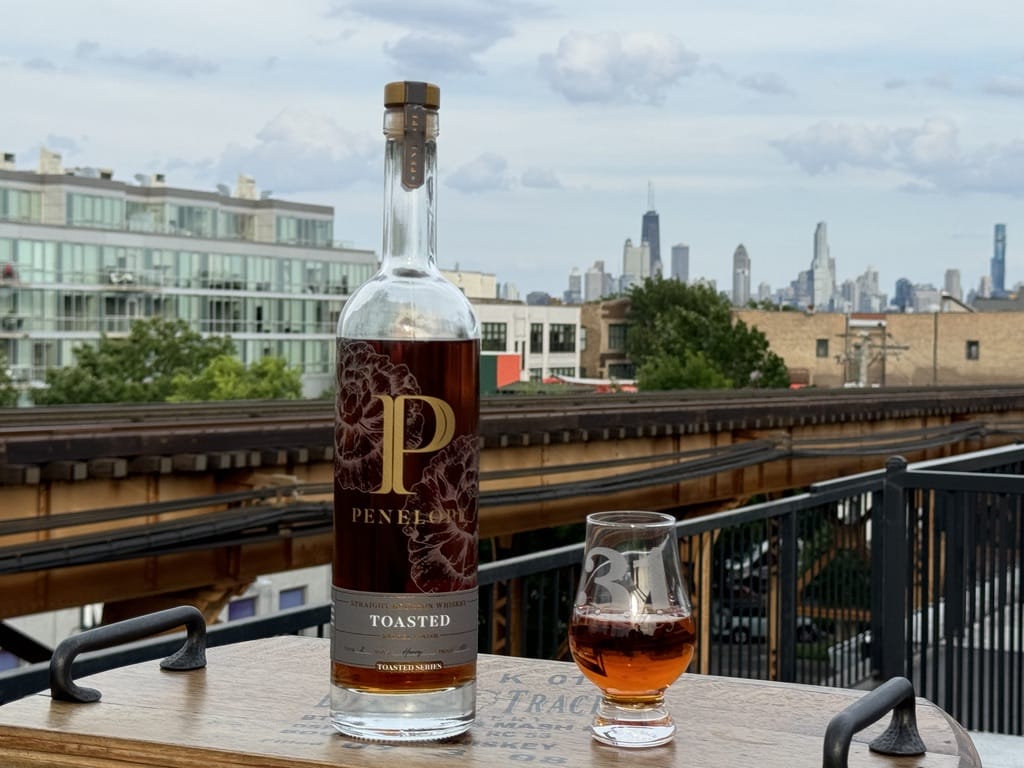
Barrel finishing is a practice almost as old as whiskey itself: the art of taking a spirit, throwing it in a barrel that used to hold some other equally delicious liquid, and coming away with a finished product that is more than the sum of its parts. There was a recent period in the whiskey industry where single barrel expressions were all the rage, but it seems like “finished” whiskies have been gaining popularity rapidly. And given the popularity of Penelope Bourbon (which my local liquor store here in Chicago stocks so profusely I can’t swing a cat without hitting one of their bottles), I figured it was the right time to give this specific expression a shot.
History
Penelope Bourbon has one of those origin stories that feels almost too wholesome to be true. In 2018, Mike Paladini was working in Silicon Valley tech startups and unwinding the way a lot of us do: with a glass of bourbon. He wasn’t a bourbon hunter by any means — more of a Buffalo Trace and Eagle Rare kind of guy, grabbing good, interesting bottles that reflected the market at the time. But like any good hobby, it escalated. He started going down what he’s described as an organic rabbit hole, exploring how different oaks worked on the spirit, how mash bills shaped flavor, and generally getting deeper into the craft than any casual drinker probably should.
Then he and his wife Kerry found out they were expecting a baby — a girl who would come to be named Penelope. Paladini wanted to mark the moment. Not with a tree in the yard or a savings bond, but by creating something. By his own admission, there was no business plan. No long family history in the bourbon business, no grandfather’s recipe hidden away in a drawer. It was a hobby that got a bit out of hand.
He brought the idea to his childhood friend and next-door neighbor Danny Polise, who had a background in the restaurant industry to complement Paladini’s tech and e-commerce experience. The two Basking Ridge, New Jersey natives set out to build a bourbon brand from scratch — and they meant from scratch. They started with six barrels. They made their own labels. They sold bottles out of the back of their car. When their New Jersey wholesale permit got delayed, they drove down to Washington D.C. and used their federal permit to sell to their first retailer, since D.C. isn’t a state and the federal document worked just fine. They were there taking photographs when the first customer pulled a bottle of Penelope off the shelf.
Paladini also made a deliberate choice with the name. Whiskey as a category has always leaned masculine, and he wanted something that felt like a different take on that: a family company that appealed across the board rather than catering to one demographic.
From day one, Penelope sourced their whiskey from MGP’s historic distillery in Lawrenceburg, Indiana (now known as Ross & Squibb Distillery), the same facility that has been producing spirits since 1847 and supplies the juice for a laundry list of well-known bourbon brands. What set Penelope apart was their approach to blending. Rather than relying on a single mash bill, they built their flagship bourbon by blending three different bourbon mash bills together, each with a different grain ratio but all drawing from the same four grains: corn, wheat, rye, and malted barley. The goal was a bourbon that was easygoing but still packed with flavor. It took a few runs to get the blend right, but when they did, they knew they had something — and the double gold at the 2020 San Francisco World Spirits Competition confirmed it.
The brand grew fast. Penelope launched their first product in 2019, and by the time they caught MGP’s eye for acquisition, they were available in over 30 states and four countries. In 2023, MGP Ingredients acquired Penelope Bourbon for $105 million through its Luxco subsidiary. The brand now sits alongside other well-known Luxco labels like Ezra Brooks, Yellowstone, Remus, and (for those of you who are fans of party punch) Everclear.
Product
- Learn More: What Is Bourbon Whiskey?
The Penelope Toasted Series takes a different path from the brand’s flagship bourbon. Where the standard Penelope Four Grain blends three different mash bills — each containing a different ratio of corn, wheat, rye, and malted barley — the Toasted Series strips things down to a single mash bill: 75% corn, 21% rye, and 4% malted barley. No wheat, no blending. It’s a simpler foundation, but the complexity comes from what happens next.
The whiskey is aged in charred new American oak barrels, with the age varying by batch. Some carry a four-year age statement, others five or six. Once that initial maturation is complete, the bourbon is transferred into a second, freshly toasted barrel for an additional finishing period.
The distinction between “toasted” and “charred” is important here, and it’s something that gets lost on a lot of casual bourbon drinkers. Charring involves setting the inside of the barrel on fire for a brief period (essentially running a flamethrower over the wood), creating a layer of charcoal on the interior that acts as a filter and imparts bold, smoky flavors. Toasting, on the other hand, is a slower, more controlled application of heat — think holding a lighter to wood rather than torching it. It caramelizes the natural sugars in the wood without creating that charcoal layer, producing softer, sweeter flavors: vanilla, toffee, and caramel rather than smoke and char. Different levels of toast produce different flavor profiles, and Penelope leans into this variability. Char levels on the finishing barrels range from #1 to #5, and toast levels vary between medium and heavy, making each batch in the Toasted Series genuinely unique.
The finishing barrels are sourced from Speyside Cooperage and Kelvin Cooperage, both located in Kentucky. Each barrel is hand-selected, and Penelope makes it a point to emphasize that every batch is different — not as a marketing gimmick, but as a natural consequence of the process. The bottle I’m reviewing today is bottled at 100 proof with a “Honey” toast on the finishing barrel.
Packaging
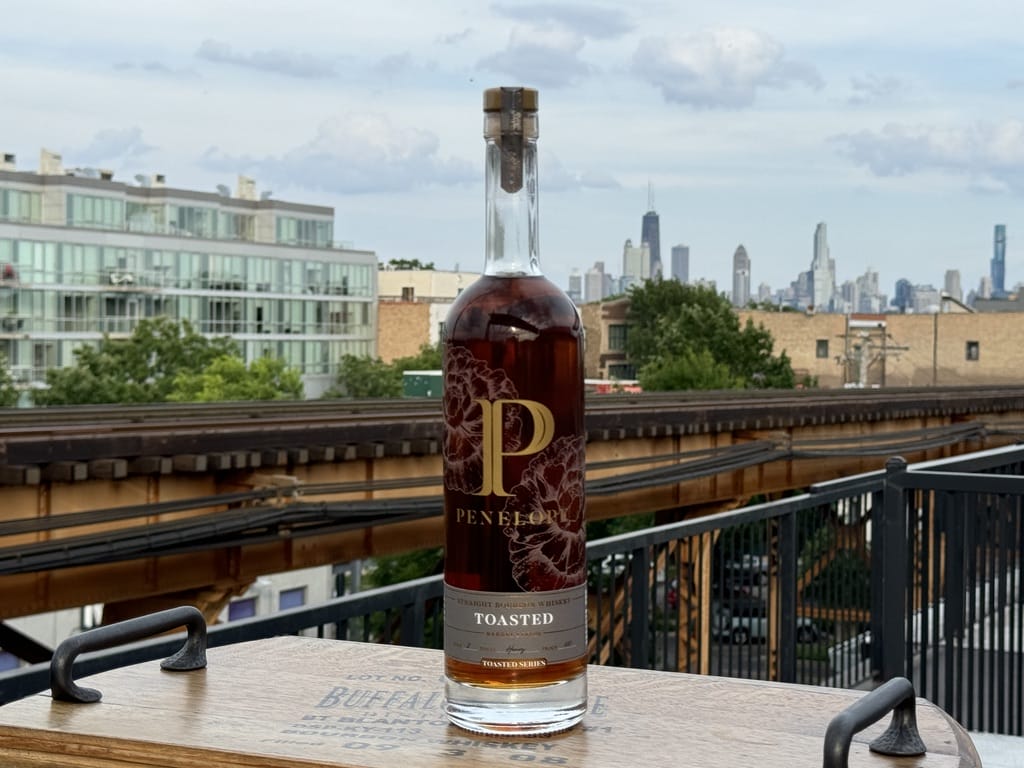
The Penelope bottle is not going to win any design awards. What we have here is about as basic as it gets: a tall, slender bottle with gently sloping shoulders and a tall neck, stopped with a simple cork. It’s the kind of bottle you see all over the liquor store, and there is nothing about the silhouette that would make you pick it up off the shelf if you weren’t already looking for it. It doesn’t scream premium, and it doesn’t really try to.
That said, there is one thing about the packaging that I genuinely appreciate, and that’s the way the branding is applied. Most of the Penelope logo is printed directly onto the glass of the bottle rather than slapped onto a giant paper label. The large “P” and the floral design elements are tastefully done and, more importantly, they allow the deep umber color of the whiskey inside to really shine through.
It’s a basic bottle design that lets that bourbon be the star of the show. I wish more brands would take this approach — let the whiskey sell itself rather than hiding it behind a billboard-sized label.
Neat
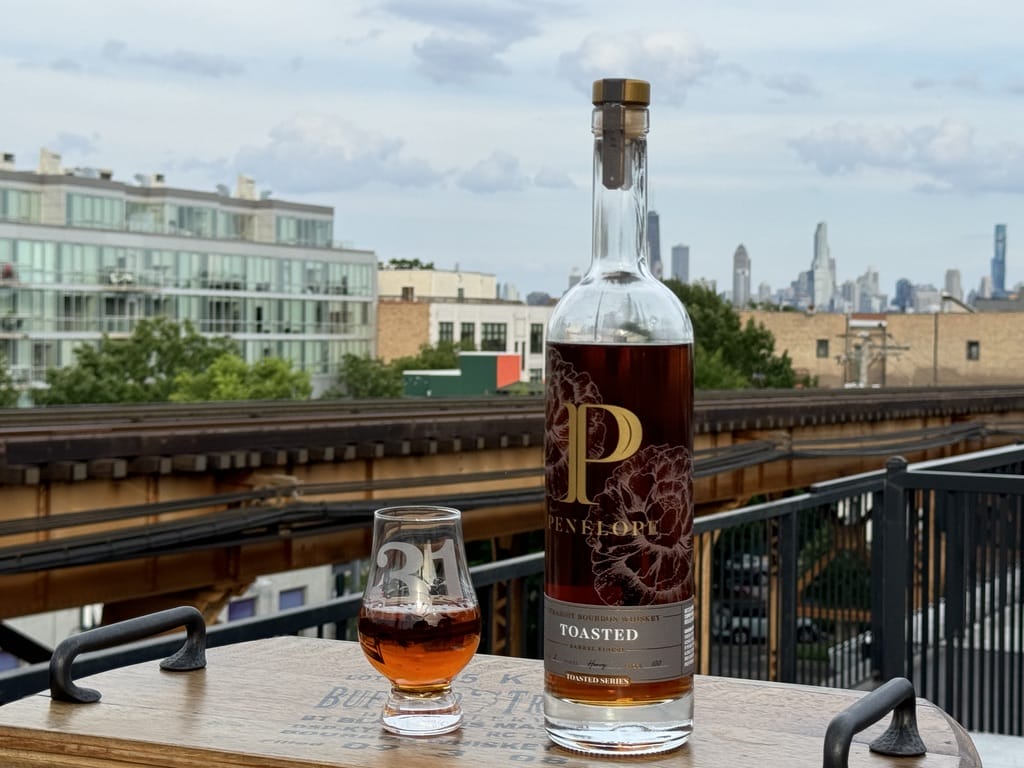
The first thing that hits me on the nose is toffee — and a lot of it. It’s an immediate and overwhelmingly sweet aroma, the kind that makes you think you’re about to sip on something that tastes like liquid candy. Behind that initial wave of sweetness, thankfully, there are some darker notes lurking: a hint of black coffee and a subtle woodiness that gives the nose some depth and complexity. It’s not a particularly complex aroma, but it’s pleasant and inviting in a way that makes you want to take that first sip.
One thing I will note here: the color of this bourbon in the glass is a surprisingly dark umber for a whiskey that was only finished in a toasted barrel. I would have thought this spent its entire life in a heavily charred cask based on the appearance alone.
Taking a sip neat, the Penelope Toasted Series is not nearly as sweet as the nose would lead you to believe. In fact, you could get some whiplash as it veers in the opposite direction pretty quickly. The dominant flavor here is black coffee: a rich, roasted bitterness that sits right at the front of the palate… and I love me some black coffee. It’s on the bitter end of the spectrum for a bourbon, which caught me off guard given how much toffee sweetness was on the nose.
In addition, there is a grapefruit-like citrus quality that adds to that bitterness — almost like biting into the pith of the fruit rather than the sweet flesh. The sweetness does make an appearance, it’s just more muted than I expected. It tastes like toffee that’s been left on the stove a touch too long, with a slightly burnt edge to it, but there is a nice peppery spice on the finish that rounds things out.
On Ice
Adding a couple of ice cubes to this bourbon does exactly what I hoped it would do: dials back the bitterness significantly. (Think properly cold brew coffee vs. that Venti Sumantra blend from some small coffee shop.) The sweeter notes are finally allowed to step forward and take their rightful place. The toffee that was so prominent on the nose but mostly absent in the neat sip is now fully present in the taste, and it’s a welcome addition.
There’s also a mild oak flavor that comes through on the rocks, providing a pleasant woody backbone to the sip. The coffee notes are still there, but they’ve been mellowed into something lighter and more pleasant. The overall experience is much more balanced and enjoyable than the neat pour.
If you’re picking up a bottle of Penelope Toasted, I would strongly recommend reaching for the ice bucket. This is where the bourbon really finds its stride and feels like a more complete, well-rounded drink.
Cocktail (Old Fashioned)
This is where the Penelope Toasted Series really hits its stride. The old fashioned format does something wonderful with this bourbon; the addition of bitters and sugar brings that bitterness I mentioned earlier completely in line, transforming what was a somewhat unbalanced neat pour into a smooth, flavorful cocktail. It’s as if this bourbon was designed to be mixed in an old fashioned.
The toffee sweetness is now front and center, complemented beautifully by the coffee notes that have been tamed into a rich, almost mocha-like undertone. There’s a pleasant citrus quality here as well. That grapefruit bitterness from the neat pour has been softened into something more akin to a bright orange zest that plays nicely with the angostura bitters. The cocktail drinks smooth and full-bodied.
Fizz (Mule)
We should preface all mule sections of my reviews with this: if you read our reviews often, you know that the mule can be a hit-or-miss proposition for a lot of whiskey (it’s actually kind of why we run this test). Unfortunately, this one lands squarely in the “miss” category. The more nuanced flavors that made the Penelope Toasted enjoyable on the rocks and in an old fashioned are almost completely washed out by the aggressive ginger beer. It’s not overly surprising, though – ginger beer is a bully of a mixer, and whiskeys with more delicate notes just can’t compete.
What you end up with here is essentially a ginger beer with bourbon in it, and not a very interesting one at that. There are better ways to drink this bourbon – just avoid it in a mule.
Overall Rating
The Penelope Toasted Series is a good bourbon, but not a great one — it’s solidly middle of the road. I find myself wanting just a little more from this bottle. The toasted barrel finish does add some interesting complexity; the nose is inviting, it’s impressively smooth, and it checks in at 100 proof. For all of that, the flavor profile is a bit of a mixed bag. Neat, it’s too bitter, which is surprising for even my tastes. On the rocks, it mellows into something much more enjoyable. And in an old fashioned, it really comes alive and shows you what it’s capable of when given the right supporting cast. In a mule it’s outkicked it coverage.
Here is the problem: at $60, this falls in a very competitive range for bourbon. There are a lot of bottles on the shelf at that price that deliver a more well-rounded experience across every preparation. I would expect a bourbon at this price to be able to stand on its own neat without needing ice or a cocktail to smooth out its rougher edges. I just think this bourbon falls a little short of where it needs to be to justify the sticker price.
| Penelope Toasted Series Bourbon Production Location: United States Classification: Straight Bourbon Whiskey Aging: No Age Statement (NAS) Proof: 50% ABV Price: $69.99 / 750 ml Overall Rating:   |
Overall Rating: 3/5
Proof that sometimes the best thing you can do for a bourbon is throw some ice at it and tell it to calm down.