
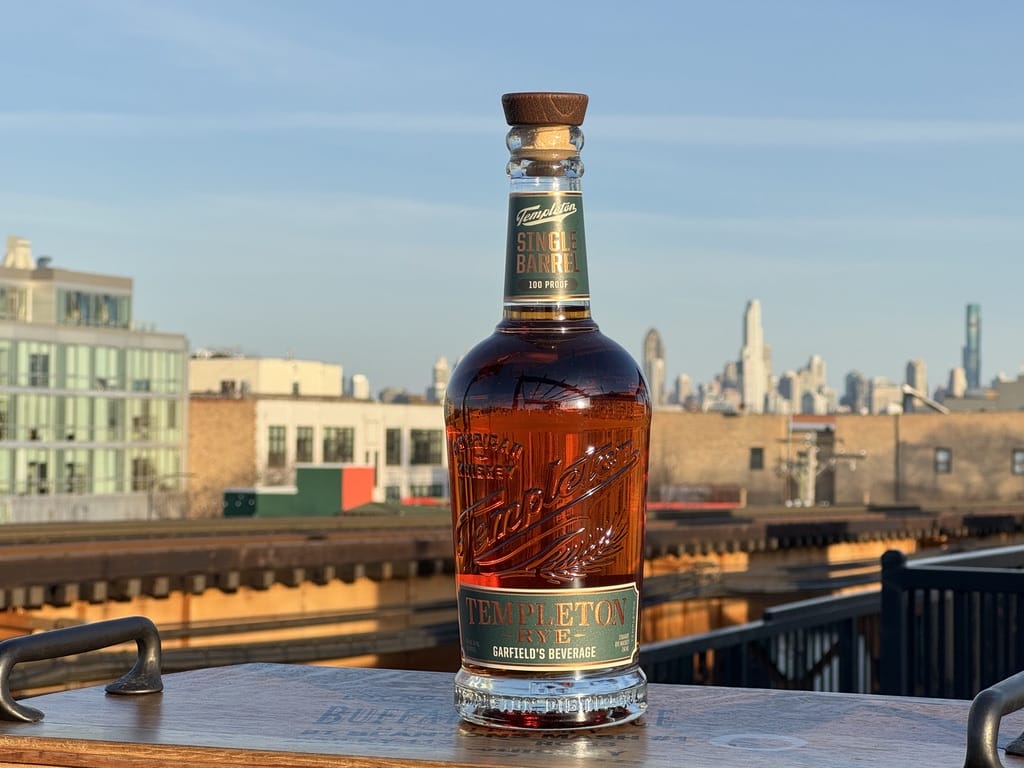
My first bottle of Templeton Rye was their 10-year product that I bought on the recommendation of the whiskey guy at my local Garfield’s Beverage (don’t worry, the review is coming). I was disappointed when I learned that this “Iowa” whiskey was actually produced at MPG mass production facility in Indiana — the Iowa distillery exists and is up and running now, but did not begin actually producing whiskey until it’s expansion in 2018. Given that it’s been about three years since the last review Nick did, I decided to grab this 4-year single barrel product selected by the experts from Garfield’s and give it another try.
History
Prohibition in the United States wasn’t exactly universally beloved (to put it mildly). While it may have been the law of the land, a significant chunk of the country felt that it was an unjust imposition — and decided that if they weren’t allowed to buy whiskey, they would just make it themselves.
That feeling extended to Templeton, Iowa, where a group of citizens in the small town of only 350 residents decided to start distilling their own whiskey. During prohibition, the town would produce a rye whiskey that would come to be known as “The Good Stuff”, which helped lubricate not only their small town but also others far and wide.
With the end of prohibition, the demand for illegal whiskey saw a sharp decline and not long after the distilling operations there ceased.
The tradition would be resurrected in 2002, when Meryl Kerkhoff (son of one of the distillers in that original group from Templeton) joined with Scott Bush and California based spirits production company Infinitum Spirits to restart production on the famous rye whiskey brand. (Infinitum Spirits is the same company behind Skrewball, by the way.)
Product
When Templeton was originally revived their whiskey was distilled and aged by the mass production facility MGP in Indiana — despite stating it was “produced and bottled” by the new Templeton Rye Spirits, LLC based in Templeton, Iowa. That stretching of the facts resulted in a class action lawsuit brought against them, and Templeton Rye was forced to add the clarifying statement “distilled in Indiana” to their bottles.
This bottle is a little different from previous versions, in that I think this might be the first bottle of whiskey we’ve reviewed that they actually made in-house. The label usually is pretty clear about being distilled in Indiana, but this one lacks that clarification, which leads me to believe that this might actually be an in-house product.
As a rye whiskey, this starts with a mixture of grains that is required to be at least 51% rye. As for what the other portion of grains are…. well, that’s a mystery known only to the distillery. Once cooked and fermented, the resulting slightly-alcoholic-beer is distilled and then placed into charred new oak barrels for a period of time. In this case, the bottle claims that the whiskey has been aged a minimum of four years prior to bottling. Once finished, the whiskey is reportedly blended with other flavors to make it taste as close to prohibition era whiskey as possible.
After aging the whiskey for 4-year in a new charred American oak barrel, one of the whiskey geeks from Garfield’s visited the distillery, sampled a few of the barrels, and chose their favorite to be bottled as a single barrel bottle.
Packaging
Templeton seems to have taken the opportunity over the last few years to completely redesign the bottle. After the lackluster effort to design a decent bottle for The Good Stuff rye, the design team really stepped up to the challenge.
The bottle is a medium height and round with an extra thick bottom that functions like the base of a classical pillar with “Templeton Distillery” embossed at the front. The bottle has a very slight outward flare moving from the bottom to the top, and a gently curving shoulder to a medium length neck. There is some additional detail at the mouth of the bottle: two slightly thicker rings rather than the usual single bump. I am not sure if this is intentionally engineered for a smoother pour or not, but either way the rye does pour very smoothly over the rings. The entire thing is topped with a dark wood and synthetic cork.
The labeling is minimal, but well done. At the bottom is a green label with gold and white printing with the name of the distillery and the name of Garfield’s Beverage. There is another similarly colored label around the neck declaring this as a single barrel bottle at 100 proof.
The Templeton logo in a stylized font and a shaft of grain (rye, I assume) are also embossed on the middle of the bottle. The fact that the bottle utilizes higher-cost embossing over a label not only classes up the product but also allows much of the dark amber whiskey to shine through, which I really enjoy.
Neat
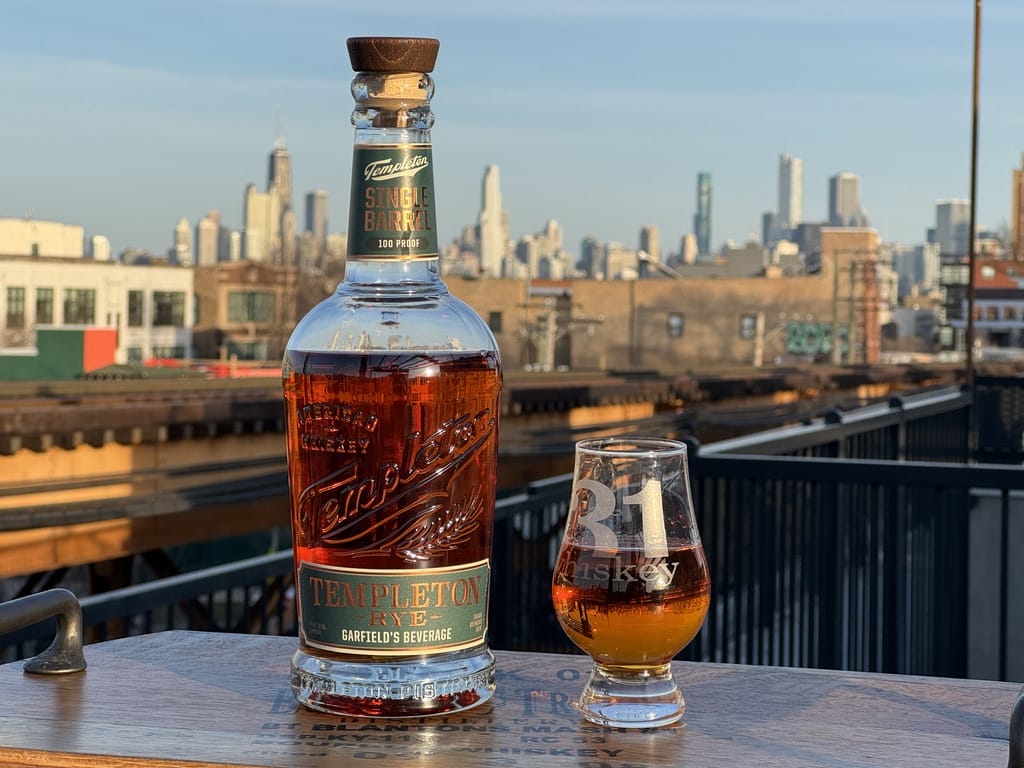
The aroma coming off the glass reminds me slightly of a Christmas candle: notes of cinnamon, chocolate, and cherry. It’s pleasant, mild, and not overwhelming (unlike anything you might find at the brutal assault on the senses that is a Yankee Candle store).
The deep amber liquid looks great in my glass, and the first sip helpfully reminds you that you are drinking a rye. There is a ton of black pepper and spice at the beginning, just like you’d expect, followed by some more traditional whiskey notes like molasses and toffee. From there, the Christmas candle aspects start to appear — specifically, with some cinnamon, clove, and allspice baking spices blended into the mixture. The finish is smooth with a slight lemony citrus flavor and some mild cherry.
This is a very different flavor profile than what Nick described in his review of The Good Stuff. While it’s not explicitly stated, this distinct flavor change would indicate some shift in recipe when distillation was moved back to Iowa.
This is a decent rye, but my one complaint is that it does not taste enough like a rye. There is some spicy peppery heat at the beginning, but it doesn’t tend to linger for long, and there’s a distinct lack of green apple. The ryes that I tend to enjoy the most have an apple forward flavor and a strong pepper finish — so this just feels backwards.
On Ice
I usually enjoy rye whiskey best on a rock or two because the ice helps to open up the flavors and can take off a bit of the spice on the finish, leading to a more mellow and enjoyable experience (especially given how peppery these spirits can be).
Surprisingly, in this case, the spice is still prominent. If drinking it neat gives you 100% of the spice, this is still going strong at 80%. That said, the more mellow notes have a little more room to breathe — the lemon and dark cherry are more noticeable, and the sweet toffee is more subdued. The Christmas-esque baking spices are a little bolder, too.
Just like when drinking it neat, there isn’t much bitterness at all. It’s a silky-smooth rye to sip on the rocks.
Cocktail (Old Fashioned)
I prefer a rye-based old fashioned over bourbon-based one. If the rye is good, the spice can give the cocktail a real edge in terms of an interesting texture that you don’t get with bourbon. This rye comes close, but just doesn’t seem to have enough oomph to give it a real edge.
Don’t take that statement the wrong way, the whiskey is very much front and center in this cocktail. You can clearly taste the spiciness of the rye, the mild sweet toffee, and just a hint of citrus (however, that could be from the orange peel as much as the lemon note that I saw when I tasted it neat).
Overall, the flavors work well together. The one thing that stands out in the cocktail is that the angostura bitters just feel out of place. I even went back to stir my cocktail again thinking that something was just not mixed enough. Nope – just doesn’t quite fit together, resulting in those bitters standing out like a sore thumb.
Fizz (Mule)
This is nothing special at all, since the whiskey struggles to stand out in the fizz. The ginger beer dominates the flavor like the Iowa caucus dominates the early presidential primaries. The black pepper spice that rye whiskey is known for is present, but greatly subdued. It’s more of a subtle background note rather than the bold defining flavor that you would expect.
With the rye not bringing its own personality to the party, it leaves me wondering if grabbing any other bottle of rye at random would have produced a more flavorful cocktail. Overall, using the Templeton rye in this cocktail left me with an underwhelming and rather forgettable experience.
Overall Rating
The Good News: This rye whiskey is a noticeable improvement over its Indiana-born predecessor, “The Good Stuff”. It’s exciting to see Templeton distilling their own product now, and that extra level of care translates into a more refined, better-tasting whiskey. Also, I don’t know who did the design for the packaging, but I tip my hat to them – well done.
The Not-So-Good News: While it’s a step forward, there’s still plenty of room for growth. Drinking it neat reveals its strengths — but if you’re considering using it for a rye mule, you might as well pour those 2 oz straight down the drain. On the rocks or in an old fashioned? Not the worst, but certainly not the best.
The Bottom Line: The depth and complexity are present, but this whiskey is still searching for balance. Let’s hope that balance comes with time and as Templeton fine-tunes their batches of whiskey.
| Templeton Rye Single Barrel 100 Proof Rye Production Location: Indiana, United States Classification: Rye Whiskey Aging: 4 Years Proof: 40% ABV Price: $49.99 / 750 ml   |

All reviews are evaluated within the context of their specific spirit classification as specified above. Click here to check out similar spirits we have reviewed.
Overall Rating: 3/5
An upgrade from Indiana, but Iowa’s still got some work to do.