
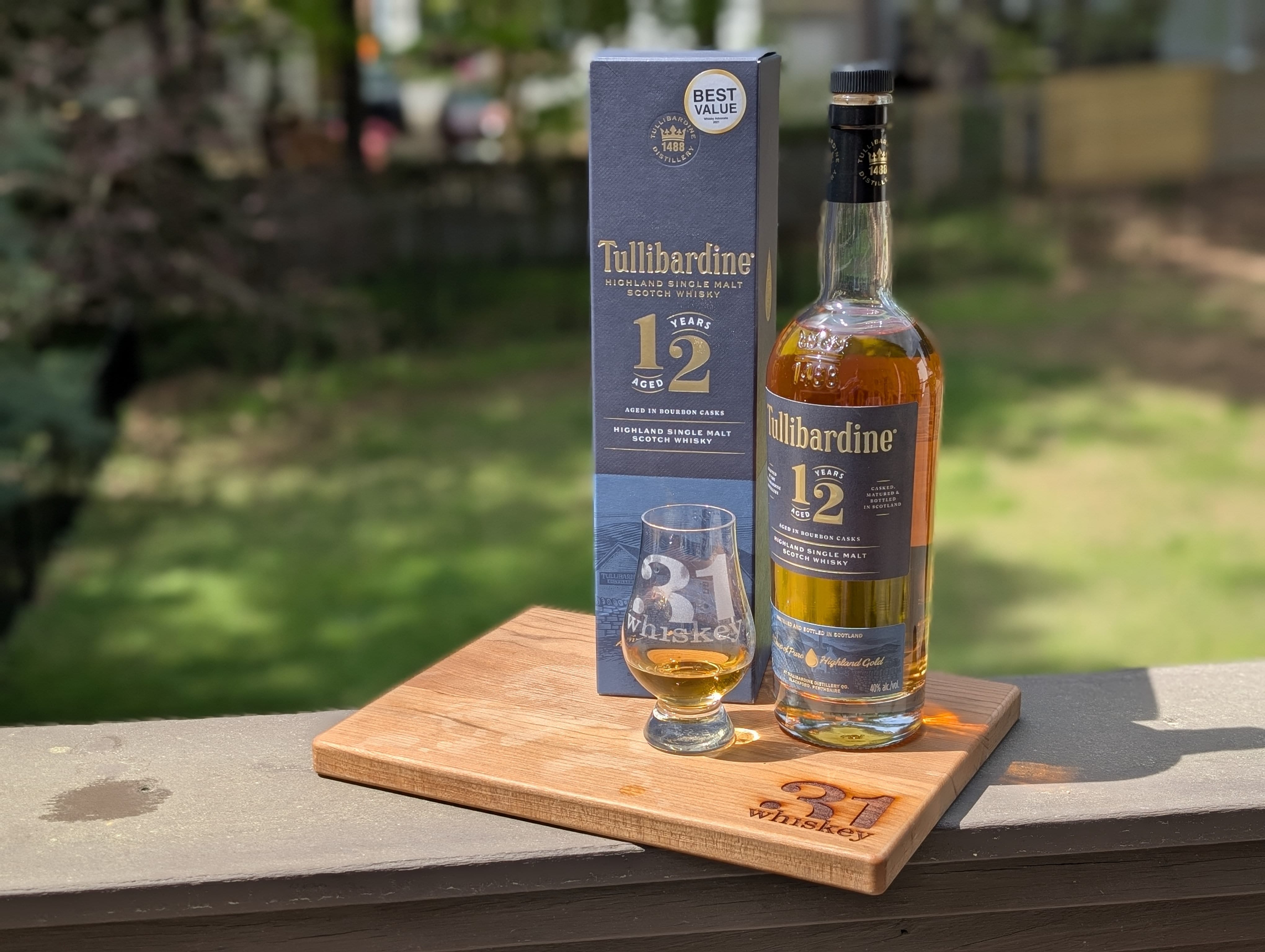
Today we’re going to be taking another look at a reasonably priced scotch whisky. This one is a little more mid-market compared to the Clan MacGregor we recently reviewed, but still seems poised not to break the bank when it comes to finding a good dram. It’s also from a distillery I hadn’t heard of before, so I was excited to get an understanding of the distillery and the whisky they are producing.
History
Alcohol production has been going on at the site of Tullibardine’s distillery for quite some time. According to local legend, King James IV of Scotland stopped by the facility (then a brewery) in 1488 to purchase some beer, which they claim is the first public purchase of beer in the country’s history.
In 1947, following the end of World War II, whisky expert William Delme-Evans stopped by the historic brewery looking for somewhere to start a new distillery. He figured that Perthshire’s Ochil Hills were the perfect location, providing a clean and reliable source of water from the Danny Burn nearby. He transformed the old brewery into a distillery he called Tullibardine, named after a small medieval chapel of the same name nearby that translates in Gaelic to “lookout hill”. That distillery would be the first new facility opened in Scotland since the turn of the century.
Production dried up in 1993 and the facility lay dormant for a decade before being re-opened in 2003. The French company Picard Vins & Spiritueux (PVS) subsequently acquired it in 2011 and founded Terroir Distillers as a subsidiary company to operate a spirits business. Since 2003 the distillery has been producing new spirits under its own brand name of Tullibardine.
Product
- Learn More: What Is Scotch Whisky?
The folks at Tullibardine are proud of the fact that they are one of the few facilities in Scotland that perform every part of the whisky making process on-site (with the notable exception that they don’t malt their own barley).
As a single malt whisky, this spirit starts with a crop of 100% barley seeds that were grown in Scotland. Those seeds are taken to a malting facility, where they are soaked in water and allowed to partially germinate, a process which releases enzymes that start to break down the starch in the seeds and convert that into sugar. The germination is stopped by heating and drying the seeds.
That malted barley is imported into the distillery where it is milled into a powder, mixed with water, cooked, and then fermented with added yeast. This process converts the remainder of the starch into sugar, and then allows the yeast to convert that sugar into alcohol and other elements.
After fermentation the distillery uses their four copper pot stills to distill the liquid twice, selectively capturing the elements that the distillery wants and concentrating the alcohol within the liquid. The resulting raw whisky is then placed into previously used American bourbon barrels (cheap and plentiful from America) where it is aged for a period of 12 years.
After the whisky has properly matured it is proofed down with local water and bottled for sale.
Packaging
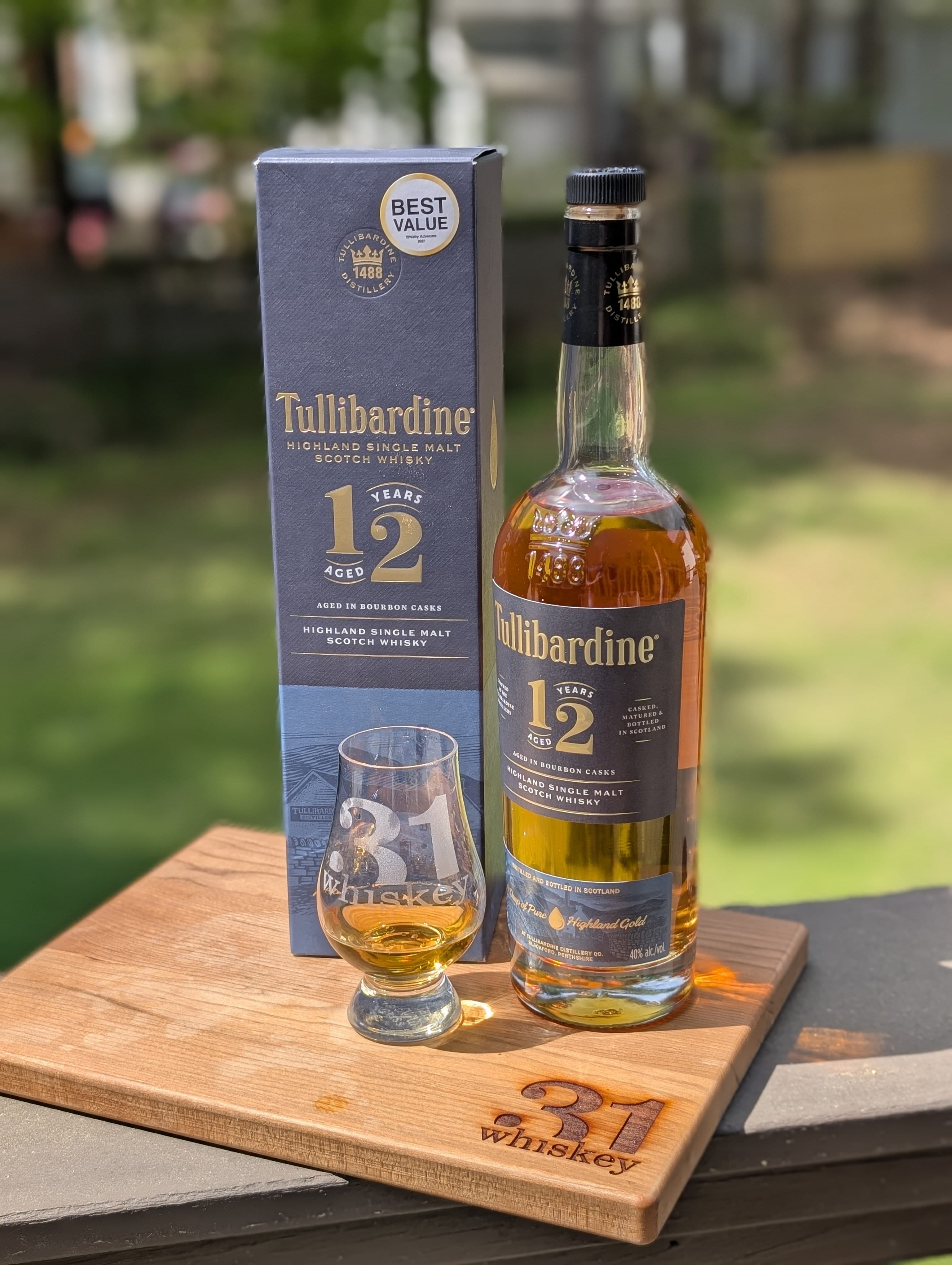
The overall style of packaging here isn’t all that different from other mid-market brands coming from Scotland. The packaging is similar to a Glenlivet or Dewar’s: a bottle with a cylindrical body, rounded shoulder, medium length neck, and plastic cork, all packaged in a cardboard sleeve.
There are some things that stand out on the bottle though… and annoy me a little. The biggest issue is the year 1488. That’s the year they claim the King of Scotland bought a beer at the facility… but it has nothing to do with the founding of the actual distillery, or the company behind the name, or anything about the actual product. It’s basically just that something alcohol-related happened in that year somewhere in the vicinity of this distillery, they think.
I’m annoyed because this is misleading. Realistically, this distillery has only been operating since 2003 when it was re-opened. The people, the processes, and the ingredients all have no provenance dating back before then. And yet, here again we have a bottle where the company is claiming half a millennium of history that is entirely unearned. To me, that’s the same level of honesty as if Facebook claimed a founding date of 1066 because William the Conqueror once relieved himself on the site of their London office.
That said, the design is fine. The colors are muted and provide a nice contrast to the golden whisky inside the bottle. And the fonts used on the packaging work well in my opinion. I also like that the ink is a metallic gold similar in color to the whisky, which provides some appreciated consistency.
Neat
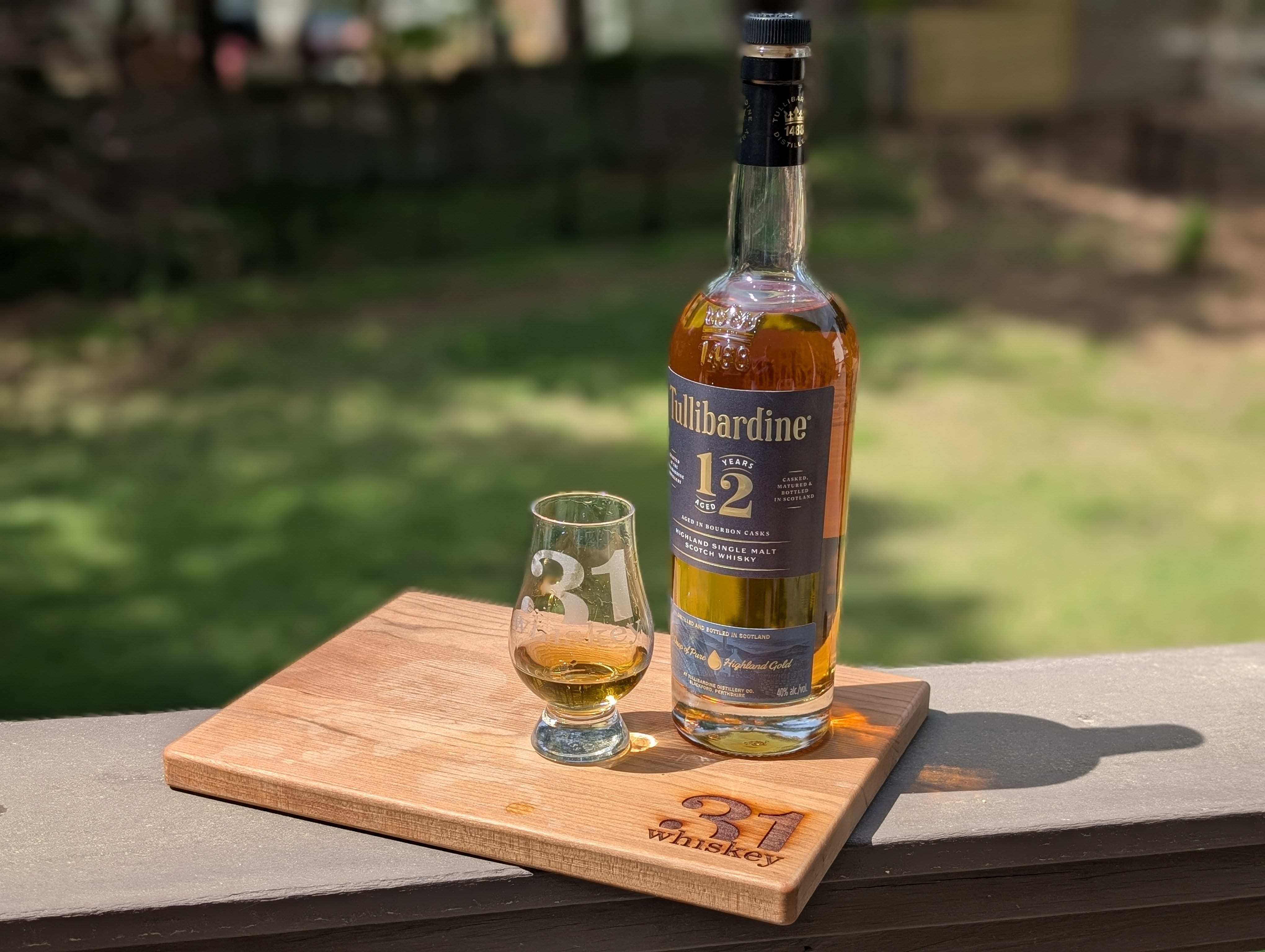
It certainly looks the part of a good Highland scotch whisky, coming out as a slightly tarnished golden color in the glass. I’m also getting some solid highland aromas here: floral blossoms, honey, vanilla, English breakfast tea, sourdough bread, and melon. It’s a profile I’ve previously described as “country club brunch” and I stand by that description here as well.
Taking a sip, the honey sweetness is the first thing that comes to mind. Light and floral, but with some richness to it that gives it that honey-esque quality. That’s backed by some vanilla and caramel notes, which quickly are joined by a bit of darker toffee and the toasted sugar that you’d find on the top of a creme brulee. I’m also getting a touch of baking spices, which would make sense for the charred oak barrels that this sat in for twelve long years.
On the finish, this gets significantly richer and darker. There’s some dark chocolate in here — enough to be noticed, but not nearly enough to add any bitterness or unpleasantness. It’s more like the kind of chocolate note you can expect from an espresso with some chocolate melted into it. The toasted sugar and toffee also become louder before eventually fading into a finish that is mostly vanilla, English breakfast tea, chocolate, and some honey.
On Ice
Like many whiskeys, especially Scotch whiskey, ice changes quite a lot about this profile. Instead of light and floral, this is now dark and rich with some interesting undertones.
The biggest flavors I’m tasting right now are actually dark chocolate and coffee — two flavors I truly didn’t expect from a highlands scotch. These notes are supported by some honey sweetness and a bit of vanilla, but generally speaking the lighter and sweeter flavors seem to be taking a back seat at this point.
In the grand scheme of things, this almost tastes more like an after-dinner digestif than a whiskey — which might not be a bad thing. I enjoy these flavors and the variety… it’s just a bit strange coming from a highlands scotch.
Overall Rating
When I think of a highlands scotch whisky, that “country club brunch” flavor profile is what I expect. Floral, slightly fruity, with a bit of sweetness and vanilla. It’s a time honored traditional flavor that works wonders and seldom misses the mark.
This whisky starts out that way, but as soon as you take a sip you can see the hints of something else lurking under the surface. All that time spent in American bourbon barrels has transformed this spirit, resulting in some darker and richer flavors lying just under the surface. Add a couple cubes of ice and this turns into a chocolate espresso with a hint of honey, which honestly is a pretty great taste all on its own.
In the end, I do think I’m a fan. This is a bottle of whisky that offers some interesting flavors, and changes depending on how you are drinking it. I’d love to see this in some cocktails — or heck, I’d even be happy to enjoy this on a fine evening alongside a good cigar. It’s that kind of a vibe.
| Tullibardine 12 Year Old Highland Single Malt Scotch Whisky Production Location: Highlands, Scotland Classification: Single Malt Scotch Whiskey Aging: 12 Years Proof: 40% ABV Price: $36.95 / 750 ml   |
Overall Rating: 4/5
A surprisingly complex whisky that starts out sweet and innocent but can be richer and darker with the addition of some ice.