
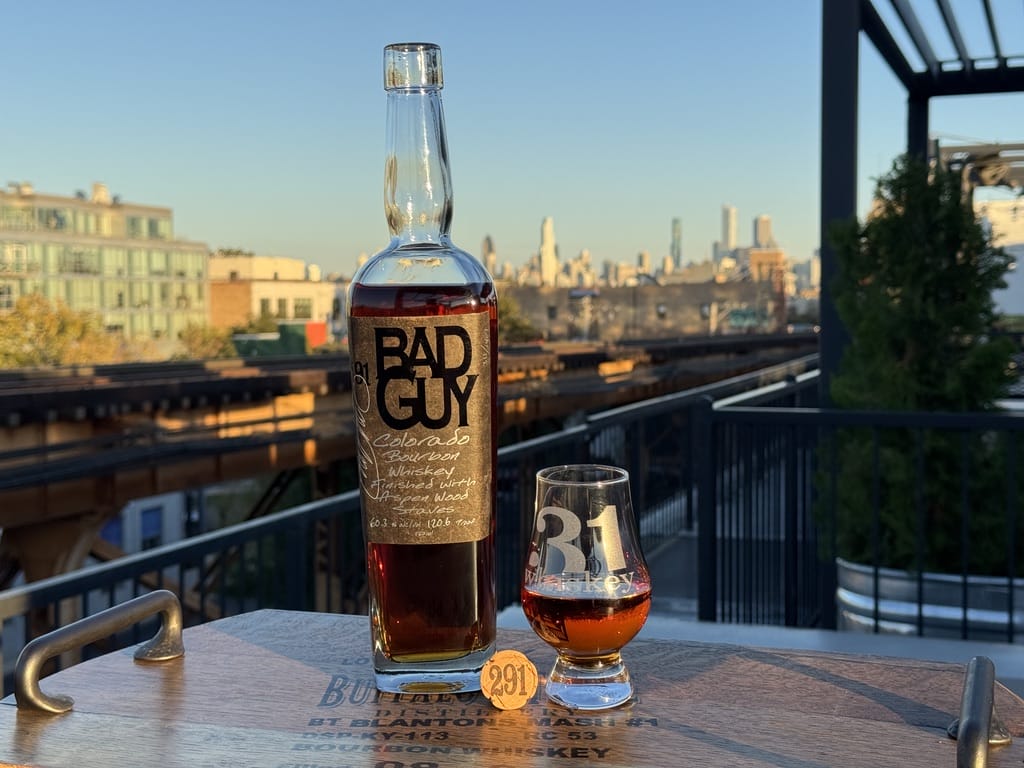
A few weeks ago, I was presented with a bottle of whiskey as a thank you gift from a co-worker. (I know this might come as a surprise to some of our readers, but I am fairly good at my day job.) Knowing that I had to throw this bottle in my suitcase and pray to the United Airline baggage handling gods to be gentle, my co-worker was kind enough to bubble wrap it for me before I could get a good look at the label. So when I arrived home and checked to ensure the bottle survived the trip (and to actually see what I was given), I was surprised to see a bottle called “Bad Guy”. Maybe I am not as good at my day job as I think.
History
I have never heard of Distillery 291. When writing about whisky is your hobby, finding a new distillery can either be thrilling or a terrible proposition — especially when that distillery has fairly recently opened its doors, as is the case of Distillery 291 with it’s first distillation run occurring on September 11, 2011.
Located in Colorado Springs, CO, Distillery 291 was founded by Michael Myers (not to be confused with either the fictional horror villain or the SNL comedian). Like many who have heard the call of distilling, Myers did not have a background in the spirits industry — in fact, his background was in fashion photography. But his love for whiskey and the old west inspired him to create what he called Colorado Whiskey.
While Colorado Whiskey might not be a legally protected term like Tennessee Whiskey, the aim for Myers was to “replicate the taste, smell and folklore” of the old west. When he started, he did not know the art of making whiskey, so he read and learned as much about the topic as he could. And “he carried with him an iconic vision of walking into an old west bar, saying ‘give me a whiskey’, and the bartender slamming down a bottle– that bottle would be 291 Colorado Whiskey”.
The original 45-gallon finishing still for Distillery 291 was crafted from seven copper photogravure plates that were created by Myers for a show in New York City, because buying a new still was just too expensive. Today, a much larger 300-gallon finishing still has taken over the role of that original still; however, that original still continues to operate as a doubling still, so each drop of whiskey still flows through those original seven copper plates.
Nearly 13 years later, Distillery 291 remains a privately owned distillery cranking out 12 different varieties of Colorado Whiskey.
Product
- Learn More: What Is Bourbon Whiskey?
According to their website, “291 whiskey is ‘Hardmade, the Colorado Way. From grain to barrel to bottle, we painstakingly craft our whiskey to an unapologetic, full-bodied experience“. Let’s dig into this and understand what the ‘Colorado way’ actually is:
This bottle is labeled as a bourbon, so we know that at least 51% of the mashbill is corn. Also in that mashbill is wheat, malted rye, and smoked barley. These grains are milled, cooked, and placed into an open air fermentation tank which allows some of the ambient yeast in the area to start converting the sugary mixture into alcohol. Distillery 291 uses a sour mash process, in which some of the previous mash is used to kick start the next batch.
The mildly alcoholic distillers beer is then passed through three different stills to create a triple distilled white whiskey. (And as mentioned in the above section, one of those stills is the handmade copper stills that used to be part of Myers’ photography career in New York City, which adds a definite flair of individuality and uniqueness to the process.)
Once distilled, the future whisky is placed in new charred American oak barrels for an undisclosed period of time. Eventually, when properly matured, toasted aspen wood staves are added to give the whiskey that unique Colorado flavor. According to their website, all of the aspen staves are harvested from nearby forests.
Once the aging process is complete, the contents of the barrels are bottled, corked, and caged by hand.
Packaging
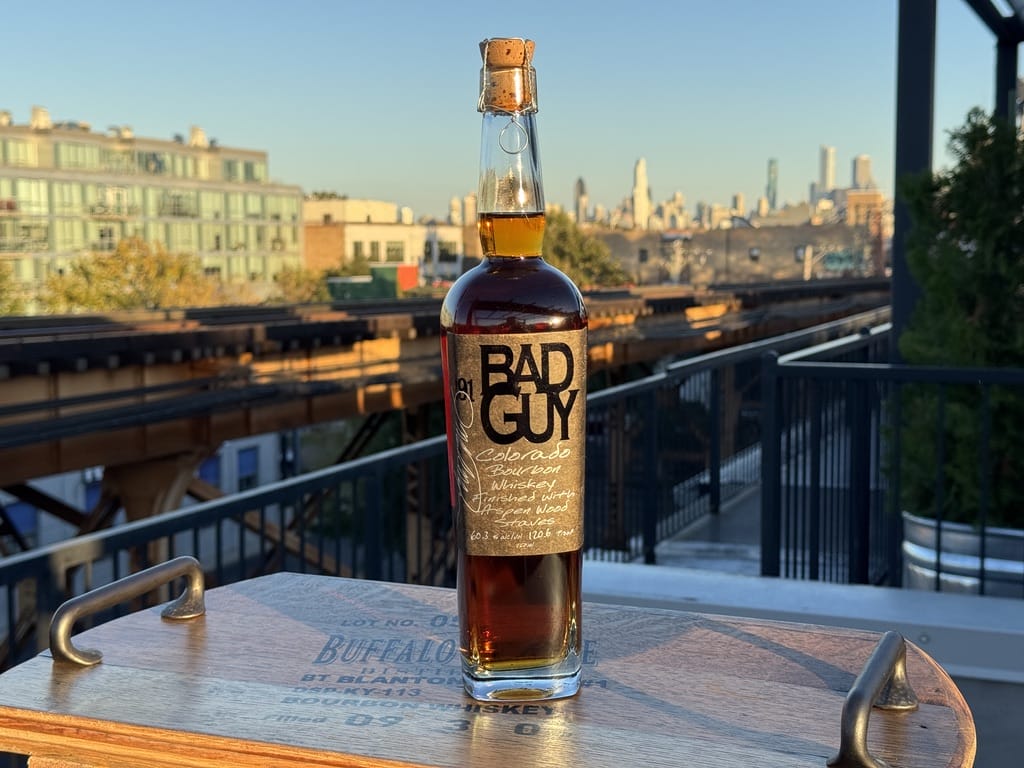
The first thing I pictured when I saw this bottle was Al Swearengen from HBO’s Deadwood sliding it across the bar. After doing some research and learning that Myers was looking to recreate that exact American old west feel, this totally made sense.
The bottle is both unsurprising and unique. The glass body is a roughly square shape, with a square cross section that is more defined at the bottom and rounds quickly into the neck at the shoulder. Overall, it’s somewhat unassuming, but successfully embodies the American Old West.
What sets this bottle apart for me is the fact that they use a natural cork, which fits with only a medium level of pressure. In transit, it’s held in place by a wire cage (similar to a bottle of champagne), and my favorite touch is the fact that “291” is burnt into the top of the cork.
The label on this bottle has a nice mix of new and old. The color and paper feel is very old school; however, the printing and use of handwritten notes scream new school. The hand script used to call out the spirit is messy but neat (and frankly, puts my handwriting to shame). Given that Myers is trying to embrace the old west, this bottle hits all of the right notes. It stood out to me when I first unwrapped it, and I can only imagine this looks great on a backbar.
Neat
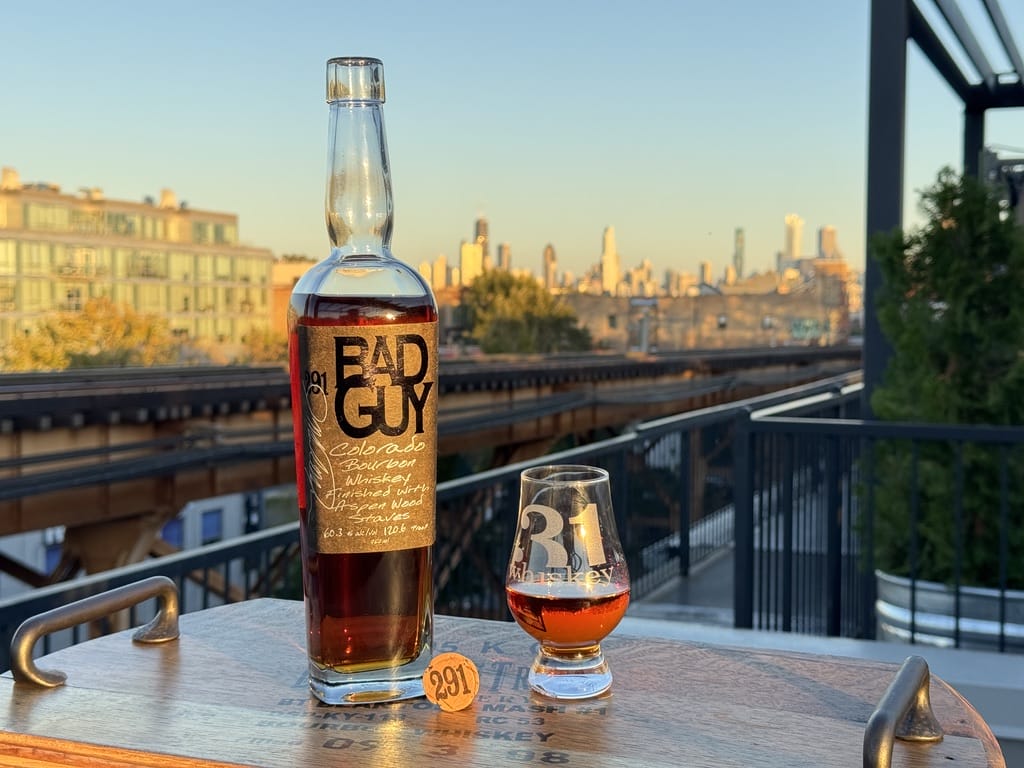
Do you remember smoking clove cigarettes in high school? Me neither, but I had some co-workers who would turn them into a personality when traveling to India, and that is exactly what this whiskey smells like. If you add a little fig or raisin, and maybe a little mild caramel, that is basically what you get when you smell this bourbon.
The first sip drinks like a barrel-proof rye, with an accompanying shock of alcohol content and forceful flavors. I know this is supposed to be a four grain mix, but this tastes like the rye is the primary grain. It’s a little overwhelming, if I’m honest. It’s a good thing I like a strong bourbon or else this might not have gotten a second taste.
Now that I’ve settled in and gotten used to the bold flavors, I can pick out more of the unique aspects.
You get a lot of clove, cinnamon, and cedar (not that the clove is a surprise, given the aroma), and there are also more hearty notes of tobacco, leather, and black tea. Towards the finish, you get some of the more sweet fruity notes of fig, peach, and toffee.
This reminds me a lot of Bookers — it will kick your ass at the beginning but taste mellow enough to be your friend at the end.
On Ice
Often, as we taste whisky on the rocks, we find the more harsh and bold flavors to be mellowed out — and thankfully in this case, that is exactly what happens.
We still get a lot of the prominent flavors of clove, cinnamon, and cedar at the start and the bolder flavors of leather, tobacco, and black tea are also still here. However, everything is much more mellow and less in-your-face.
On ice, this is really nice. I loved sipping this neat, but this is even better. The ice mellows out the harshness that you get with a barrel strength whiskey and manages to not lose any flavors in the process.
Cocktail (Old Fashioned)
I didn’t shake this cocktail but there is an inherent creaminess to it, as if had been.
I love that the bitters and sugar open up the flavor profile of this whiskey – especially the more forward flavors of tobacco, cedar, and leather. There is some mild sweetness in the form of peach and citrus, but overall it’s all savory all of the time.
This is the kind of old fashioned I would want to drink with a steak dinner.
Fizz (Mule)
I’m not a fan of mules. I think it’s a boring drink that doesn’t properly show off the whiskey, since the bold mixers have a tendency to shout down the flavors in the spirit. But I figured a whiskey this flavorful has got to make a good mule… and I wasn’t wrong — this is a great cocktail.
This bourbon stands up well to the ginger beer, which is not always easy to do. The sweet, bold flavors of the ginger beer is still very present, but oh my does this bourbon still shine through. The orange, tobacco, and clove flavors all come through clear as a bell. The resulting cocktail is rich, flavorful, and clearly a bourbon drink.
I would drink this again in a mule, which is high praise from me (a known hater of Kentucky mule cocktails). At this point, I’m not sure which preparation of this bourbon that I prefer best — if asked, my answer would probably be “yes”.
Overall Rating
The label may say Bad Guy, but after tasting it I know that I am a good guy (or at least didn’t offend my coworker enough for them to gift me bad whiskey).
This is a top to bottom great bourbon. I love the story of Distillery 291 and Michael Myers: a distillery founded in 2011 by a former fashion photographer that aims to capture the rugged essence and bold taste of the old west. The “Bad Guy” bourbon features a bold and versatile spirit that feels like it’s been ripped out of the small screen of Deadwood.
Just be aware, if you are gifting or receiving this bottle… judge it from the taste, not the name.
| Distillery 291 Bad Guy Colorado Bourbon Whiskey Finished with Aspen Wood Staves Produced By: Distillery 291 Production Location: Colorado, United StatesClassification: Bourbon Whiskey Aging: No Age Statement (NAS) Proof: 60.3% ABV Price: $107.99 / 750 ml Overall Rating:  |
Overall Rating: 5/5
The label on the bottle may say Bad Guy, but I think this delicious bourbon is a great buy.
Nicely written! Cheers.